
Close Menu
    Facebook X (Twitter) Instagram
    SciTechDaily
    • Biology
    • Chemistry
    • Earth
    • Health
    • Physics
    • Science
    • Space
    • Technology
    Facebook X (Twitter) Pinterest YouTube RSS
    SciTechDaily
    Home»Space»Decades Later, Scientists Finally Explain Voyager 2’s Bizarre Readings at Uranus
    Space

    Decades Later, Scientists Finally Explain Voyager 2’s Bizarre Readings at Uranus

    By Southwest Research InstituteDecember 6, 20251 Comment3 Mins Read
    Facebook Twitter Pinterest Telegram LinkedIn WhatsApp Email Reddit
    Share
    Facebook Twitter LinkedIn Pinterest Telegram Email Reddit
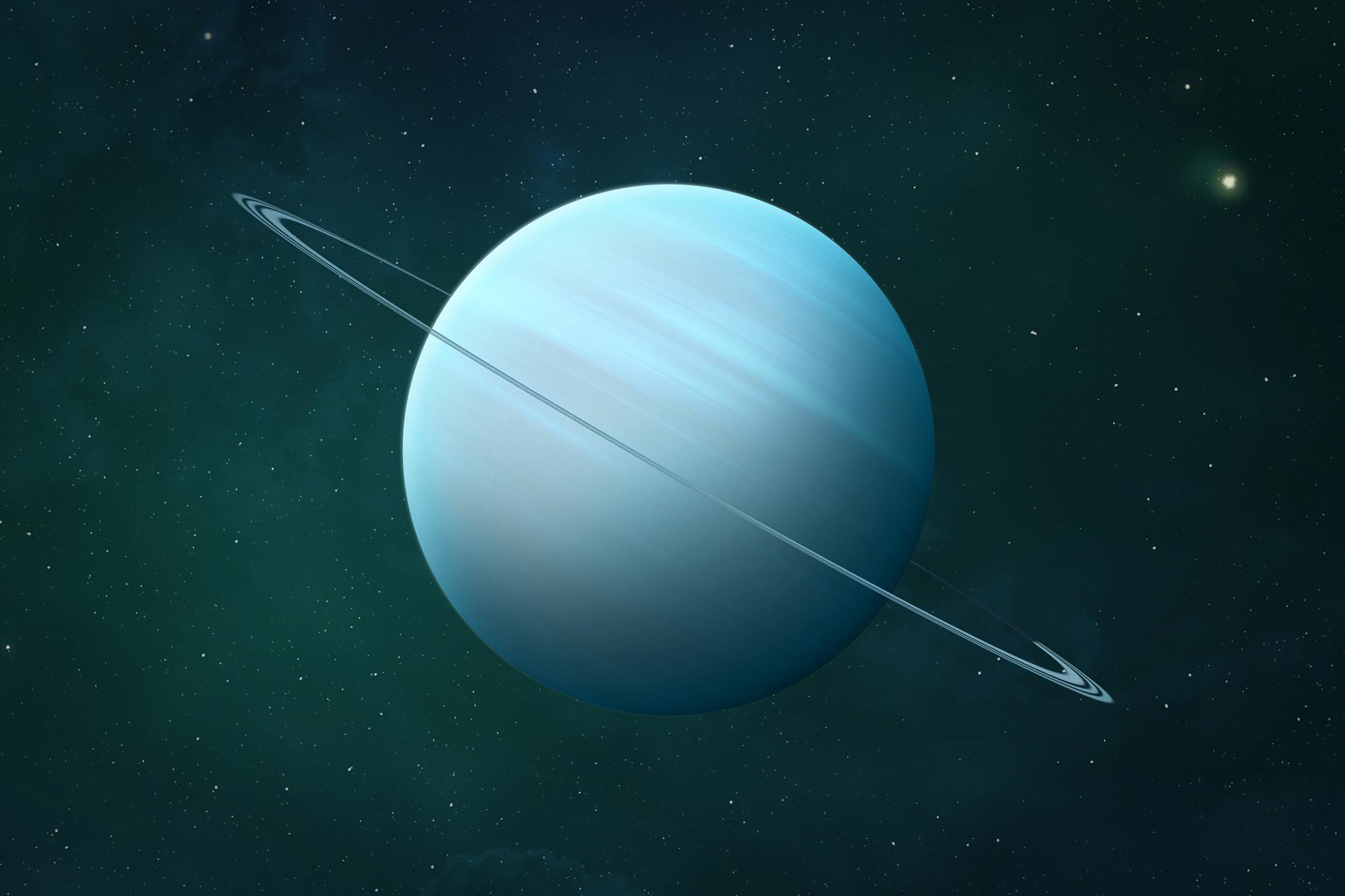
    Planet Uranus in Space Illustration
    Scientists now think a major solar wind event supercharged Uranus’ radiation belts during Voyager 2’s flyby, offering a new explanation for puzzling decades-old measurements. Credit: Shutterstock

    Powerful waves unleashed by solar storms could be the key to understanding extreme radiation.

    Southwest Research Institute (SwRI) researchers now think they have found the answer to a puzzle that has lingered for nearly four decades involving Uranus and its unusual radiation environment.

    When Voyager 2 completed its first and only visit to the planet in 1986, the spacecraft detected an unexpectedly intense electron radiation belt, far stronger than scientists had predicted. Comparisons with other worlds suggested that Uranus should not have produced such extreme values. The discovery left scientists questioning how a planet so different from the rest of the solar system could maintain such a powerful band of trapped electrons.

    New investigations are offering a potential explanation. SwRI scientists propose that the conditions recorded by Voyager 2 may resemble events seen near Earth during major solar wind disturbances. Researchers now suspect that a solar wind feature known as a co-rotating interaction region was moving through the Uranian system at the time of the flyby. If so, this passing structure could account for the unusually high energy levels Voyager 2 measured.
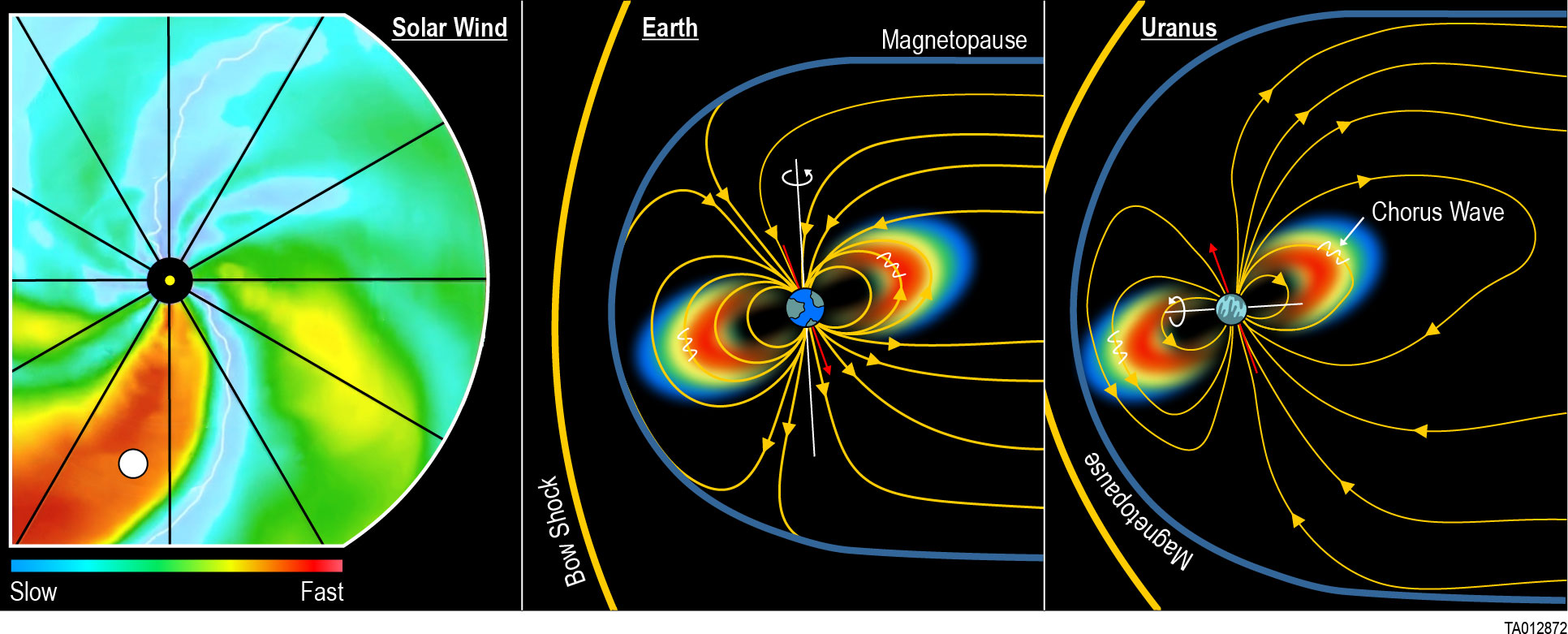
    Solar Storm Uranus Graphic
    SwRI scientists compared space weather impacts of a fast solar wind structure (first panel) driving an intense solar storm at Earth in 2019 (second panel) with conditions observed at Uranus by Voyager 2 in 1986 (third panel) to potentially solve a 39-year-old mystery about the extreme radiation belts found. The ‘chorus’ wave is a type of electromagnetic emission that may accelerate electrons and could have resulted from the solar storm. Credit: Southwest Research Institute

    “Science has come a long way since the Voyager 2 flyby,” said SwRI’s Dr. Robert Allen, lead author of a paper outlining this research. “We decided to take a comparative approach looking at the Voyager 2 data and compare it to Earth observations we’ve made in the decades since.”

    Extreme Space Weather at Uranus

    This new study indicates that the Uranian system may have experienced a space weather event during the Voyager 2 visit that led to powerful high-frequency waves, the most intense observed over the entirety of the Voyager 2 mission. In 1986, scientists thought that these waves would scatter electrons to be lost to Uranus’s atmosphere. But since then, Allen said, scientists have learned that those same waves under certain conditions can also accelerate electrons and feed additional energy into planetary systems.

    “In 2019, Earth experienced one of these events, which caused an immense amount of radiation belt electron acceleration,” said SwRI’s Dr. Sarah Vines, a co-author of the paper. “If a similar mechanism interacted with the Uranian system, it would explain why Voyager 2 saw all this unexpected additional energy.”

    But these findings also raise a lot of additional questions about the fundamental physics and sequence of events that would enable these intense wave emissions.

    “This is just one more reason to send a mission targeting Uranus,” Allen said. “The findings have some important implications for similar systems, such as Neptune’s.”

    Reference: “Solving the Mystery of the Electron Radiation Belt at Uranus: Leveraging Knowledge of Earth’s Radiation Belts in a Re-Examination of Voyager 2 Observations” by R. C. Allen, S. K. Vines and G. C. Ho, 21 November 2025, Geophysical Research Letters.
    DOI: 10.1029/2025GL119311

    Never miss a breakthrough: Join the SciTechDaily newsletter.
    Follow us on Google and Google News.

    Astrophysics Planetary Science Solar Wind Southwest Research Institute Uranus
    Share. Facebook Twitter Pinterest LinkedIn Email Reddit

    Related Articles

    Scientists Uncover Strange New State of Matter Inside Uranus and Neptune

    Scientists Reveal the True Power of the Solar Wind

    Astronomers Reveal That Uranus May Have Two Undiscovered Moons

    Gradual Accumulation Planetary Pebbles Formed Gas-Giant Planets

    New Research Shows Pluto May Still Be Geologically Active

    Astronomers Discover ‘Trojan’ Asteroid Sharing the Orbit of Uranus

    Researchers Confirm Three Asteroids Are Co-Orbital With Uranus

    Vaporization Simulation of Earth Helps Explain the Atmospheres of Super-Earths

    IBEX Measures Particles Outside Our Solar System

    1 Comment

    1. Boba on December 7, 2025 10:16 am

      They found that Uranus is a very dark place.

      Reply
    Leave A Reply Cancel Reply

    • Facebook
    • Twitter
    • Pinterest
    • YouTube

    Don't Miss a Discovery

    Subscribe for the Latest in Science & Tech!

    Trending News

    AI Could Detect Early Signs of Alzheimer’s in Under a Minute – Far Before Traditional Tests

    What if Dark Matter Has Two Forms? Bold New Hypothesis Could Explain a Cosmic Mystery

    This Metal Melts in Your Hand – and Scientists Just Discovered Something Strange

    Beef vs. Chicken: Surprising Results From New Prediabetes Study

    Alzheimer’s Breakthrough: Scientists Discover Key Protein May Prevent Toxic Protein Clumps in the Brain

    Quantum Reality Gets Stranger: Physicists Put a Lump of Metal in Two Places at Once

    Scientists May Have Found the Key to Jupiter and Saturn’s Moon Mystery

    Scientists Uncover Brain Changes That Link Pain to Depression

    Follow SciTechDaily
    • Facebook
    • Twitter
    • YouTube
    • Pinterest
    • Newsletter
    • RSS
    SciTech News
    • Biology News
    • Chemistry News
    • Earth News
    • Health News
    • Physics News
    • Science News
    • Space News
    • Technology News
    Recent Posts
    • Scientists Discover Enzyme That Could Supercharge Ozempic-Like Weight Loss Drugs
    • Asthma and Depression Don’t Mix the Way Scientists Expected
    • Why Promising Cancer Drugs Failed: Scientists Uncover the Missing Piece
    • Popular Sweetener Linked to DNA Damage – “It’s Something You Should Not Be Eating”
    • Ancient “Rock” Microbes May Reveal How Complex Life Began
    Copyright © 1998 - 2026 SciTechDaily. All Rights Reserved.
    • Science News
    • About
    • Contact
    • Editorial Board
    • Privacy Policy
    • Terms of Use

    Type above and press Enter to search. Press Esc to cancel.