
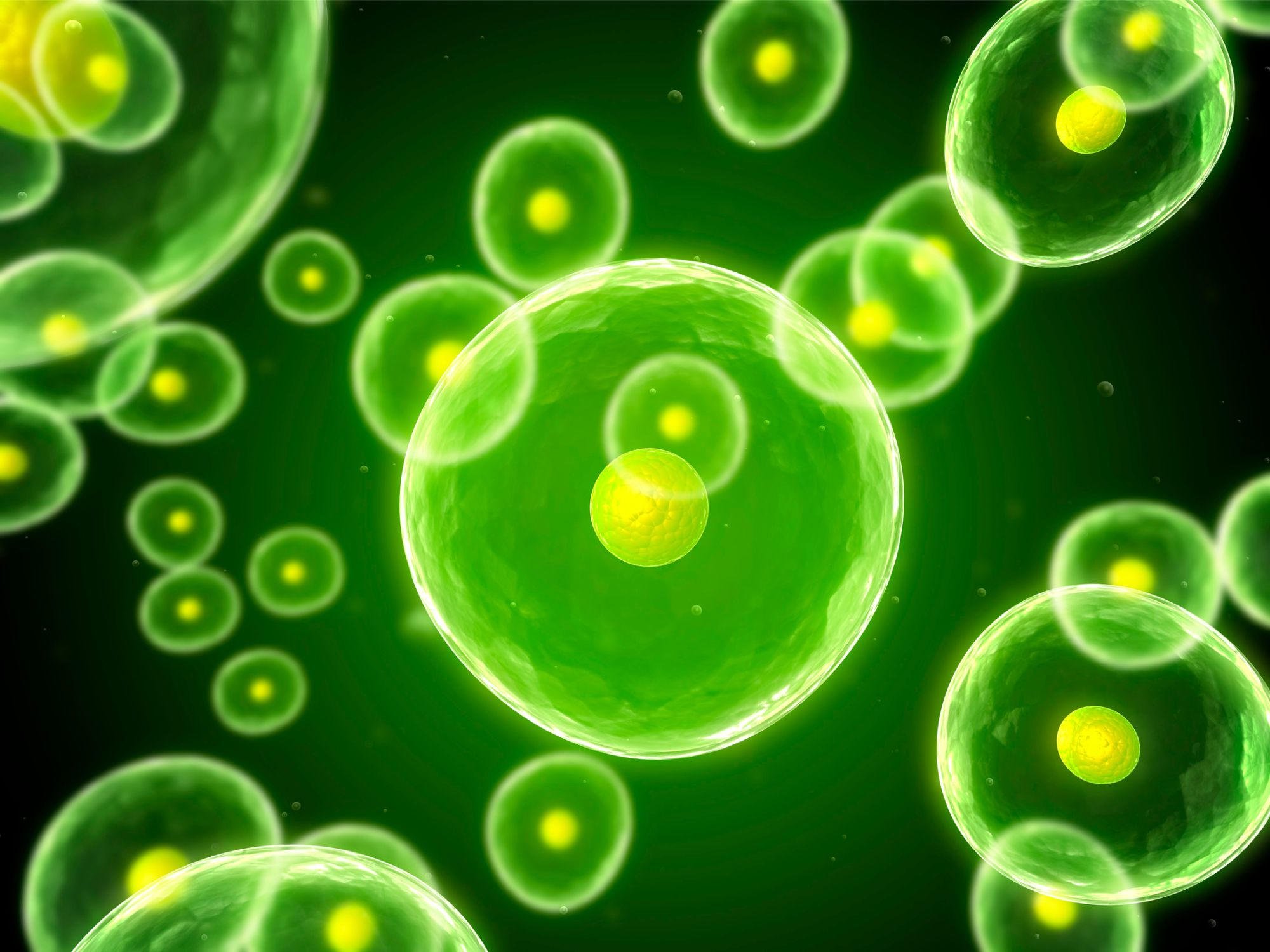
The technique known as Zman-seq uncovers the history of cells, potentially propelling the creation of innovative treatments for cancer and various other diseases.
While physicists continue to debate over Albert Einstein’s assertion that time is an illusion, biologists are certain about its importance in comprehending life as a dynamic system. Recently, biologists have deepened their understanding of intricate biological systems. They have achieved this by using advanced tools that allow for the analysis of large quantities of cellular and molecular data, and by examining the cellular networks responsible for diseases.However, these in-depth investigations of how cells behave and interact have provided only separate snapshots of what happens inside complex organisms, without accounting for the dimension of time and revealing the sequence of cellular events.
Now, in a new study recently published in Cell, researchers from Prof. Ido Amit’s lab at the Weizmann Institute of Science have managed for the first time to develop a method for tracking and measuring changes over time on in single cells inside the body. The method, called Zman-seq (from the Hebrew word zman, for “time”), consists of labeling cells with different time stamps and tracking them in healthy or pathological tissue.
Using this cellular time machine, researchers can get to know the cells’ history and how long each cell had stayed in the tissue, ultimately achieving an understanding of the molecular and cellular temporal changes that had taken place within that tissue.
The Advancements and Limitations of Single-Cell Technologies
Single-cell technologies, the tools that enable biologists to understand what happens inside individual cells, have advanced significantly in recent years, in large part thanks to the vibrant single-cell research community in which Amit’s lab is one of the pioneers. With these tools, it is now possible to obtain high-resolution images of how diseases develop and how the body responds to different medications, to identify rare cell populations, decipher which cells interact with one other and how they are spatially distributed in a tissue. However, all these important insights are equivalent to getting many still-frame images from a movie and trying to understand the plot. “Knowing what preceded what is not enough to deduce causality, but without this knowledge, we don’t really have a chance of understanding what the cause is and what is the effect,” Amit says.
The development of the groundbreaking new technology started with the research of Dr. Daniel Kirschenbaum, a postdoctoral researcher in Amit’s lab. Kirschenbaum was born in Hungary and did his PhD in neuropathology in Switzerland, where he studied glioblastoma, the most common and aggressive brain tumor. “We usually think of cancer as cells growing out of control, but in fact, cancer is also the loss of the ability of the body, and specifically of its immune system, to control this growth,” he says. “And when you look at tumors, large parts of them are composed of dysfunctional immune cells, which sometimes make up one-third or even half of all the cells in a tumor.”
Glioblastoma is one of the most immune-suppressive types of tumors. “To understand how to defeat this cancer, we need to understand what happens to the immune cells as they enter the tumor and why they lose the capacity to fight the tumor and become dysfunctional,” Kirschenbaum explains. “Ideally, we’d want to have a little clock on each cell telling us when it entered the tumor and when the signals and checkpoints that instruct it to become incompetent are activated. This back-to-the-future time machine was thought to be impossible to develop.”
The breakthrough came when Kirschenbaum decided to take an uncanny approach. “Instead of trying to measure time in cells within the tumor tissue, we decided to try to mark the cells while they are still in the blood – before they enter the tumor. By using different fluorescent dyes at different time points, we are later able to know exactly when each cell entered the tissue and how long it had been there, and this reveals the dynamic changes that happened to the cells in the tissue, for example, what are the different stages at which immune cells become dysfunctional inside the tumor.”
Methodology and Insights from Zman-seq
The challenge, Kirschenbaum adds, was to develop the optimal way to color the cells in the blood at specific time points, making sure the dye does not reach the tissue itself or stay too long in the blood, potentially mixing with the next dye. At the same time, the dye had to stay on the cells long enough for them to be measured. As part of the study, the researchers in Amit’s lab showed that the method makes it possible to measure time in immune cells in different tissues – the brain, the lungs, and the digestive system of animal models.
Using Zman-seq, Kirschenbaum and his colleagues were able to gain insights into why the immune system is so dysfunctional in battling glioblastoma. “For example, we showed that immune cells called natural killer cells, which, as their name implies, are crucial to killing rogue cells, become dysfunctional very quickly because the tumor hijacks their killing mechanisms – and this happens within less than 24 hours after their entry into the tumor. This explains why therapeutic attempts to harness the immune system for fighting glioblastoma are so ineffective,” Kirschenbaum says.
Other members of Amit’s lab in Weizmann’s Systems Immunology Department, including Dr. Ken Xie and Dr. Florian Ingelfinger, contributed to the development of Zman-seq. Collaborators included immunologists Prof. Marco Colonna of Washington University, Prof. Katayoun Rezvani of the University of Texas, Prof. Florent Ginhoux of the Shanghai Institute of Immunology, neurooncologist Dr. Tobias Weiss of the University Hospital Zurich, and computational biologists Prof. Fabian J. Theis of the Helmholtz Center Munich and Prof. Nir Yosef of the Weizmann Institute.
Now, researchers in Amit’s lab are developing ways to block the immune-disabling tumor checkpoints in order to reactivate the immune system in glioblastoma and other hard-to-treat tumors. In addition, they plan to adapt Zman-seq to the study of temporal dynamics of cells throughout the human body. “For example, many cancer patients are getting therapy before surgery. We want to use the method to color immune cells in the body during that period so that after the surgery, we can better understand the dynamics of immune cells in the tumor and optimize patient treatments,” adds Kirschenbaum.
“Until today, there were quite a few different methods trying to analyze single-cell data and arranging them along a time axis according to different parameters. But these approaches were all somewhat arbitrary in choosing what are the sequence of events,” Amit says. “Zman-seq supplies the ‘hard facts,’ the empirical measurements enabling scientists to understand the precise order of events that immune and other cells are going through when they enter a tumor, and this may lead to a completely new thinking on how to generate more effective therapies for cancer and other disorders.”
Reference: “Time-resolved single-cell transcriptomics defines immune trajectories in glioblastoma” by Daniel Kirschenbaum, Ken Xie, Florian Ingelfinger, Yonatan Katzenelenbogen, Kathleen Abadie, Thomas Look, Fadi Sheban, Truong San Phan, Baoguo Li, Pascale Zwicky, Ido Yofe, Eyal David, Kfir Mazuz, Jinchao Hou, Yun Chen, Hila Shaim, Mayra Shanley, Soeren Becker, Jiawen Qian, Marco Colonna, Florent Ginhoux, Katayoun Rezvani, Fabian J. Theis, Nir Yosef, Tobias Weiss, Assaf Weiner and Ido Amit, 21 December 2023, Cell.
DOI: 10.1016/j.cell.2023.11.032
Prof. Ido Amit’s research is supported by the Dwek Institute for Cancer Therapy Research; the Moross Integrated Cancer Center; the Morris Kahn Institute for Human Immunology; the Swiss Society Institute for Cancer Prevention Research; the Elsie and Marvin Dekelboum Family Foundation; the EKARD Institute for Cancer Diagnosis Research; the Lotte and John Hecht Memorial Foundation and the Schwartz Reisman Collaborative Science Program.
Prof. Amit is the incumbent of the Eden and Steven Romick Professorial Chair.
Never miss a breakthrough: Join the SciTechDaily newsletter.
Follow us on Google and Google News.