
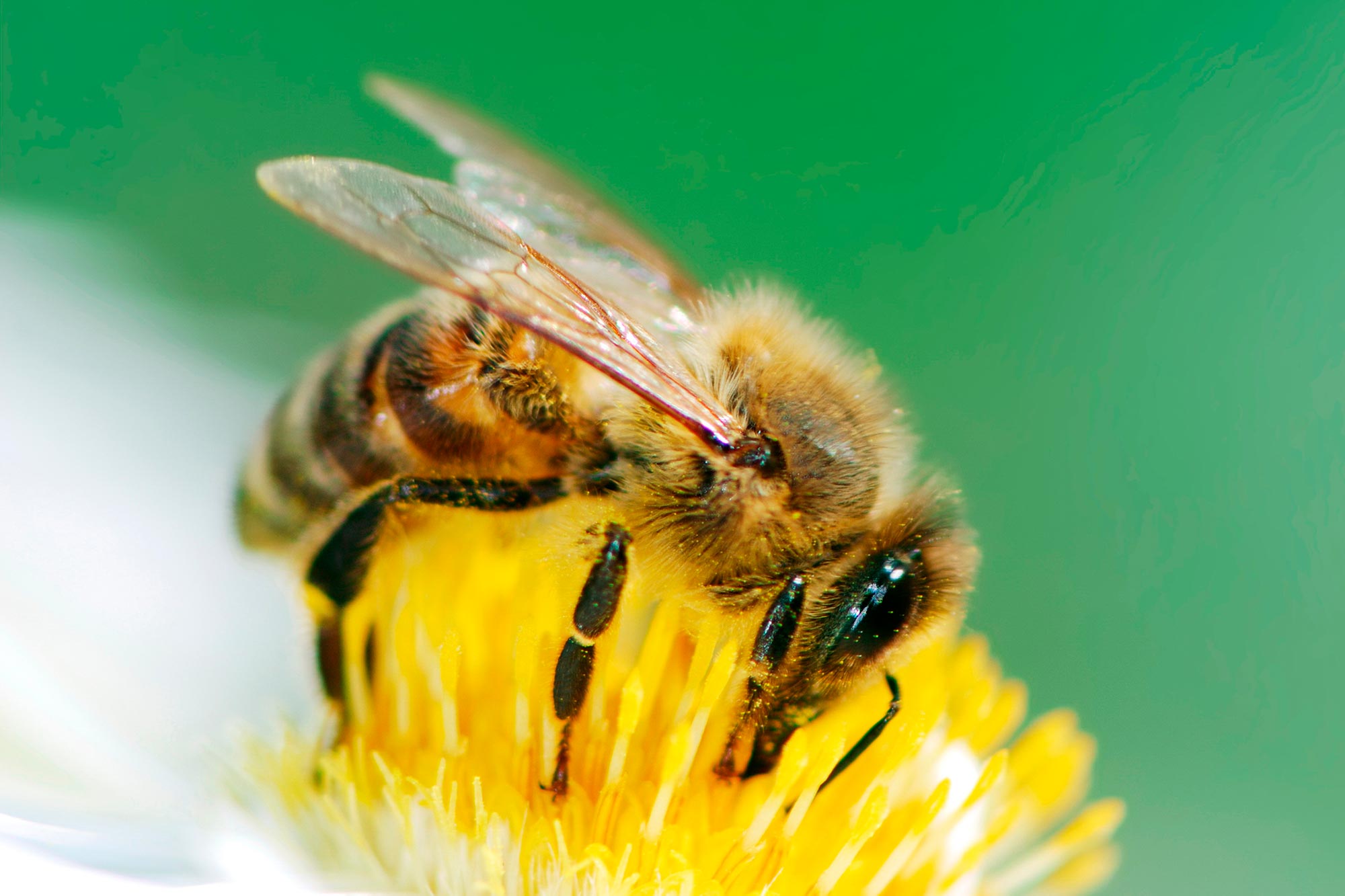
New research reveals that bees produce nutrients that aid in the colonization of their gut bacteria, highlighting a symbiotic host-microbiota relationship and offering insights into bees’ environmental vulnerabilities.
Bacteria have adapted to all terrestrial environments. Some have evolved to survive in the gut of animals, where they play an important role for their host; they provide energy by degrading indigestible food, they train and regulate the immune system, they protect against invasion by pathogenic bacteria, and they synthesize neuroactive molecules that regulate the behavior and cognition of their host.
Mutual Benefits in Host-Bacteria Relationship
These are great advantages for the host, but what advantages do the bacteria derive? Certainly, the host provides a comfortable home, but does the host also provide nutrients to native bacteria that enable them to colonize?
It is a difficult question that is possible to answer with the aid of … bees. Professor Philipp Engel in UNIL’s Department of Fundamental Microbiology (DMF) in Dorigny has set his sights on the western honey bee (Apis mellifera). They are a relatively simple system to study compared to humans and their gut microbiota. Best known for the delicious honey they produce, this insect is also an excellent experimental model for gut microbiota research: it has acquired a remarkably simple and stable microbiota, composed of only around twenty bacterial species. In the laboratory of the Engel group, bees are raised without gut bacteria, and then fed specific species that will colonize the gut.
Full Board for the Bacteria
Bees love to gorge on nutrient rich pollen and honey, but they can also survive for long periods on a diet of only sugar water. But what happens to the gut bacteria? A study published on January 15, 2024, in Nature Microbiology by the Lausanne scientists reveals new insights: Dr. Andrew Quinn and PhD candidate Yassine El Chazli began by looking for evidence that the bacteria share nutrients with one another when bees receive nothing more than sugar water. Remember that intestinal bacteria are known to consume dietary nutrients as well as waste products from other microorganisms.
However, their first results left them perplexed: One specific bacterium in the gut, Snodgrassella alvi, cannot metabolize sugar to grow, and yet it still colonized the bee gut when sugar was the only food in the diet and no other bacteria were present.
By measuring metabolites in the gut, the scientists discovered that the bee synthesizes multiple acids (citric acid, malic acid, 3-hydroxy-3-methylglutaric acid, etc.) that are exported into the gut and were less abundant when S. alvi was present. These results led them to pose an unexpected hypothesis: Does the bee directly enable S. alvi to colonize its gut by furnishing the necessary nutrients?
Picture Proof
Proving this hypothesis was surprisingly difficult, but fortunately, the key expertise was just across the road in the laboratory of Professor Anders Meibom (affiliated with UNIL and EPFL). Professor Meibom and his team are experts in measuring the flux of metabolites in complex environments at nanometer scale resolution by using one of the few NanoSIMS (Nanoscale Secondary Ion Mass Spectrometry) instruments in Europe.
Together the two teams devised an experiment in which microbiota-free bees received a special diet of glucose where the natural 12C atoms of carbon in the glucose were replaced with the naturally rare 13C “labeled” isotopes. The bees were then colonized with S. alvi. At the end of the experiment, the fixed guts embarked on a journey, first passing by the electron microscopy facility of UNIL, led by Senior Lecturer Christel Genoud. Then, they moved on to the laboratory of Professor Meibom and his NanoSIMS. In the end, the scientists were able to construct a 2-dimensional “image” of the 13C atoms in the gut of the bee, which showed that the S. alvi cells were significantly enriched in 13C, which reflected the 13C enrichment of the acids present in the gut.
To the Rescue of the Bees
Thus, in a single image, the team was able to show conclusively that the bee synthesizes food for its intestinal bacteria. “This is a wonderful example of cutting-edge, truly interdisciplinary scientific collaboration, which has brought together several scientific units within UNIL and EPFL,” comments Anders Meibom. When we work together in this way, there are not many academic environments in the world that have more to offer,” adds the professor, who is a pioneer in the application of NanoSIMS technologies to the intransigent questions of biology.
“It’s possible that many other gut microorganisms also feed on host-derived compounds,” says co-lead author Dr. Andrew Quinn, imagining an extension of this approach to other bacteria. Refocusing on bees: “These results could also explain why bees have such a specialized and conserved gut microbiota.”
And these mechanisms could play a role in bees’ vulnerability to climate change, pesticides, or new pathogens: “Their vulnerability could result from a disruption in this intricate metabolic synergy between the bee and its gut microbiota. We already know that exposure to the herbicide glyphosate makes bees more susceptible to pathogens and reduces the abundance of S. alvi in the gut. Now, armed with these new findings, we’re looking for answers to these pressing questions.”
Reference: “Host-derived organic acids enable gut colonization of the honey bee symbiont Snodgrassella alvi” by Andrew Quinn, Yassine El Chazli, Stéphane Escrig, Jean Daraspe, Nicolas Neuschwander, Aoife McNally, Christel Genoud, Anders Meibom and Philipp Engel, 15 January 2023, Nature Microbiology.
DOI: 10.1038/s41564-023-01572-y
Never miss a breakthrough: Join the SciTechDaily newsletter.
Follow us on Google and Google News.