
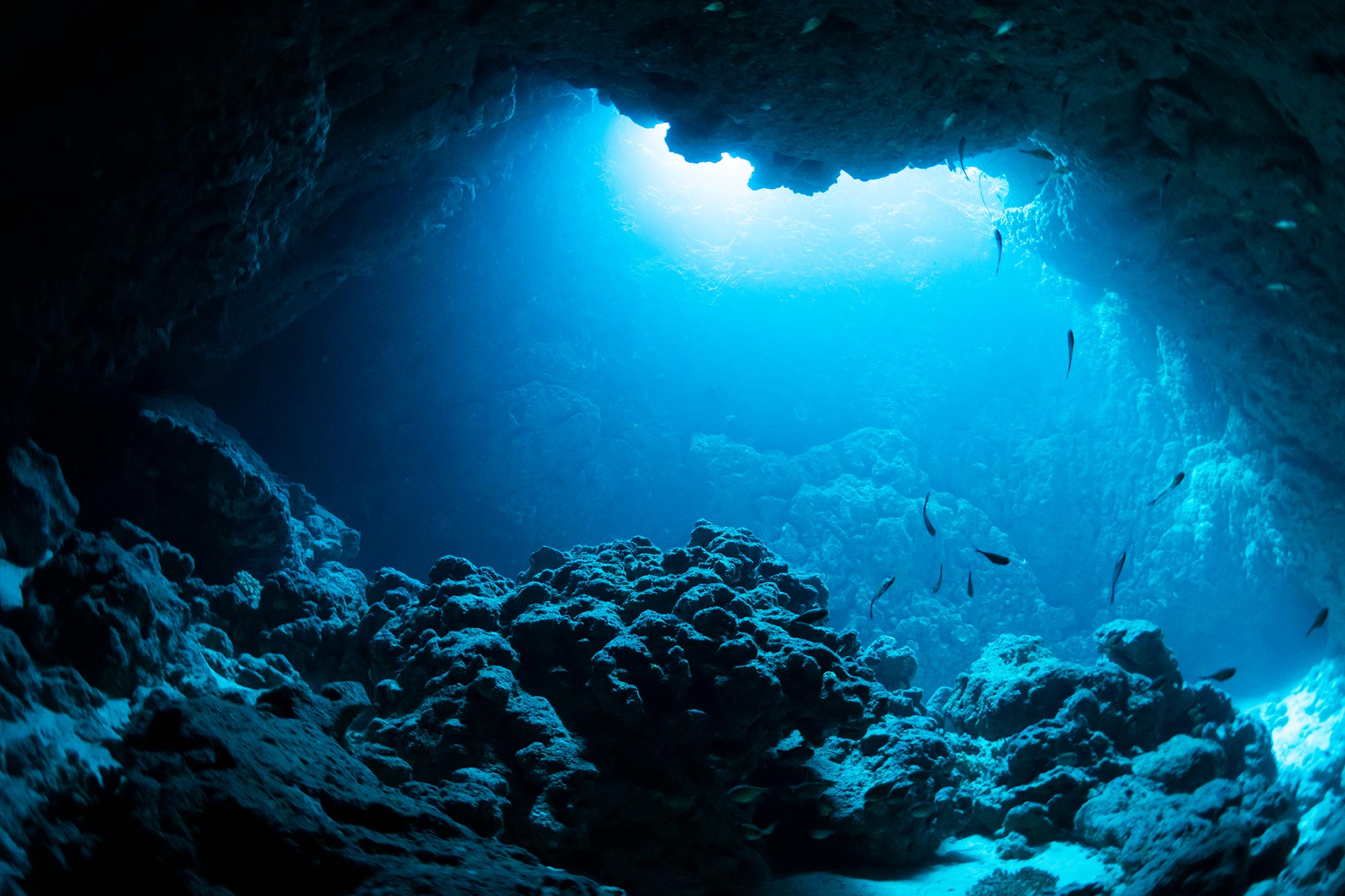
Researchers found that deep-sea mining waste clouds could dilute the ocean’s food supply in the twilight zone, where tiny plankton sustain vast marine ecosystems.
The sediment is like “junk food” for these creatures, offering little nutrition and disrupting the deep-sea food web. Scientists warn that the effects could reach commercial fisheries and the global food chain if large-scale mining begins without safeguards.
Mining Waste Threatens the Ocean’s Twilight Zone
A new study from researchers at the University of Hawai‘i (UH) at Mānoa, published today (November 6) in Nature Communications, provides the first evidence that waste from deep-sea mining in the Pacific’s Clarion-Clipperton Zone (CCZ) could disturb marine ecosystems in the ocean’s midwater “twilight zone.”
This critical layer, stretching from about 200 to 1,500 meters below the surface, is home to countless zooplankton—tiny animals that form the foundation of the ocean’s food chain. The research found that 53% of zooplankton and 60% of micronekton, the small swimming organisms that feed on them, would be affected by mining waste discharges, potentially altering food supplies for larger predators.
“When the waste released by mining activity enters the ocean, it creates water as murky as the mud-filled Mississippi River. The pervasive particles dilute the nutritious, natural food particles usually consumed by tiny, drifting Zooplankton,” said Michael Dowd, lead author of the study and Oceanography graduate student in the UH Mānoa School of Ocean and Earth Science and Technology (SOEST).
“Micronekton, small shrimp, fish and other animals that swim, feed on zooplankton. Some migrate between the depths and near surface waters and they are consumed by fish, seabirds and marine mammals. Zooplankton’s exposure to junk food sediment has the potential to disrupt the entire food web.”
Deep-Sea Mining’s Nutritional Fallout
The paper, “Deep-sea mining discharge can disrupt midwater food webs,” analyzed waste released during a 2022 mining test in the midwater of the CCZ, an enormous region of the Pacific Ocean targeted for extraction of polymetallic nodules containing valuable minerals such as cobalt, nickel, and copper. Researchers sampled water at the depths where the discharge occurred and discovered that the mining particles contained far fewer amino acids, a major source of nutrition, than the natural organic matter that sustains life in these zones.
“This isn’t just about mining the seafloor; it’s about reducing the food for entire communities in the deep sea,” said Erica Goetze, co-author, SOEST oceanography professor, and expert in marine zooplankton ecology. “We found that many animals at the depth of discharge depend on naturally occurring small detrital particles — the very food that mining plume particles replace.”
The research arrives as nations increase efforts to secure critical minerals for technologies such as electric vehicle batteries and renewable energy infrastructure. At present, roughly 1.5 million square kilometers of the CCZ are already licensed for potential deep-sea mining operations.
Disrupting a System Tuned to Scarcity
During the deep-sea mining process, nodules are collected from the seafloor, along with seawater and sediments, and transferred through a pipe to a collection ship for separation of nodules from sediment waste. This seawater-containing sediment waste, as well as pulverized very small nodule particles, must be returned to the ocean. Although the release depth for this waste is currently unclear, some mining operators have proposed midwater mining discharge within the twilight zone. Until now, the impacts of this waste on midwater communities was poorly understood. These impacts will be critical for the establishment of regulations around waste discharge, which don’t yet exist–a gap in governance over the industry.
The twilight zone hosts a staggering diversity of life, including tiny krill, fish, squid, octopus and gelatinous species such as jellyfish and siphonophores. By rising towards the ocean’s surface every night, then swimming back down again, these creatures support the transport of carbon to greater depths in the ocean, which is critical to ocean and human health. These creatures either feed on the particles in the twilight zone or prey on those that do, creating a tightly linked food web that connects the surface ocean to the abyss.
“Our research suggests that mining plumes don’t just create cloudy water — they change the quality of what’s available to eat, especially for animals that can’t easily swim away,” explained Jeffrey Drazen, co-author, SOEST oceanography professor, and deep-sea ecologist. “It’s like dumping empty calories into a system that’s been running on a finely tuned diet for hundreds of years.”
Urgent Concerns With Commercial Mining
The findings raise urgent concerns about long-lasting, system-wide effects if large-scale commercial mining proceeds without strong environmental safeguards. Pacific tuna fisheries, for example, operate in the CCZ, which means that deep-sea mining waste could impact fish that land on dinner plates globally.
“Deep-sea mining has not yet begun at a commercial scale, so this is our chance to make informed decisions,” said Brian Popp, co-author, SOEST earth sciences professor, and expert in marine stable isotope biogeochemistry. “If we don’t understand what’s at stake in the midwater, we risk harming ecosystems we’re only just beginning to study.”
The authors hope their findings will inform international regulatory decisions currently being shaped by the International Seabed Authority, as well as the National Oceanic and Atmospheric Administration, which is responsible for reviewing the environmental impacts of U.S.-led deep-sea mining initiatives. They also call for expanded research to protect the full vertical extent of ocean ecosystems.
Protecting the Depths Before It’s Too Late
“Before commercial deep-sea mining begins, it is essential to carefully consider the depth at which mining waste is discharged,” added Drazen. “The fate of these mining waste plumes and their impact on ocean ecosystems varies with depth, and improper discharge could cause harm to communities from the surface to the seafloor.”
Reference: “Deep-sea mining discharge can disrupt midwater food webs” by Michael H. Dowd, Victoria E. Assad, Alexus E. Cazares-Nuesser, Jeffrey C. Drazen, Erica Goetze, Angelicque E. White and Brian N. Popp, 6 November 2025, Nature Communications.
DOI: 10.1038/s41467-025-65411-w
Additional authors on the study include oceanography graduate students Victoria Assad and Alexus Cazares-Nuesser, and oceanography professor Angelicque White.
Never miss a breakthrough: Join the SciTechDaily newsletter.
Follow us on Google and Google News.
4 Comments
“Researchers sampled water at the depths where the discharge occurred and discovered that the mining particles contained far fewer amino acids, a major source of nutrition, than the natural organic matter that sustains life in these zones.”
If these authors are as careless with their choice of words as I have come to expect, I’m compelled to ask whether they meant “far fewer amino acids,” or alternatively, “a lower percentage of amino acids in the suspended” particles. It is an important distinction because if there are fewer total amino acids, it suggests that the amino acids may only be a thin veneer on the surface and/or a fixed rate of detrital organic ‘rain’, whereas a lower percentage of amino acids simply reflects the fact that the mining disturbs the subsurface and carries the inorganic material up off the bottom, increasing the suspended particle count and thereby reducing the percentage of amino acids without actually reducing the number of amino acids per unit volume.
Related to the above, they also say, “We found that many animals at the depth of discharge depend on naturally occurring small detrital particles — the very food that mining plume particles replace.” The question is, do the inorganic particles “replace” the food particles, or just increase the total number of all particles available? I’m assuming that the plankton and micronekton have the ability to differentiate between food and unusable inorganic particles. (If not, the article should have stated that as being a concern.) The false-positive rejection process may consume more energy, but that probably won’t be as severe as an absence of food. I expect more precision in the use of words than what I’m seeing. Ideally, there should be no ambiguity about what they mean and I shouldn’t have to question what they mean.
They further say, “Until now, the impacts of this waste on midwater communities was poorly understood.” I don’t think that they have contributed a lot to our understanding because they haven’t studied the reaction of the biota to a sediment-rich environment. Hypothetically, an environment with the same number of pure amino acid particles, PLUS an increased number of amino acid-enriched inorganic particles could provide more food. However, they didn’t consider that possibility and therefore they didn’t explore it. It appears to be an opportunity missed because of narrow thinking and perhaps an unexamined bias.
“Until now, the impacts of this waste on midwater communities was poorly understood.”
After reading the article in Nature, I see that they did not consider that the constituents in the effluent plume have different settling velocities, determined by size, density, and turbulence. The point being, the crushed ‘manganese nodule’ particles, with a reduced nutrient composition, have a higher density than the organic materials and will settle out the fastest, all other things being equal. Therefore, they didn’t incorporate in their analysis and concerns about inorganic particles that they will have the shortest residency times before returning to the bottom. Not all suspended particles are equal in their impact.
This is a good start, but is isn’t as comprehensive as I would like to see for something as important as supplying resources for a different energy system in the future. Their concern for negative consequences seems to have blinded them to alternative interpretations (potential to increase food supply) and mitigating factors (more rapid settling of inorganic particles).
These researchers only see first-order effects. Life evolves and plankton evolve rapidly. Disruption also tends to create opportunity for life that can adapt.
So I would expect that yes, the first year or so of mining could cause some reduction in life in these zones, but after that period of time, there would be an explosion of life.
Should also be pointed out that prediction in science are merely untested hypotheses, and not anything to do with hard science. Further anyone can pose an untested hypothesis.
So I really have to question how doomerism like this and many other pretend-science articles end up getting published … oh, right, the publishers are corrupt.
Even worse than an untested hypothesis is a logically untestable hypothesis, or one that cannot be tested in the lifetime of those reading it.