
Close Menu
    Facebook X (Twitter) Instagram
    SciTechDaily
    • Biology
    • Chemistry
    • Earth
    • Health
    • Physics
    • Science
    • Space
    • Technology
    Facebook X (Twitter) Pinterest YouTube RSS
    SciTechDaily
    Home»Biology»Deepest Scientific Marine Samples Ever Collected Show Hints of Life
    Biology

    Deepest Scientific Marine Samples Ever Collected Show Hints of Life

    By SciTechDailyNovember 19, 2012No Comments2 Mins Read
    Facebook Twitter Pinterest Telegram LinkedIn WhatsApp Email Reddit
    Share
    Facebook Twitter LinkedIn Pinterest Telegram Email Reddit
    deep-sea-bacteria
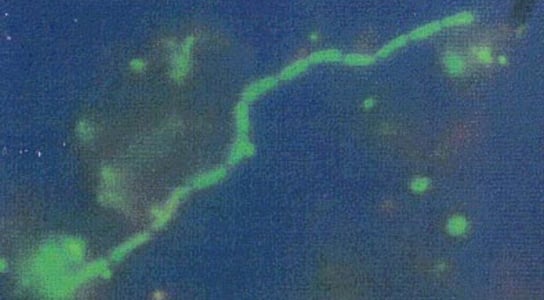
    Deep sea bacteria Credit: Image by Shelly Carpenter, NOAA Ocean Explorer

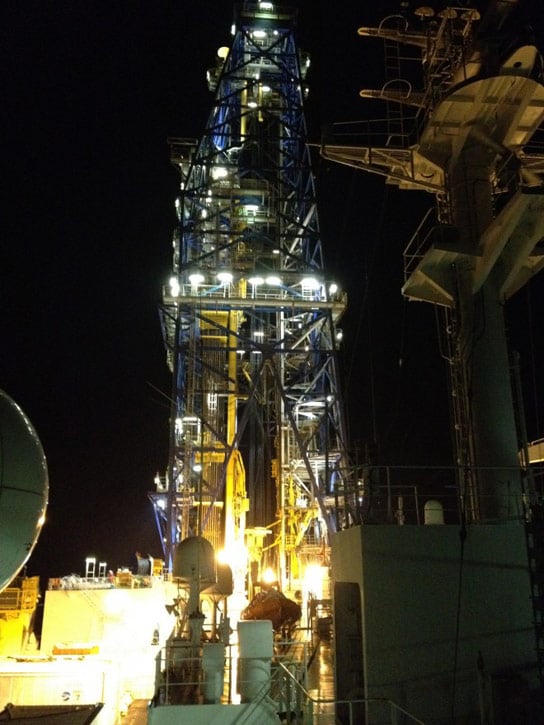
    A recent expedition resulted in a new world record for deepest scientific marine drilling, 2,440 meters (8,005 feet) beneath the seafloor. The Research Vessel Chikyu off the coast of Japan’s Shimokita Peninsula housed the members of the microbiology team that took part in the groundbreaking leg of the Integrated Ocean Drilling Program.

    Once the cores started coming up, the samples were processed and some evidence of life was found. They found some clues in the relative ratio of C1 to C2 compounds. This is a good proxy for life because if you’re just thermally producing methane from breaking down a complex organic substance by heat, you would get multiple sizes of organic compounds. But if biology is breaking it down, microbes will produce more C1 compounds because it will break everything down to that lowest level – methane, carbon dioxide, and those sorts of products.

    There is an indication of a high C1:C2 ratio in these deep samples and there is also an indication of microbes attached to sediment particles that are believed to have come from the deep subsurface.

    With drilling operations, there is always a risk of contamination and one of the main parts of the microbiology on board was to look at contamination. The research vessel relied on an automated counting microscope to count cells. However, the cells were so small and few that it was hard to get the computer to do it. The procedure now has to be redone in land-based labs, where they have specific clean rooms.
    chikyu-research-vessel-drill
    The Japanese Research Vessel Chikyu’s drill rig illuminated at night. Credit: Elizabeth Trembath-Reichert

    Never miss a breakthrough: Join the SciTechDaily newsletter.
    Follow us on Google and Google News.

    Deep Sea Microbial Life Microbiology Oceanography Sediment
    Share. Facebook Twitter Pinterest LinkedIn Email Reddit

    Related Articles

    Ingenious Ocean Microbes Team Up Brilliantly To Gather Food When It’s Scarce

    Methane-Eating Microbes in Ocean Play Important Role in Moderating Earth’s Temperature

    Microorganisms Discovered on the Rio Grande Rise Are a Basis for Life and a Possible Origin of Metals

    A Surprising Cycle: Researchers Discover an Immense Hydrocarbon Cycle in the World’s Ocean

    Microbiologists Discover Bacteria That Feed on Metal, Ending a Century-Long Search

    Viral Dark Matter: Giant Viruses Have Metabolic Genes – Even Though Viruses Don’t Have a Metabolism

    Forgotten Pathway Adds a New Dimension to the Global Carbon Cycle

    Carnivorous Deep Sea Sponge Discovered Off Coast of California

    Oxygen Depletion and Acidification Accelerate Coral Death

    Leave A Reply Cancel Reply

    • Facebook
    • Twitter
    • Pinterest
    • YouTube

    Don't Miss a Discovery

    Subscribe for the Latest in Science & Tech!

    Trending News

    Scientists Call for a Complete Rethink of Alzheimer’s Treatment

    Scientists Identify Molecular Switch That Lets Exercise Reverse Muscle Aging

    Why Your Most Vivid Dreams Might Be the Key to Deep, Restful Sleep

    A Bright Star Hid a Massive Secret for 50 Years: Mystery of Gamma Cassiopeiae Finally Solved

    Scientists Identify Protein That Slows Key Effects of Aging

    Revolutionary Submarine Mysteriously Disappears Without a Trace – Scientists Are Now Preparing for a Bold Return

    Why Drinking More Water Isn’t Enough To Stop Kidney Stones

    New Study Reveals Surprising Effect of Drinking Coffee at Night

    Follow SciTechDaily
    • Facebook
    • Twitter
    • YouTube
    • Pinterest
    • Newsletter
    • RSS
    SciTech News
    • Biology News
    • Chemistry News
    • Earth News
    • Health News
    • Physics News
    • Science News
    • Space News
    • Technology News
    Recent Posts
    • Scientists Uncover Unexpected Behavior Deep Inside Earth’s Mantle
    • 3.5-Billion-Year-Old Rocks Rewrite the Story of Plate Tectonics
    • “These Wrinkles Shouldn’t Exist” – A Geologist’s Hike Uncovers a 180-Million-Year-Old Mystery
    • Why Aging Lungs Turn Mild Infections Into Life-Threatening Illness
    • Lost Bronze Age Mines Unearthed in Spain Transform Bronze Age History
    Copyright © 1998 - 2026 SciTechDaily. All Rights Reserved.
    • Science News
    • About
    • Contact
    • Editorial Board
    • Privacy Policy
    • Terms of Use

    Type above and press Enter to search. Press Esc to cancel.