
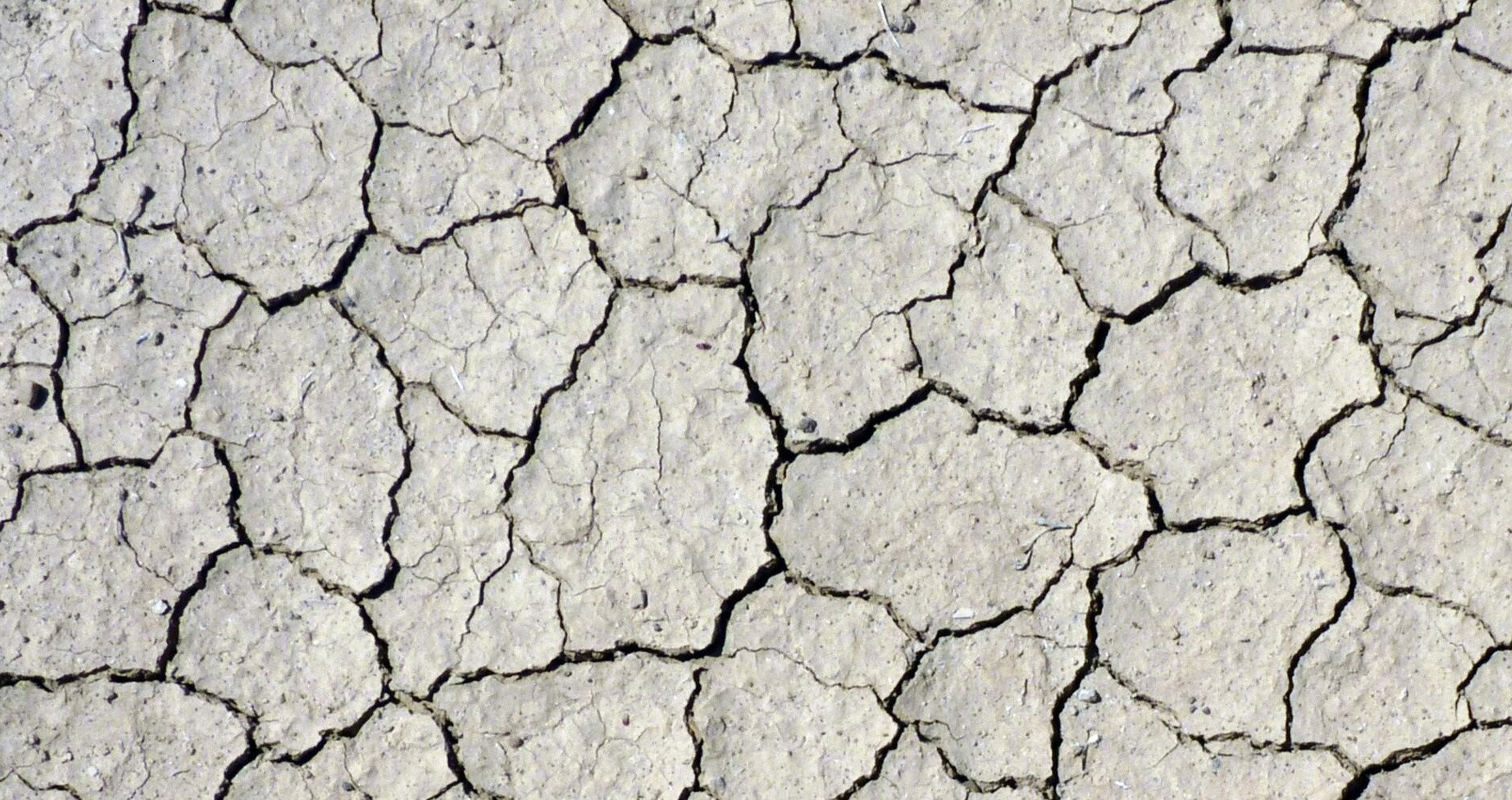
New research has uncovered the fracture mechanisms in soft materials, leading to potential advancements in creating durable, defect-free materials with wide-reaching benefits across various industries and positive environmental impacts.
A groundbreaking theory has unveiled the physical mechanisms behind fractures in soft materials. This revolutionary discovery promises the development of defect-free materials with enhanced resistance and durability, contributing to environmental sustainability. The research was recently published in Physical Review Letters.
“We have revealed that fracture propagates from the free surface of the material, starting from an elastic instability that breaks the symmetry of the object. Then, the rupture drastically extends with an intricate network of cracks spreading like a turbulence phenomenon similar to what we observe in fluids, like during vortex formation,” explains Pasquale Ciarletta from the MOX Laboratory, Department of Mathematics at Politecnico di Milano.
Implications Across Industries
This discovery stimulates significant applications in various technological sectors. For instance, in the production of micro and nano devices, where materials need to be extremely resistant and defect-free. Understanding how cracks form can lead to designing more robust and durable materials. In the consumer electronics field, this could lead to the creation of devices such as smartphones, tablets, and laptops with screens that better withstand shocks and drops, thus reducing the frequency of repairs and replacements. In the medical sector, implantable devices like pacemakers and prostheses could benefit from safer and longer-lasting materials, critically improving patient health.
In the aerospace industry, understanding and preventing material fractures can lead to more robust and reliable structures, reducing the risks associated with space and air travel. “The results of this research not only pave the way for future studies aimed at developing materials with unprecedented mechanical properties but also have a positive environmental impact by reducing the need for frequent product replacements and decreasing waste. This can contribute to more sustainable production and more efficient use of natural resources,” concludes Davide Riccobelli from the Department of Mathematics at Politecnico di Milano.
Reference: “Elastic Instability behind Brittle Fracture” by D. Riccobelli, P. Ciarletta, G. Vitale, C. Maurini and L. Truskinovsky, 13 June 2024, Physical Review Letters.
DOI: 10.1103/PhysRevLett.132.248202
The study was conducted by an international team of researchers, led at Politecnico di Milano by Davide Riccobelli and Pasquale Ciarletta, in collaboration with Sorbonne Université, École Polytechnique, and ESPCI in Paris, demonstrating that international collaborations continue to play a crucial role in pushing the boundaries of materials science.
Never miss a breakthrough: Join the SciTechDaily newsletter.
Follow us on Google and Google News.
1 Comment
The research was recently published in Physical Review Letters.
VERY GOOD!
Please witness the exemplary collaboration between theoretical physicists and experimentalists (https://scitechdaily.com/microscope-spacecrafts-most-precise-test-of-key-component-of-the-theory-of-general-relativity/#comment-854286). Contemporary physics has always lived in a self righteous children’s story world. Whose values have been overturned by such a comical and ridiculous reality?
Misguided by the pseudo-scientific theory of Physical Review Letters (PRL), many researchers do not consider the similarities and differences between geometric shapes and physical reality in physics research, but indulge in imagination. Although scientific research can be imagined, it cannot be done recklessly.
Is Physical Review Letters (PRL) trustworthy?