

A star’s close flyby billions of years ago possibly influenced the solar system’s architecture, leading to unusual orbits of trans-Neptunian objects and explaining the origin of Jupiter and Saturn’s irregular moons.
New evidence suggests that billions of years ago, a star may have passed very close to our solar system. As a result, thousands of smaller celestial bodies in the outer solar system outside Neptune’s orbit were deflected into highly inclined trajectories around the sun. It is possible that some of them were captured by the planets Jupiter and Saturn as moons.
When we think of our solar system, we usually assume that it ends at the outermost known planet, Neptune. “However, several thousand celestial bodies are known to move beyond the orbit of Neptune,” explains Susanne Pfalzner, astrophysicist at Forschungszentrum Jülich.
It is even suspected that there are tens of thousands of objects with a diameter of more than 100 kilometers. “Surprisingly, many of these so-called trans-Neptunian objects move on eccentric orbits that are inclined relative to the common orbital plane of the planets in the solar system.”
Scientists at the Simulation and Data Lab Astronomy and Astrophysics at Forschungszentrum Jülich have carried out more than 3,000 computer simulations to find the cause of the unusual orbits of the transneptum objects. The young sun is surrounded by a disc of the material from which the planets eventually formed. There are several indications that the close flyby of another star could have disturbed this disc. The simulation shows how such a close flyby would have strongly influenced the orbits of the outer disc material. Many objects would have been thrown far out into space on eccentric orbits. While the outer solar system would have been completely restructured, the inner solar system, including our Earth, would have remained undisturbed. Credit: Forschungszentrum Jülich
Unraveling Trans-Neptunian Mysteries
Together with her student Amith Govind and Simon Portegies Zwart from Leiden University, Susanne Pfalzner has used more than 3,000 computer simulations to investigate a possible cause of the unusual orbits: could another star have caused the strange orbits of trans-Neptunian objects?
The three astrophysicists found that a distinctive, close flyby of another star can explain the inclined and eccentric orbits of the known transneptunian celestial bodies. “Even the orbits of very distant objects can be deduced, such as that of the dwarf planet Sedna in the outermost reaches of the solar system, which was discovered in 2003. And also objects that move in orbits almost perpendicular to the planetary orbits,” says Susanne Pfalzner.
Such a flyby can even explain the orbits of 2008 KV42 and 2011 KT19 – the two celestial bodies that move in the opposite direction to the planets.
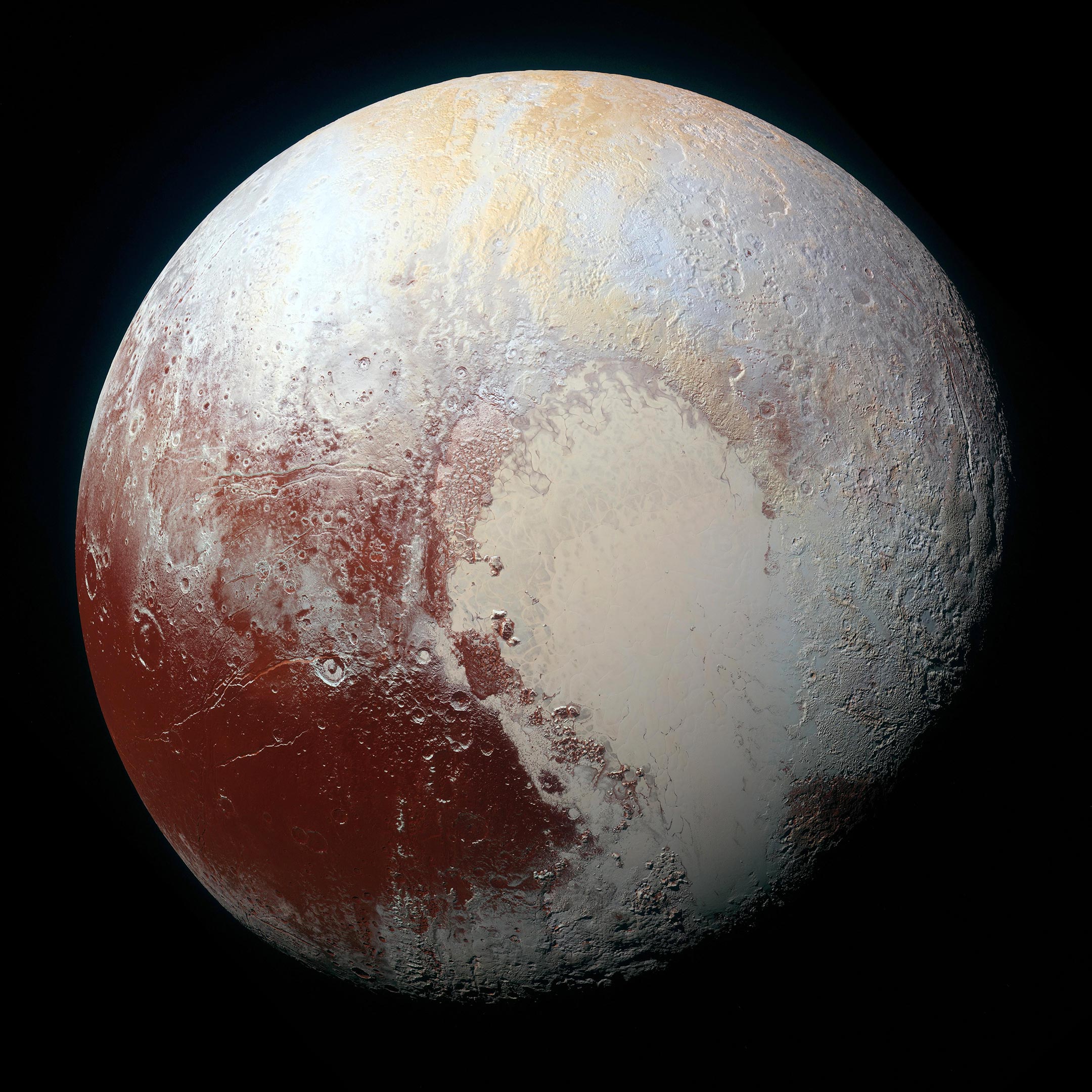
Celestial Mechanics and Moons: Unearthing the Impact
“The best match for today’s outer solar system that we found with our simulations is a star that was slightly lighter than our Sun – about 0.8 solar masses,” explains Pfalzner’s colleague Amith Govind. “This star flew past our sun at a distance of around 16.5 billion kilometers. That’s about 110 times the distance between Earth and the sun, a little less than four times the distance of the outermost planet Neptune.”
However, the scientists’ most surprising realization was that the flyby of an alien star billions of years ago could also provide a natural explanation for phenomena closer to home. Susanne Pfalzner and her colleagues found that in their simulations, some trans-Neptunian objects were hurled into our solar system – into the region of the outer giant planets Jupiter, Saturn, Uranus, and Neptune.

The Moons’ Tale: From Chaos to Capture
“Some of these objects could have been captured by the giant planets as moons,” says Simon Portegies Zwart from Leiden University. “This would explain why the outer planets of our solar system have two different types of moons.”
In contrast to the regular moons, which orbit close to the planet on circular orbits, the irregular moons orbit the planet at a greater distance on inclined, elongated orbits. Until now, there was no explanation for this phenomenon.
“The beauty of this model lies in its simplicity,” says Pfalzner. “It answers several open questions about our solar system with just a single cause.”
References:
“Trajectory of the stellar flyby that shaped the outer Solar System” by Susanne Pfalzner, Amith Govind and Simon Portegies Zwart, 4 September 2024, Nature Astronomy.
DOI: 10.1038/s41550-024-02349-x
“Irregular Moons Possibly Injected from the Outer Solar System by a Stellar Flyby” by Susanne Pfalzner, Amith Govind and Frank W. Wagner, 4 September 2024, The Astrophysical Journal Letters.
DOI: 10.3847/2041-8213/ad63a6
Never miss a breakthrough: Join the SciTechDaily newsletter.
Follow us on Google and Google News.
3 Comments
How many stars have made a close flyby? Scholz’s star is known to have done that.
Olaf Scholz has a star???
They are going to destroy our beautiful 🌎planet by using nuclear☢️ weapons,the big powers,in the very near next world war😭😭😭😭😭😭😭😭😭😭😭😭😭😭😭😭😭😭😭😭😭😭PLEASE DONT!!!