
Close Menu
    Facebook X (Twitter) Instagram
    SciTechDaily
    • Biology
    • Chemistry
    • Earth
    • Health
    • Physics
    • Science
    • Space
    • Technology
    Facebook X (Twitter) Pinterest YouTube RSS
    SciTechDaily
    Home»Biology»Dinosaur-Hunting Croc Cousin With Monster Jaws Unearthed in Patagonia
    Biology

    Dinosaur-Hunting Croc Cousin With Monster Jaws Unearthed in Patagonia

    By PLOSSeptember 5, 2025No Comments3 Mins Read
    Facebook Twitter Pinterest Telegram LinkedIn WhatsApp Email Reddit
    Share
    Facebook Twitter LinkedIn Pinterest Telegram Email Reddit
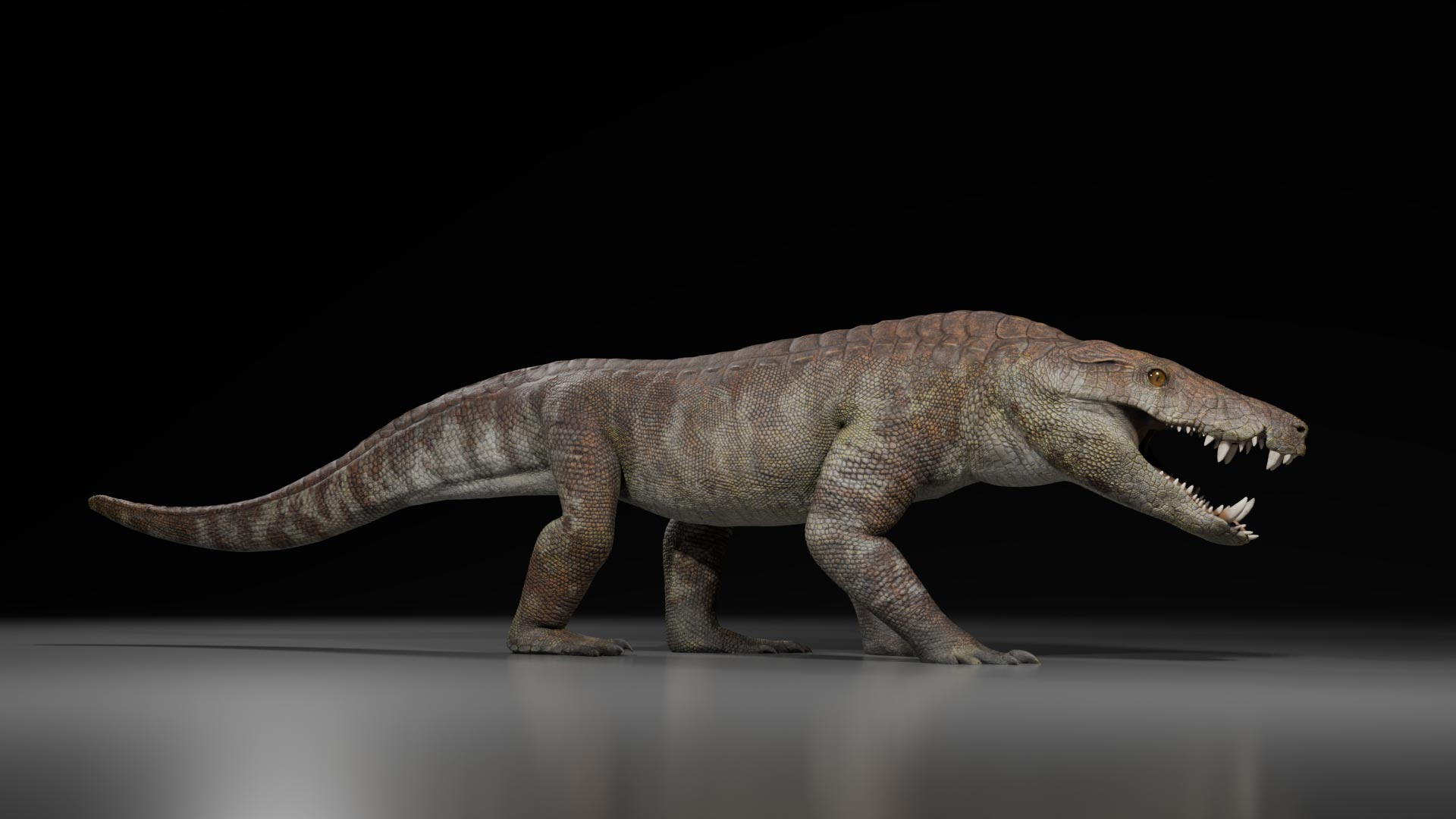
    Kostensuchus atrox Life Restoration
    Kostensuchus atrox – life restauration, 3 meters long. Credit: Gabriel Diaz Yanten, CC-BY 4.0

    Seventy million years ago, in the wetlands of prehistoric Patagonia, a terrifying predator prowled alongside dinosaurs.

    Scientists have uncovered a remarkably well-preserved fossil of Kostensuchus atrox, a massive crocodile-relative stretching 11 feet long with bone-crushing jaws. This apex hunter likely fed on medium-sized dinosaurs, making it one of the top predators of its time.

    Discovery of a Giant Predator

    A team of researchers has identified a new species of giant predator related to crocodiles, based on an exceptionally preserved fossil discovered in Argentina. The study, led by Fernando Novas of the Museo Argentino de Ciencias Naturales “Bernardino Rivadavia” in Argentina, was published August 27, 2025, in the open-access journal PLOS One.

    Around 70 million years ago, during the Maastrichtian stage at the very end of the Cretaceous period, southern Patagonia was a warm region with seasonal rains. Its river-fed floodplains supported a rich ecosystem that included dinosaurs, turtles, frogs, and early mammals.
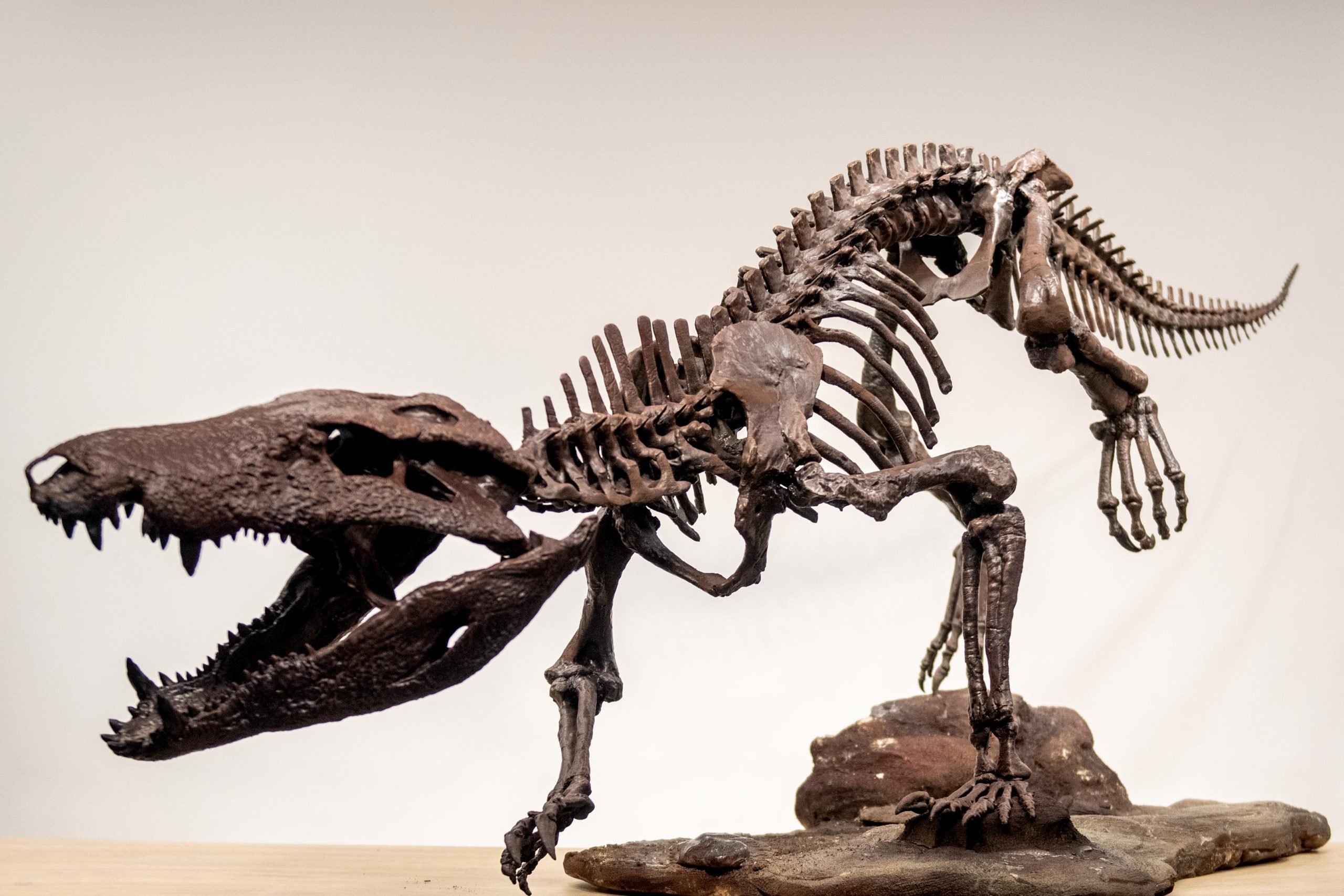
    Kostensuchus atrox Skeleton
    Kostensuchus atrox – Mounted skeleton (reconstructed 3D print and painted). Credit: José Brusco, CC-BY 4.0

    Fossil Details Reveal a Fierce Hunter

    The newly recovered specimen from the Chorrillo Formation is unusually complete, preserving a skull, jaws with well-defined features, and numerous other bones. This powerful crocodile-like predator is estimated to have measured about 3.5 meters (11.5 feet) in length and weighed close to 250 kilograms (551 pounds). Its broad jaws and large teeth suggest it hunted sizable prey, possibly including medium-sized dinosaurs.

    The animal has been named Kostensuchus atrox, a reference to the fierce Patagonian wind called the Kosten in the Tehuelche language, the crocodile-headed Egyptian deity Souchos, and the Latin word atrox, meaning “fierce” or “harsh.”
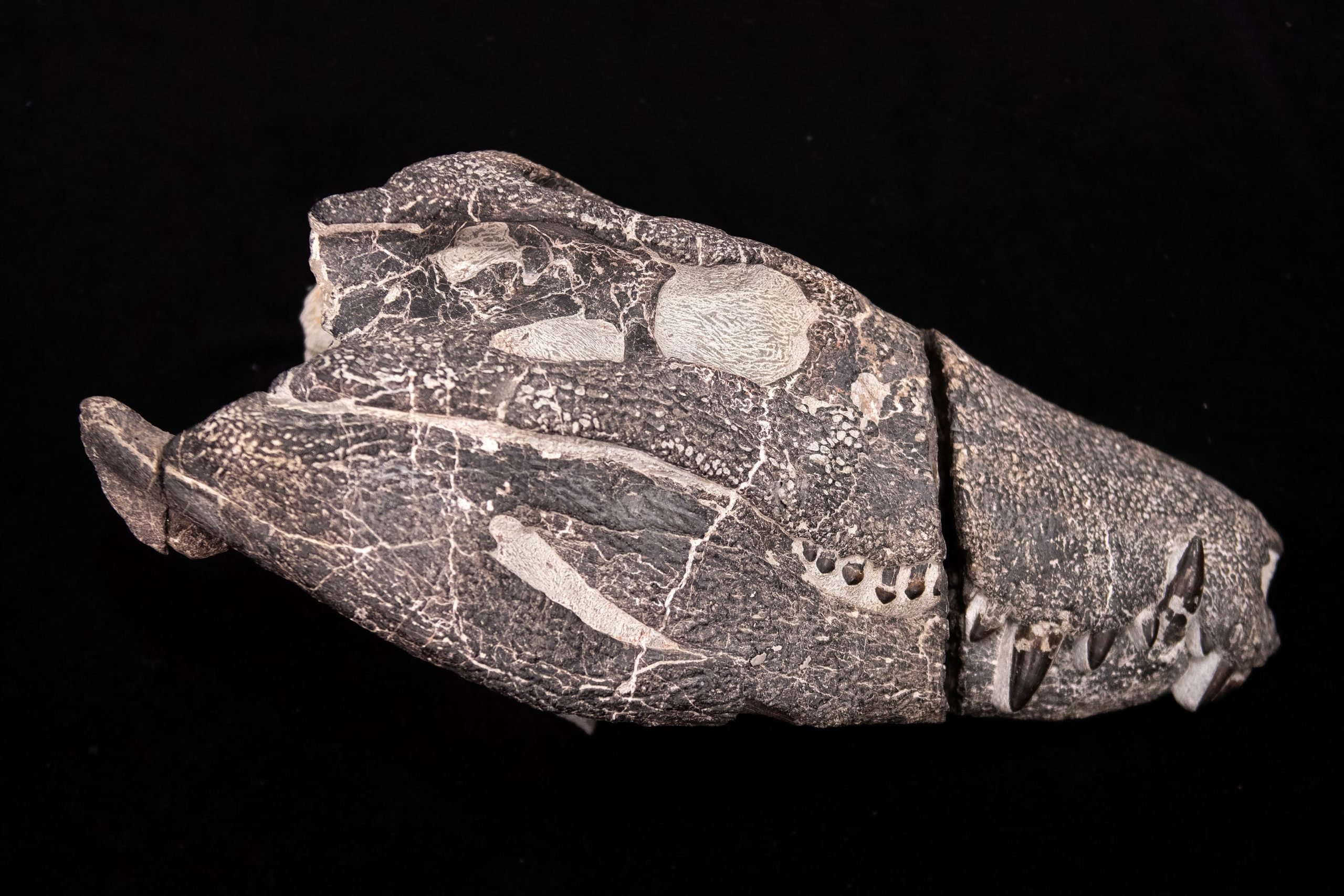
    Kostensuchus atrox Skull
    Kostensuchus atrox – skull already prepared, freed from the rock. Credit: José Brusco, CC-BY 4.0

    Apex Predator of the Cretaceous Floodplains

    K. atrox itself is not a dinosaur, but rather a peirosaurid crocodyliform, an extinct group of reptiles related to modern crocodiles and alligators. This species is the second-largest predator known to scientists from the Maastrichtian Chorrillo Formation, and the researchers believe it was likely one of the top predators in the region. K. atrox is also the first crocodyliform fossil found in the Chorrillo Formation, and one of the most intact peirosaurid crocodyliforms ever found, giving scientists unique new insight into these prehistoric animals and their ecosystem.

    Reference: “A new large hypercarnivorous crocodyliform from the Maastrichtian of Southern Patagonia, Argentina” by Fernando E. Novas, Diego Pol, Federico L. Agnolín, Ismar de Souza Carvalho, Makoto Manabe, Takanobu Tsuihiji, Sebastián Rozadilla, Gabriel L. Lio and Marcelo P. Isasi, 27 August 2025, PLOS ONE.
    DOI: 10.1371/journal.pone.0328561

    Funding: DP 9282-R-22 National Geographic Society https://www.nationalgeographic.org/society/ The funders had no role in study design, data collection and analysis, decision to publish, or preparation of the manuscript. ISC Faperj E-26/200.998/2024 Fundação Carlos Chagas Filho de Amparo à Pesquisa do Estado do Rio de Janeiro https://www.faperj.br/ The funders had no role in study design, data collection and analysis, decision to publish, or preparation of the manuscript. ISC CNPq 303596/2016-3 Conselho Nacional de Desenvolvimento Científico e Tecnológico https://www.gov.br/cnpq/pt-br The funders had no role in study design, data collection and analysis, decision to publish, or preparation of the manuscript.

    Never miss a breakthrough: Join the SciTechDaily newsletter.
    Follow us on Google and Google News.

    Crocodiles Dinosaurs Paleontology PLOS Reptiles
    Share. Facebook Twitter Pinterest LinkedIn Email Reddit

    Related Articles

    Earliest Known Skin Fossil Shocks Paleontologists – “Unlike Anything We Would Have Expected”

    Surprising Diversity of Cretaceous Reptiles at Argentina Fossil Site – Revealed by Discovery of Ancient Teeth

    Scientists Discover New Species of Horned Dinosaur – Mercuriceratops Gemini

    Paleontologists Announce the Discovery of Bird-Like Dinosaur Anzu Wyliei

    Discovery of ‘Bird-Dinosaur’ Eosinopteryx Challenges Bird Evolution Theory

    Nyasasaurus, Oldest Dinosaur Believed to Be 243 Million Years Old

    Molecular Analysis of Dinosaur Osteocytes Indicates Presence of Endogenous Molecules

    Pegomastax Africanus, A Miniature Dinosaur That Thrived in Southern Africa

    Evidence Shows that Birds are Essentially Living Dinosaurs

    Leave A Reply Cancel Reply

    • Facebook
    • Twitter
    • Pinterest
    • YouTube

    Don't Miss a Discovery

    Subscribe for the Latest in Science & Tech!

    Trending News

    New Pill Lowers Stubborn Blood Pressure and Protects the Kidneys

    Humans May Have Hidden Regenerative Powers, New Study Suggests

    Scientists Just Solved the Mystery of Why Crabs Walk Sideways

    Doctors Are Surprised by What This Vaccine Is Doing to the Heart

    This Popular Supplement May Boost Your Brain, Not Just Your Muscles

    Scientists Say This Simple Supplement May Actually Reverse Heart Disease

    Warming Oceans Could Trigger a Dangerous Methane Surge

    This Simple Movement Could Be Secretly Cleaning Your Brain

    Follow SciTechDaily
    • Facebook
    • Twitter
    • YouTube
    • Pinterest
    • Newsletter
    • RSS
    SciTech News
    • Biology News
    • Chemistry News
    • Earth News
    • Health News
    • Physics News
    • Science News
    • Space News
    • Technology News
    Recent Posts
    • Hidden Heart Risk Found in 1 in 5 People, Study Warns
    • Scientists Say This Daily Walking Habit May Be the Secret to Keeping Weight Off After Dieting
    • New Therapy Rewires the Brain To Restore Joy in Depression Patients
    • Researchers Discover Efficient New Way To Split Hydrogen From Water for Energy
    • This Korean Skincare Ingredient Could Help Fight Deadly Superbugs
    Copyright © 1998 - 2026 SciTechDaily. All Rights Reserved.
    • Science News
    • About
    • Contact
    • Editorial Board
    • Privacy Policy
    • Terms of Use

    Type above and press Enter to search. Press Esc to cancel.