
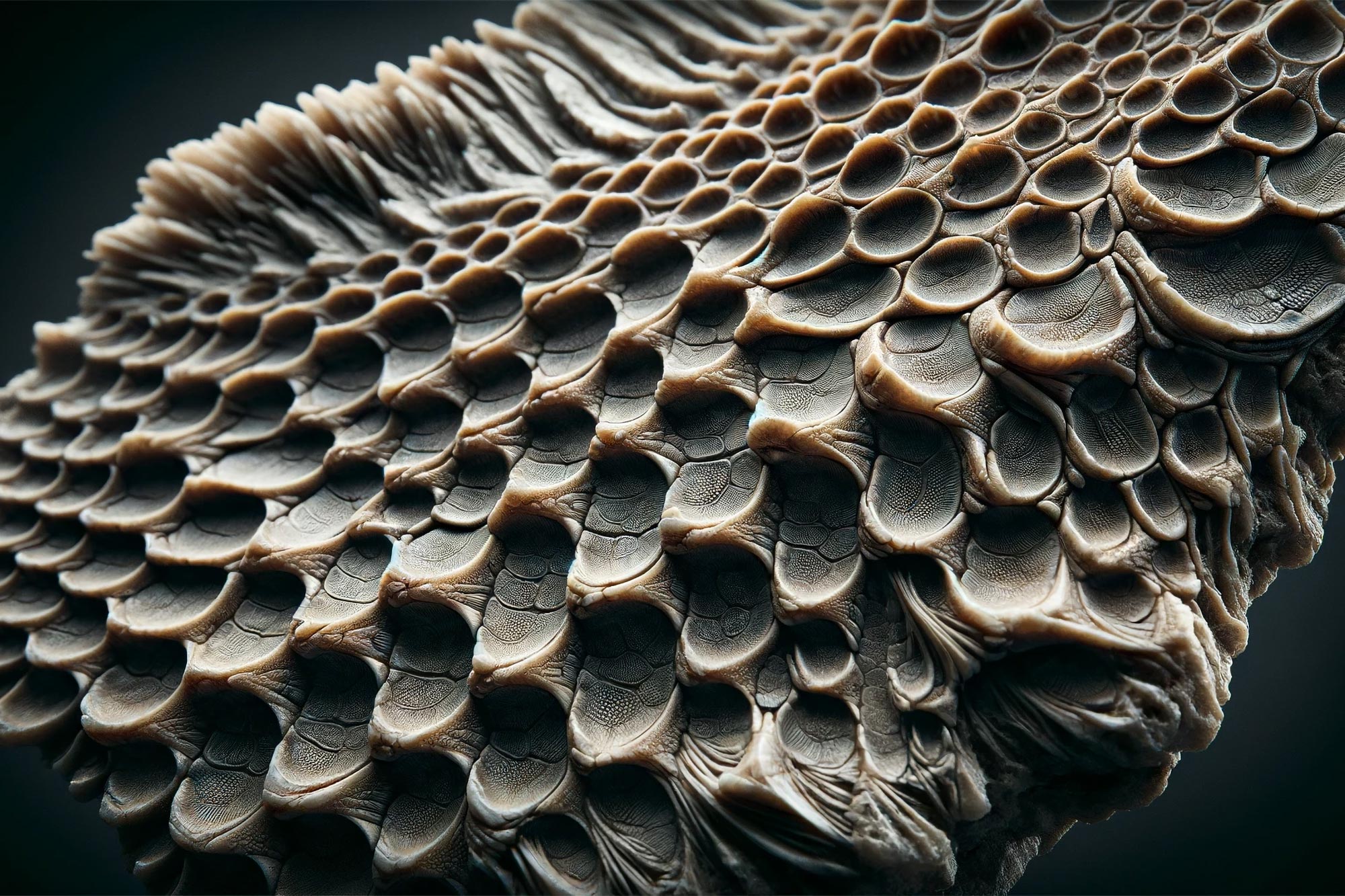
A groundbreaking discovery reveals the oldest fossilized reptile skin, showing significant evolutionary features and offering a unique perspective on early terrestrial animal life. Preserved in an Oklahoma cave system, this finding sheds light on the development of skin adaptations in vertebrates.
Researchers have identified a 3D fragment of fossilized skin that is at least 21 million years older than previously described skin fossils. The skin, which belonged to an early species of Paleozoic reptile, has a pebbled surface and most closely resembles crocodile skin. It’s the oldest example of preserved epidermis, the outermost layer of skin in terrestrial reptiles, birds, and mammals, which was an important evolutionary adaptation in the transition to life on land. The fossil was described recently in the journal Current Biology along with several other specimens that were collected from the Richards Spur limestone cave system in Oklahoma.
A Glimpse Into Ancient Life
“Every now and then we get an exceptional opportunity to glimpse back into deep time,” says first author Ethan Mooney, a paleontology graduate student at the University of Toronto who worked on the project as an undergraduate with paleontologist Robert Reisz at the University of Toronto. “These types of discoveries can really enrich our understanding and perception of these pioneering animals.”
Skin and other soft tissues are rarely fossilized, but the researchers think that skin preservation was possible in this case because of the cave system’s unique features, which included fine clay sediments that slowed decomposition, oil seepage, and a cave environment that was likely an oxygenless environment.
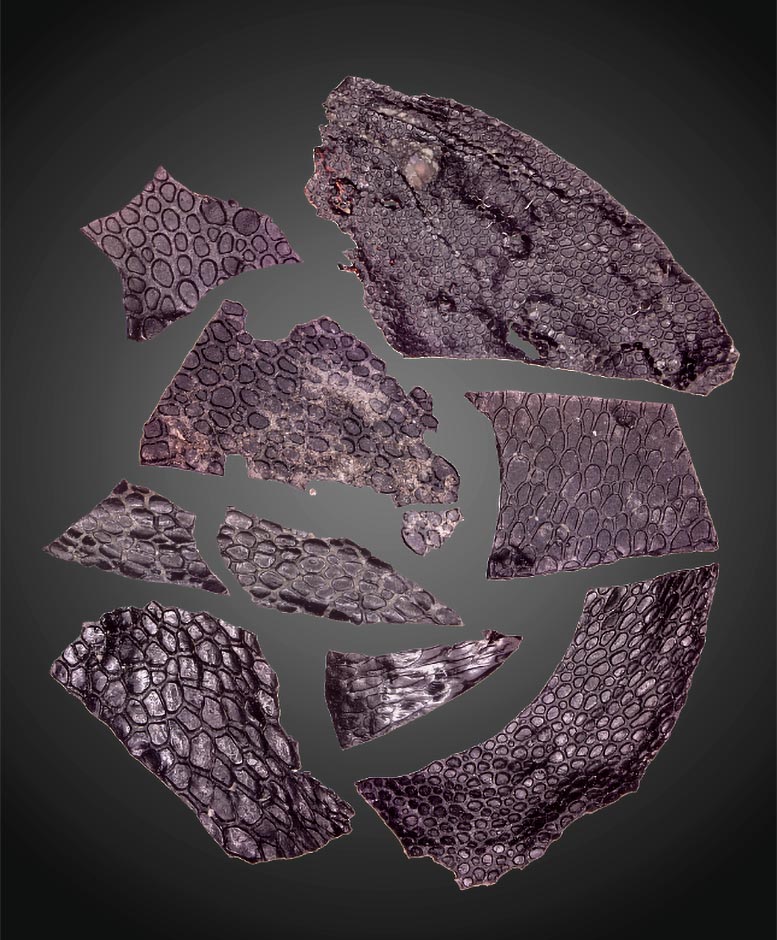
“Animals would have fallen into this cave system during the early Permian and been buried in very fine clay sediments that delayed the decay process,” says Mooney. “But the kicker is that this cave system was also an active oil seepage site during the Permian, and interactions between hydrocarbons in petroleum and tar are likely what allowed this skin to be preserved.”
Uncovering the Details
The skin fossil is tiny—smaller than a fingernail. Microscopic examination undertaken by coauthor Tea Maho of the University of Toronto Mississauga revealed epidermal tissues, a hallmark of the skin of amniotes, the terrestrial vertebrate group that includes reptiles, birds, and mammals and that evolved from amphibian ancestors during the Carboniferous Period.
“We were totally shocked by what we saw because it’s completely unlike anything we would have expected,” says Mooney. “Finding such an old skin fossil is an exceptional opportunity to peer into the past and see what the skin of some of these earliest animals may have looked like.”
Reptilian Features and Evolutionary Significance
The skin shares features with ancient and extant reptiles, including a pebbled surface similar to crocodile skin, and hinged regions between epidermal scales that resemble skin structures in snakes and worm lizards. However, because the skin fossil is not associated with a skeleton or any other remains, it is not possible to identify what species of animal or body region the skin belonged to.
The fact that this ancient skin resembles the skin of reptiles alive today shows how important these structures are for survival in terrestrial environments. “The epidermis was a critical feature for vertebrate survival on land,” says Mooney. “It’s a crucial barrier between the internal body processes and the harsh outer environment.”
Potential Ancestral Link and Preservation
The researchers say that this skin may represent the ancestral skin structure for terrestrial vertebrates in early amniotes that allowed for the eventual evolution of bird feathers and mammalian hair follicles.
The skin fossil and other specimens were collected by lifelong paleontology enthusiasts Bill and Julie May at Richards Spur, a limestone cave system in Oklahoma that is an active quarry. The unique conditions at Richards Spur preserved many of the oldest examples of early terrestrial animals. The specimens are housed at the Royal Ontario Museum.
Reference: “Paleozoic cave system preserves oldest-known evidence of amniote skin” by Ethan D. Mooney, Tea Maho, R. Paul Philp, Joseph J. Bevitt and Robert R. Reisz, 11 January 2024, Current Biology.
DOI: 10.1016/j.cub.2023.12.008
This research was supported by the Natural Sciences and Engineering Research Council and Jilin University.
Never miss a breakthrough: Join the SciTechDaily newsletter.
Follow us on Google and Google News.