

Close Menu
    Facebook X (Twitter) Instagram
    SciTechDaily
    • Biology
    • Chemistry
    • Earth
    • Health
    • Physics
    • Science
    • Space
    • Technology
    Facebook X (Twitter) Pinterest YouTube RSS
    SciTechDaily
    Home»Health»Dirty Air Linked to Higher Alzheimer’s Risk in Massive US Study
    Health

    Dirty Air Linked to Higher Alzheimer’s Risk in Massive US Study

    By PLOSFebruary 17, 20262 Comments3 Mins Read
    Facebook Twitter Pinterest Telegram LinkedIn WhatsApp Email Reddit
    Share
    Facebook Twitter LinkedIn Pinterest Telegram Email Reddit
    Mother Baby Urban Factory Pollution
    Long-term exposure to air pollution is linked to a higher risk of Alzheimer’s disease, according to a massive study of U.S. seniors. Credit: Shutterstock

    Breathing polluted air may do more than irritate your lungs — it could also raise your risk of Alzheimer’s disease.

    Older adults who are exposed to higher levels of air pollution appear more likely to develop Alzheimer’s disease, according to new research led by Yanling Deng of Emory University. The study was published today (February 17th) in the open-access journal PLOS Medicine.

    Alzheimer’s disease is the leading cause of dementia, affecting an estimated 57 million people worldwide. Air pollution has already been identified as a risk factor not only for Alzheimer’s, but also for several chronic conditions, including hypertension, stroke, and depression. These same health problems are also associated with dementia. Until now, however, scientists were unsure whether polluted air increases dementia risk by first contributing to these chronic illnesses, or whether those illnesses simply make the brain more vulnerable to pollution’s effects.

    Massive Medicare Study Examines 27.8 Million Older Adults

    To investigate, researchers analyzed data from more than 27.8 million U.S. Medicare beneficiaries age 65 and older between 2000 and 2018. They compared long term exposure to air pollution with new diagnoses of Alzheimer’s disease, while also examining whether conditions such as stroke, hypertension, and depression influenced the relationship.

    The results showed a clear pattern. Higher exposure to air pollution was linked to a greater risk of developing Alzheimer’s disease. The association was somewhat stronger among individuals who had previously experienced a stroke. In contrast, hypertension and depression did not appear to significantly intensify the pollution-related risk.
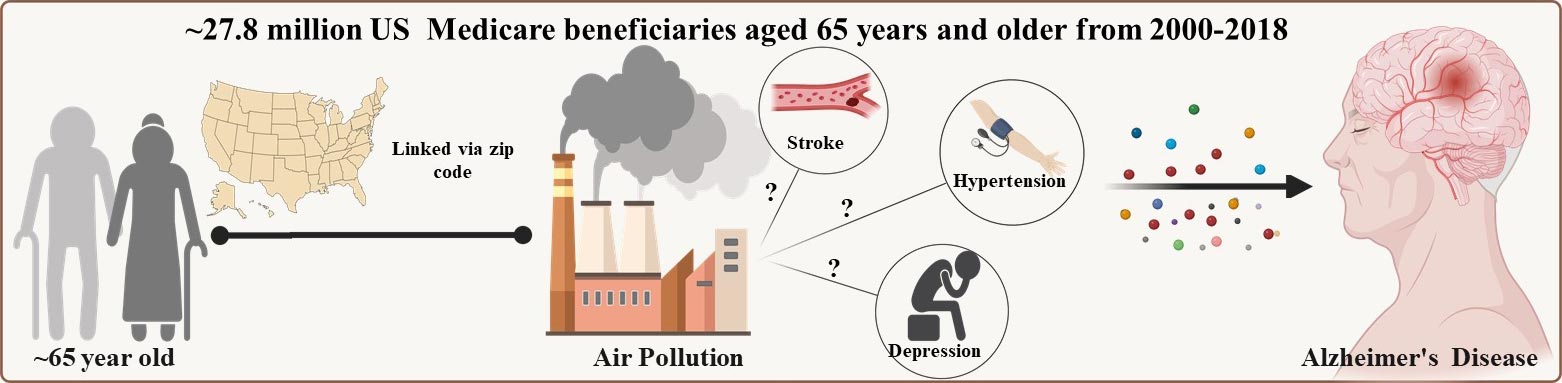
    Air Pollution May Directly Contribute to Alzheimer’s Disease
    Visual summary of the main findings of the study. Credit: Yanling Deng (CC-BY 4.0)

    Evidence Points to Direct Effects on the Brain

    Overall, the findings indicate that air pollution may contribute to Alzheimer’s primarily through direct biological effects on the brain rather than indirectly through other chronic health conditions. At the same time, people with a history of stroke may be particularly sensitive to the damaging neurological effects of polluted air.

    The results suggest that improving air quality could play an important role in lowering dementia risk and protecting brain health in older adults.

    The authors add, “In this large national study of older adults, we found that long-term exposure to fine particulate air pollution was associated with a higher risk of Alzheimer’s disease, largely through direct effects on the brain rather than through common chronic conditions such as hypertension, stroke, or depression.”

    “Our findings suggest that individuals with a history of stroke may be particularly vulnerable to the harmful effects of air pollution on brain health, highlighting an important intersection between environmental and vascular risk factors.”

    Reference: “The role of comorbidities in the associations between air pollution and Alzheimer’s disease: A national cohort study in the American Medicare population” by Yanling Deng, Yang Liu, Hua Hao, Ke Xu, Qiao Zhu, Haomin Li, Tszshan Ma and Kyle Steenland, 17 February 2026, PLOS Medicine.
    DOI: 10.1371/journal.pmed.1004912

    Funding: This work was supported by the National Institutes of Health (R01 AG074357 to KS and R01 ES034175 to YL). The funders had no role in study design, data collection and analysis, decision to publish, or preparation of the manuscript.

    Never miss a breakthrough: Join the SciTechDaily newsletter.
    Follow us on Google and Google News.

    Alzheimer's Disease Dementia Neuroscience PLOS Pollution
    Share. Facebook Twitter Pinterest LinkedIn Email Reddit

    Related Articles

    Higher Risk of Dementia Associated With Fine Particulate Air Pollution

    Toxic Gas in Rat Brains Reveals Potential for New Dementia Treatments

    Identifying “The Terrorist Inside My Husband’s Brain” – Living Brain Imaging Can Clearly Differentiate Between Types of Dementia

    Growing List of Risk Factors for Alzheimer’s Disease: Forest Fires, Cars, and Power Plants

    Significant Link Found Between Air Pollution and Neurological Disorders in U.S.

    Omega-3 From Eating Fish May Protect Our Brains From Toxic Effects of Air Pollution

    Pulse Pressure: A Game Changer in the Fight Against Dementia

    The Combination of Foods You Eat Together May Raise Dementia Risk

    An Aspirin a Day Does Not Keep Dementia at Bay – No Difference Than Placebo

    2 Comments

    1. Charles G. Shaver on February 17, 2026 11:47 am

      As usual, they referenced inaccurate and incomplete outdated data and failed to factor-in sub-acute (nearly subclinical) non-IgE-mediated food allergies and toxic US FDA approved food additives (e.g., soy, TBHQ and MSG, minimally). Fore more details: https://odysee.com/@charlesgshaver:d?view=about

      Reply
    2. Vica Hunter on February 23, 2026 3:10 pm

      For three years, I struggled with chronic fatigue syndrome while my dad was battling Parkinson’s disease. During that difficult time, we explored various options, including an herbal program we found online from Earthcure herbal clinic online. After starting the program, we felt improvements in our overall well-being and continued to monitor our health with Dr Madida Sam. The experience taught us the value of hope, persistence, and carefully considering different approaches alongside Earthcure herbal Clinic guidance.

      Reply
    Leave A Reply Cancel Reply

    • Facebook
    • Twitter
    • Pinterest
    • YouTube

    Don't Miss a Discovery

    Subscribe for the Latest in Science & Tech!

    Trending News

    Popular Sugar-Free Sweetener Linked to Liver Disease, Study Warns

    What Is Hantavirus? The Deadly Disease Raising Alarm Worldwide

    Scientists Just Discovered How the Universe Builds Monster Black Holes

    Scientists Unveil New Treatment Strategy That Could Outsmart Cancer

    A Simple Vitamin May Hold the Key to Treating Rare Genetic Diseases

    Scientists Think the Real Fountain of Youth May Be Hiding in Your Gut

    Ravens Don’t Follow Wolves, They Predict Them

    This Common Knee Surgery May Be Doing More Harm Than Good

    Follow SciTechDaily
    • Facebook
    • Twitter
    • YouTube
    • Pinterest
    • Newsletter
    • RSS
    SciTech News
    • Biology News
    • Chemistry News
    • Earth News
    • Health News
    • Physics News
    • Science News
    • Space News
    • Technology News
    Recent Posts
    • James Webb Telescope Reveals the Universe’s Hidden Cosmic Web in Stunning Detail
    • Scientists Build a Living AI Device Using Real Brain Cells
    • Why Are So Many New Fathers Dying? Scientists Say the U.S. Has a Dangerous Blind Spot
    • Scientists Identify Simple Supplement That Greatly Reduces Alzheimer’s Damage
    • You May Have a Dangerous Type of Cholesterol Even if Your Tests Look Normal
    Copyright © 1998 - 2026 SciTechDaily. All Rights Reserved.
    • Science News
    • About
    • Contact
    • Editorial Board
    • Privacy Policy
    • Terms of Use

    Type above and press Enter to search. Press Esc to cancel.