
Close Menu
    Facebook X (Twitter) Instagram
    SciTechDaily
    • Biology
    • Chemistry
    • Earth
    • Health
    • Physics
    • Science
    • Space
    • Technology
    Facebook X (Twitter) Pinterest YouTube RSS
    SciTechDaily
    Home»Biology»Discovery of New Seal Species Rewrites Evolutionary History
    Biology

    Discovery of New Seal Species Rewrites Evolutionary History

    By Monash UniversityNovember 13, 2020No Comments4 Mins Read
    Facebook Twitter Pinterest Telegram LinkedIn WhatsApp Email Reddit
    Share
    Facebook Twitter LinkedIn Pinterest Telegram Email Reddit
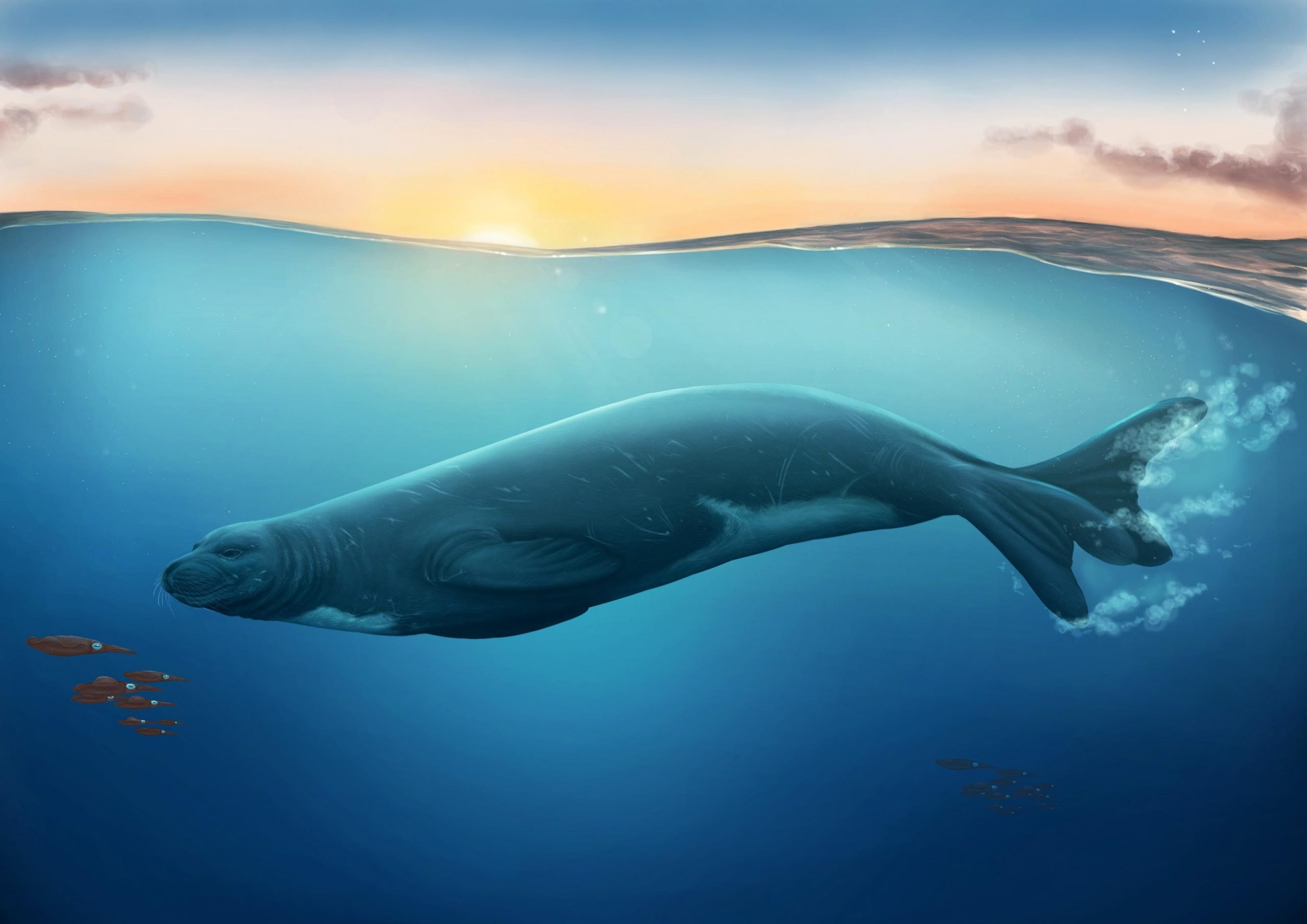
    Newly Discovered Extinct Monk Seal Species
    An artist impression of the newly discovered extinct monk seal species. Credit: Illustration by Jaime Bran. Copyright_Museum of New Zealand Te Papa.

    An international team of biologists, led by Monash University, has discovered a new species of extinct monk seal from the Southern Hemisphere – describing it as the biggest breakthrough in seal evolution in 70 years.

    The discovery, published on November 11, 2020, in the Proceedings of the Royal Society, radically changes scientists’ understanding of how seal species evolved around the world.

    It came after researchers examined seven preserved fossil specimens, including a complete skull, found by local fossil hunters on south Taranaki beaches in New Zealand between 2009 and 2016.

    The new species is named Eomonachus belegaerensis, (meaning ‘dawn monk seal from Belegaer’) after the sea of Belegaer, which lies west of Middle Earth in J.R.R. Tolkien’s Lord of the Rings.

    Paleontologist James Rule
    Monash University Palaeontologist James Rule inspects the fossil skull of the newly identified monk seal species.

    Around 2.5 meters (8 feet) in length and weighing around 200 – 250kg (440-550lb), Eomonachus belegaerensis lived in the waters around New Zealand some 3 million years ago.

    It was previously thought that all true seals originated in the North Atlantic, with some later crossing the equator to live as far south as Antarctica.

    Eomonachus now shows that many ancient seals, including the ancestors of today’s monk, elephant, and Antarctic seals, actually evolved in the Southern Hemisphere.

    Monash paleontologist James Rule, a PhD candidate at the Monash Biomedicine Discovery Institute (BDI), led the research as part of a trans-Tasman collaboration involving Monash University and Museums Victoria in Australia, and Te Papa and Canterbury Museum in New Zealand. The study was supervised and co-authored by Dr. Justin Adams (Monash BDI), Dr. Erich Fitzgerald (Museums Victoria), and Associate Professor Alistair Evans (School of Biological Sciences).
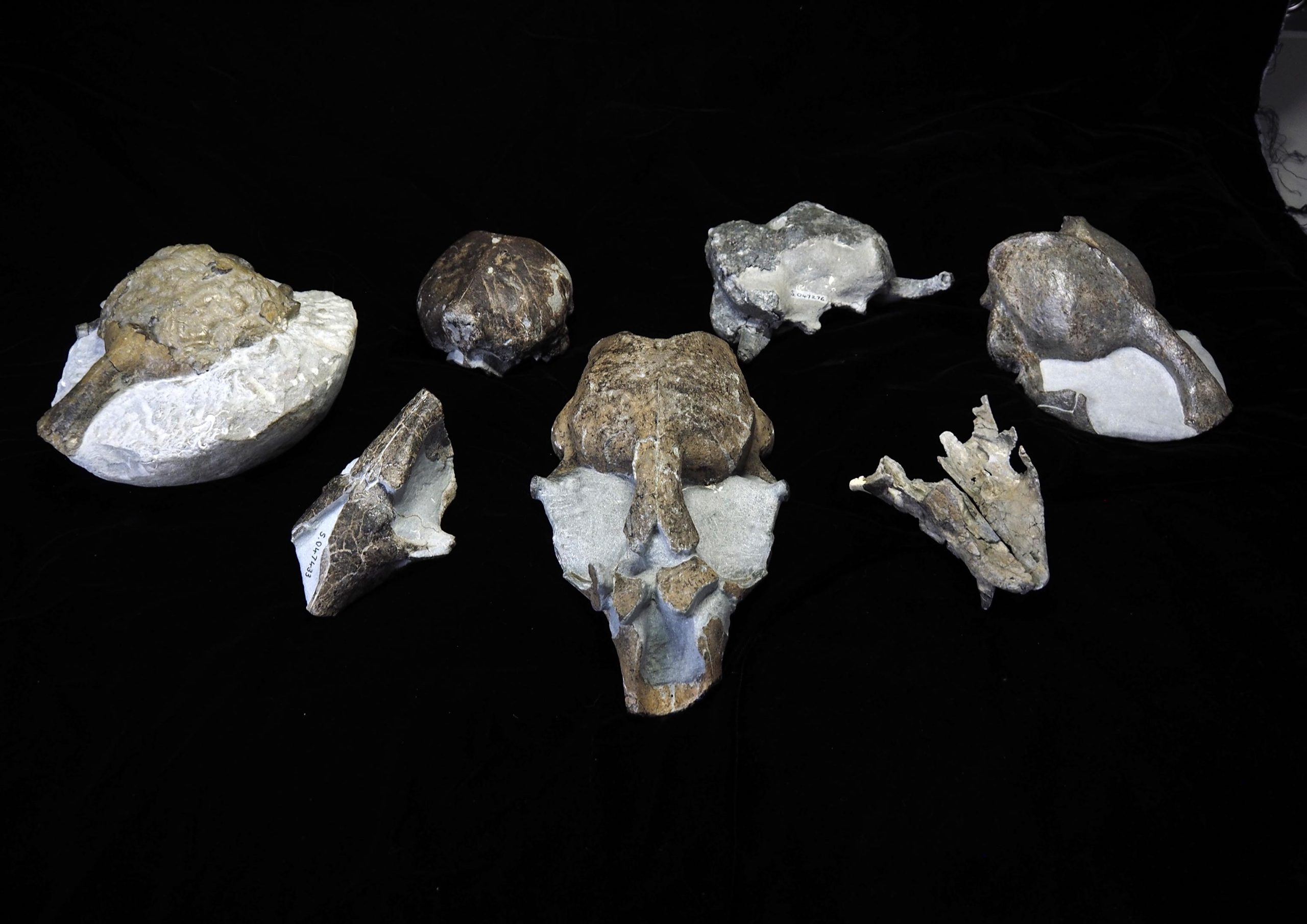
    Fossils New Seal Species
    Pieces of the fossil specimens discovered include a complete skull.

    “This new species of extinct monk seal is the first of its kind from the Southern Hemisphere. Its discovery really turns seal evolution on its head,” Mr. Rule said.

    “Until now, we thought that all true seals originated in the Northern Hemisphere, and then crossed the equator just once or twice during their entire evolutionary history. Instead, many of them appear to have evolved in the southern Pacific, and then crisscrossed the equator up to eight times.”

    Te Papa Museum of New Zealand curator of marine mammals and study collaborator Dr. Felix Marx said the discovery was a triumph for citizen science.

    “This new species has been discovered thanks to numerous, exceptionally well-preserved fossils – all of which were found by members of the public.”

    Dr. Marx is hopeful about future discoveries of new species in New Zealand’s ancient past.

    “New Zealand is incredibly rich in fossils, and so far we have barely scratched the surface. Who knows what else is out there?” Dr. Marx said.

    Reference: “First monk seal from the Southern Hemisphere rewrites the evolutionary history of true seals” by James P. Rule, Justin W. Adams, Felix G. Marx, Alistair R. Evans, Alan J. D. Tennyson, R. Paul Scofield and Erich M. G. Fitzgerald, 11 November 2020, Proceedings of the Royal Society B: Biological Sciences.
    DOI: 10.1098/rspb.2020.2318

    About monk seals

    Unlike their cold-loving relatives in the Arctic and Antarctic, Monk seals prefer the warmer waters of the Mediterranean, Hawai’i and – until their extinction there in the 1950s – the Caribbean. Monk seals are the most endangered groups of marine mammals, with fewer than 2000 individuals thought to be left in the wild. Hunting has driven populations down.

    Never miss a breakthrough: Join the SciTechDaily newsletter.
    Follow us on Google and Google News.

    Evolution Monash University New Species Paleontology Popular
    Share. Facebook Twitter Pinterest LinkedIn Email Reddit

    Related Articles

    52-Million-Year-Old Bat Skeleton Unveils New Species and Clues to Evolution of Flying Mammals

    Tyrannosaurus Skeletal Remains Reveal T. rex May Have Been 3 Distinct Species

    New Species of Beetle Discovered in Dinosaur Ancestor’s 230 Million-Year-Old Poop

    New Species of Humongous Prehistoric Crocodile “River Boss” Discovered in Australia

    New Species of Bizarre, Extinct Lizard – So Strange It Was Misidentified as a Hummingbird-Sized Dinosaur

    Paleontologists Discover Two Unusual New Species of Ancient, Burrowing Mammal Ancestors

    Snakefly Mystery Deepens After Surprising Fossil Discovery

    New Insight Into the Evolution of Sight From 54 Million Year-Old Fossil

    Newly Discovered Dinosaur (Mansourasaurus shahinae) Links Africa and Europe

    Leave A Reply Cancel Reply

    • Facebook
    • Twitter
    • Pinterest
    • YouTube

    Don't Miss a Discovery

    Subscribe for the Latest in Science & Tech!

    Trending News

    Wasp Colonies Explode Into Violence After Losing Their Queen

    Scientists Create “Living Plastic” That Self-Destructs in Just Six Days

    Your Blood May Carry a 700-Million-Year-Old Secret

    Scientists Discover Some “Zombie Cells” May Actually Help You Live Longer

    Earth May Be Seeding Venus With Life, According to New Research

    What Scientists Found Inside a 117-Year-Old Woman Reveals New Clues to Long Life

    Scientists Discover Mysterious Creature Living in the Great Salt Lake – and It Exists Nowhere Else on Earth

    It’s Alive? Surprising Discovery Changes What We Know About Fog

    Follow SciTechDaily
    • Facebook
    • Twitter
    • YouTube
    • Pinterest
    • Newsletter
    • RSS
    SciTech News
    • Biology News
    • Chemistry News
    • Earth News
    • Health News
    • Physics News
    • Science News
    • Space News
    • Technology News
    Recent Posts
    • Scientists Discover a Bizarre Crocodile Cousin That Walked Like a Dinosaur
    • How Pigeons Find Their Way Home May Finally Be Solved
    • This Dinosaur Had the Claws of a Raptor but Hunted Like a Heron
    • Doctors May Need To Rethink Calcium and Vitamin D Recommendations After Major Review
    • Researchers Suspected Brain Inflammation in Long COVID but Found Something Else
    Copyright © 1998 - 2026 SciTechDaily. All Rights Reserved.
    • Science News
    • About
    • Contact
    • Editorial Board
    • Privacy Policy
    • Terms of Use

    Type above and press Enter to search. Press Esc to cancel.