
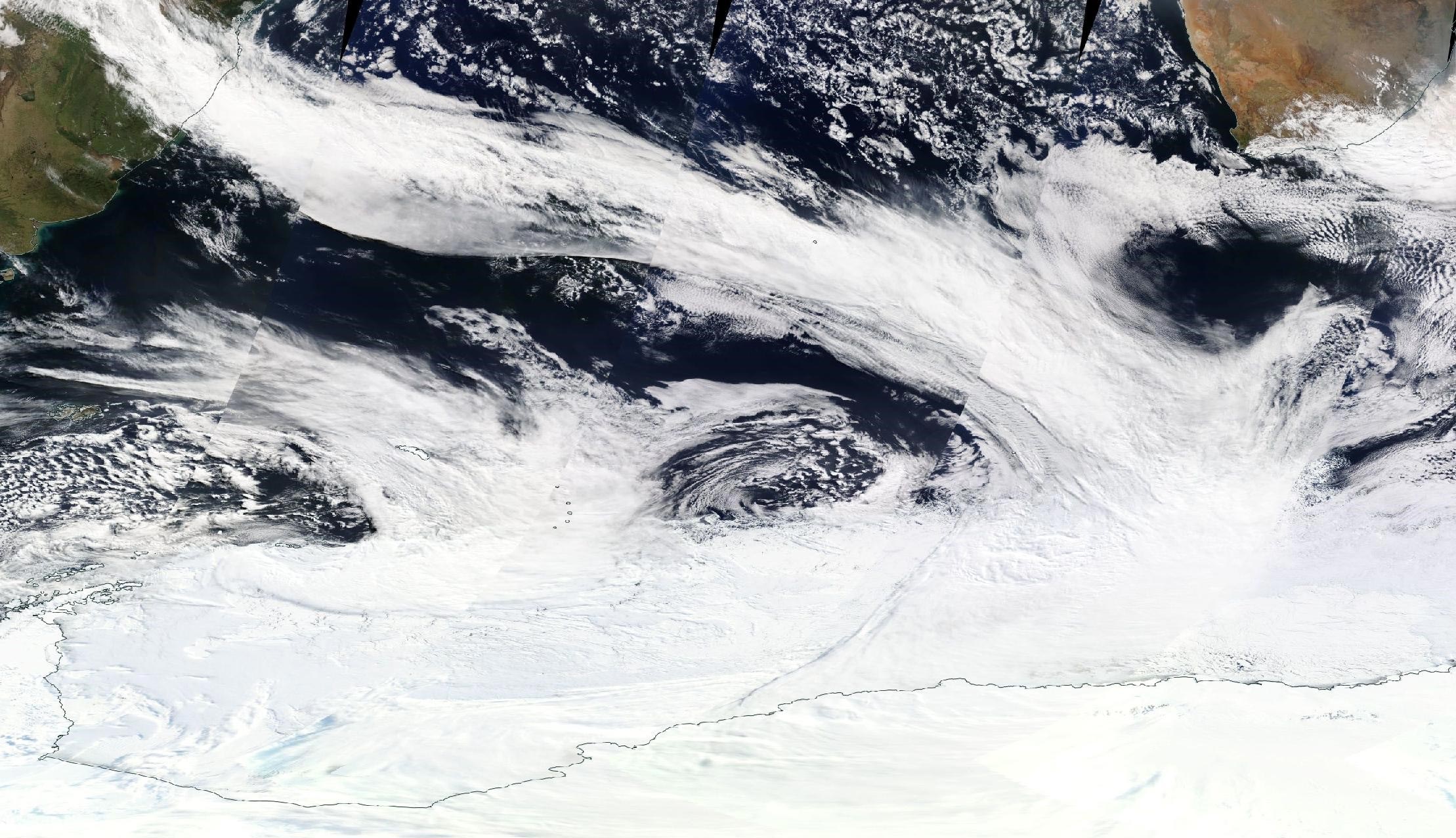
Warm, moist rivers of air may have continent-wide effects and influence climate change.
Warm, moist rivers of air in Antarctica play a key role in creating massive holes in sea ice in the Weddell Sea and may influence ocean conditions around the vast continent as well as climate change, according to Rutgers co-authored research.
Scientists studied the role of long, intense plumes of warm, moist air – known as atmospheric rivers – in creating enormous openings in sea ice. They focused on the Weddell Sea region of the Southern Ocean near Antarctica, where these sea ice holes (called polynyas) infrequently develop during the winter. A large hole in this area was first observed in 1973 and a hole developed again in the late winter and early spring of 2017.
In the first study of its kind, published in the journal Science Advances, scientists found that repeated strong atmospheric rivers during late August through mid-September 2017 played a crucial role in forming the sea ice hole. These rivers brought warm, moist air from the coast of South America to the polar environment, warming the sea ice surface and making it vulnerable to melting.
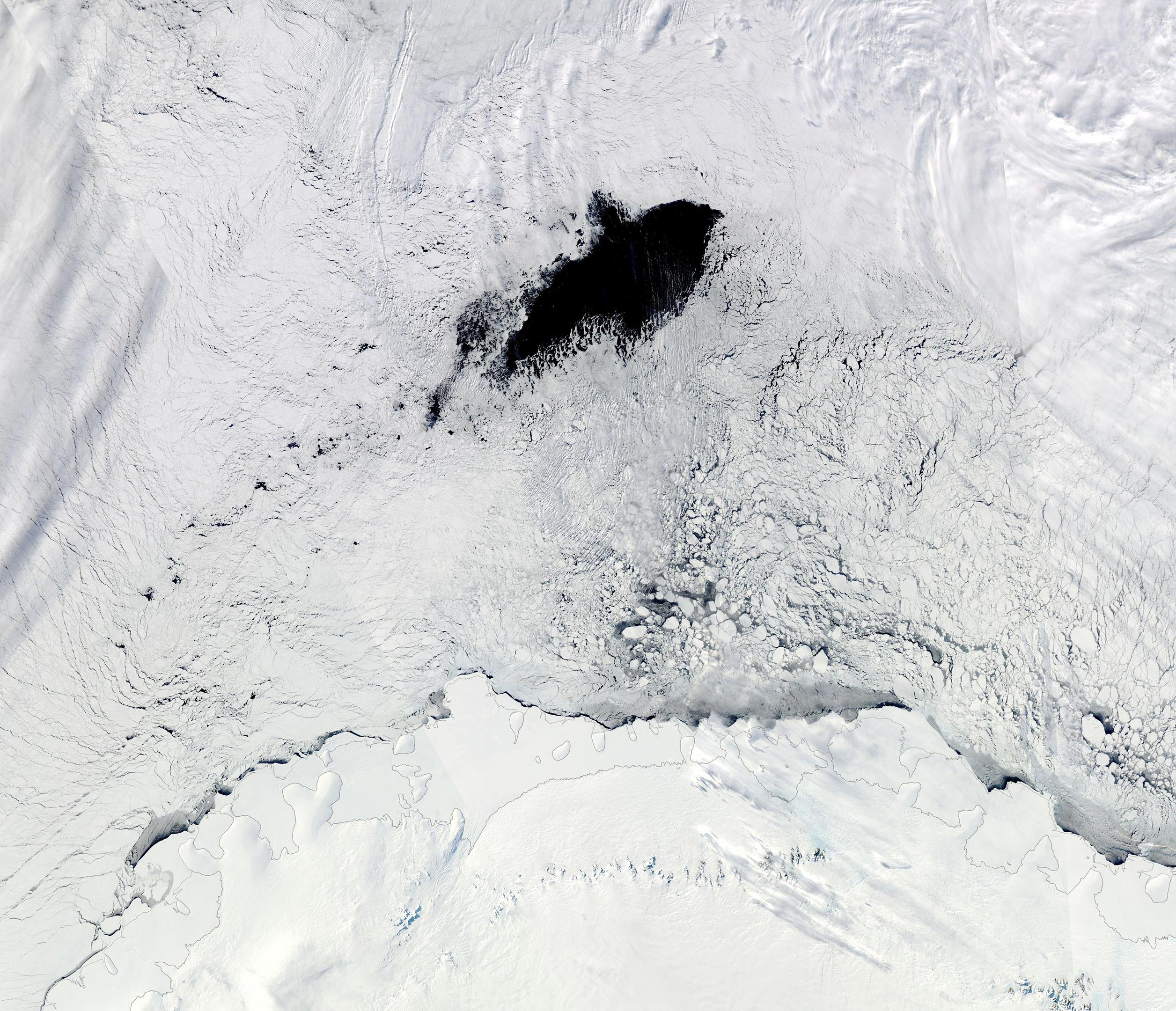
“Polynyas strongly influence the physical and ecological dynamics of the Southern Ocean,” said co-author Kyle Mattingly, a post-doctoral researcher at the Rutgers Institute of Earth, Ocean, and Atmospheric Sciences. “They serve as giant ‘windows’ in the sea ice that allow large amounts of heat to move from the ocean to the atmosphere, modifying regional and global ocean circulation. They also affect the timing and magnitude of phytoplankton (algae) blooms, which are the base of the marine food web. Our study will pave the way for greater understanding of climate variability and climate change in these regions.”
Previous studies have found that atmospheric rivers influence melting of West Antarctic land ice and ice shelves, and the new study builds on those findings by showing their effects on Antarctic sea ice for the first time. The rivers are thousands of miles long and the sea ice holes cover thousands of square miles, usually at specific locations that are primed by local ocean circulation conditions.
West Antarctica, an enormous ice sheet that sits on land, is melting and contributing to global sea-level rise, and the melting has accelerated in the 21st century. If the entire Antarctic Ice Sheet melted, the ocean level would rise by about 200 feet (60 meters), according to the National Snow & Ice Data Center. Sea-level rise and flooding from coastal storms threaten coastal communities worldwide, especially in low-lying areas.
Under projected future climate change, atmospheric rivers are predicted to become more frequent, longer, wider, and more effective in moving high levels of water vapor toward the Antarctic Ocean and continent, along with increasing the intensity of precipitation. In general, where they make landfall is predicted to shift toward the poles, and the effect of climate change on sea ice holes in the Weddell Sea and elsewhere in the Southern Ocean is an important area for future research.
Reference: “On the crucial role of atmospheric rivers in the two major Weddell Polynya events in 1973 and 2017 in Antarctica” by Diana Francis, Kyle S. Mattingly, Marouane Temimi, Rob Massom and Petra Heil, 11 November 2020, Science Advances.
DOI: 10.1126/sciadv.abc2695
Co-authors include scientists at Khalifa University of Science and Technology, Stevens Institute of Technology the Australian Antarctic Division and Australian Antarctic Program Partnership.
Never miss a breakthrough: Join the SciTechDaily newsletter.
Follow us on Google and Google News.
6 Comments
This news article claims, “Under projected future climate change, atmospheric rivers are predicted to become more frequent, …” That claim is presumably based on the statement in the original article, “Under projected future climate change, the frequency of AR events is predicted to increase by ~50% globally and 60% in the southern midlatitudes …” However,the source for this claim states, “The projections indicate that while there will be ~10% fewer ARs in the future, …” which is the opposite of the original claim.
https://agupubs.onlinelibrary.wiley.com/doi/abs/10.1029/[email protected]/(ISSN)1944-8007.ATMOS_RIVERS1
This is all based on modeling, which has a poor record for regional precipitation predictions, and a tendency to run warm in all but the Russian model. What’s worse, these claims are based on RCP8.5, which some critics have pointed out as being improbable, based on fossil fuel resources.
The “original article” AKA scientific study, does not say anything about a 10% decrease in ARs. It mentions a 10% decrease in the area average sea ice concentrations.
“For instance, an intense AR event occurred on 16 and 17 September 2017 (Fig. 2, E and F, and fig. S3) and resulted in additional 10% decrease in the area-averaged sea ice concentration “
My bad, I was reading the study referenced in the article, not the one you linked to.
The study you linked to does state that there will be 10% fewer ARs.
However, it also says that they will be 25% wider, last 25% longer, and exhibit stronger integrated water vapor transports.
As the saying goes: All models are wrong, but some of them are useful.
We are so slow on this planet to get anything done are planet will lose. as will we.
“are planet will lose”
Did you finish high school? Why should anyone take what you say seriously?