
Close Menu
    Facebook X (Twitter) Instagram
    SciTechDaily
    • Biology
    • Chemistry
    • Earth
    • Health
    • Physics
    • Science
    • Space
    • Technology
    Facebook X (Twitter) Pinterest YouTube RSS
    SciTechDaily
    Home»Technology»DNA Storage Record Broken: 1 Gram Could Hold As Much as 455 Exabytes
    Technology

    DNA Storage Record Broken: 1 Gram Could Hold As Much as 455 Exabytes

    By SciTechDailyAugust 21, 2012No Comments2 Mins Read
    Facebook Twitter Pinterest Telegram LinkedIn WhatsApp Email Reddit
    Share
    Facebook Twitter LinkedIn Pinterest Telegram Email Reddit
    DNA-storage-george-church
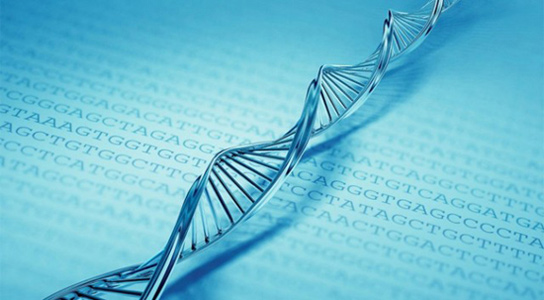
    In theory, each gram of DNA could store 455 exabytes of data.

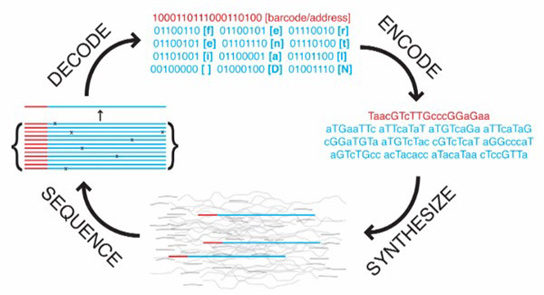
    Researchers have been able to encode a draft of an entire book into DNA. The 5.27 MB file contains 53,246 words, 11 JPG images, as well as a JavaScript program, making this the largest piece of non-biological data ever stored in DNA.

    The scientists published their findings on August 16 in the journal Science. In theory, two bits of data could be incorporated per nucleotide, implying that each gram of DNA could store 455 exabytes of data (1 exabyte is 1 million terabytes), which outstrips inorganic storage devices like flash memory, hard disks, and even quantum-computing methods.
    how-to-store-in-dna

    Geneticist George Church and his colleagues made significant gains on previous attempts, augmenting it by at least 600 times. For now, this organic storage is still years away as there is no practical way of using it every day. It requires days of lab work to retrieve and store information since DNA strands have to be synthesized or sequenced to read the data.

    Other attempts to store information in DNA were held up by difficulties in making perfectly long strands. Shorter molecules are easier to work with. Church et al. kept their storage attempts to a mere 159 nucleotides, and then generated multiple copies of each so that catching and corrections mutations was easier.
    dna-storage

    In a single strand of DNA, 96 nucleotides represent the encoded data as binary bits. 19 nucleotides show how this data should be ordered and 44 enable easier sequencing. ‘0’ was assigned to A and C and ‘1’ to G and T.

    This technique could be used in specialized applications where stored data doesn’t need to be read for a long time. This kind of storage could last centuries, whereas magnetic and optical storage media would be rendered obsolete.


    George Church and Sriram Kosuri discuss the benefits of using DNA as a storage medium and the approach they developed. Credit: Wyss Institute at Harvard University.

    Reference: “Next-Generation Digital Information Storage in DNA” by George M. Church, Yuan Gao and Sriram Kosuri, 16 August 2012, Science.
    DOI: 10.1126/science.1226355

    Never miss a breakthrough: Join the SciTechDaily newsletter.
    Follow us on Google and Google News.

    DNA Genetics Harvard University Storage
    Share. Facebook Twitter Pinterest LinkedIn Email Reddit

    Related Articles

    Key Differences in Seemingly Synonymous Parts of the Genetic Code

    Database Will Integrate Data From Clinical Testing Labs & Literature

    New Genome Interpreter Aims to Address Privacy Concerns and Aid Clinicians

    Faster Whole-Genome Sequencing May Lead to Routine Use in Neonatal Intensive Care

    Cancer-Fighting DNA Nanorobots Could Target Specific Cells for Repair

    Butterfly Research Reveals Genetic Sharing from Hybridization

    3-D Image Shows How DNA Packs Itself into a “Fractal Globule”

    Researchers Develop DNA Nanorobot to Seek Specific Cell Targets

    Police Can Now Identify Your Eye Color from DNA

    Leave A Reply Cancel Reply

    • Facebook
    • Twitter
    • Pinterest
    • YouTube

    Don't Miss a Discovery

    Subscribe for the Latest in Science & Tech!

    Trending News

    One of the Universe’s Largest Stars May Be Getting Ready To Explode

    Scientists Discover Enzyme That Could Supercharge Ozempic-Like Weight Loss Drugs

    Popular Sweetener Linked to DNA Damage – “It’s Something You Should Not Be Eating”

    Ancient “Rock” Microbes May Reveal How Complex Life Began

    Researchers Capture Quantum Interference in One of Nature’s Rarest Atoms

    “A Plague Is Upon Us”: The Mass Death That Changed an Ancient City Forever

    Scientists Discover Game-Changing New Way To Treat High Cholesterol

    This Small Change to Your Exercise Routine Could Be the Secret to Living Longer

    Follow SciTechDaily
    • Facebook
    • Twitter
    • YouTube
    • Pinterest
    • Newsletter
    • RSS
    SciTech News
    • Biology News
    • Chemistry News
    • Earth News
    • Health News
    • Physics News
    • Science News
    • Space News
    • Technology News
    Recent Posts
    • Scientists Prove There Are Just Six Degrees of Separation in a Social Network
    • Bee Bacteria Could Fix a Major Flaw in Plant-Based Milk
    • Scientists Discover a Surprising Way To Make Bread Healthier and More Nutritious
    • Natural Compounds Boost Bone Implant Success While Killing Bacteria and Cancer Cells
    • After 60 Years, Scientists Uncover Unexpected Brain Effects of Popular Diabetes Drug Metformin
    Copyright © 1998 - 2026 SciTechDaily. All Rights Reserved.
    • Science News
    • About
    • Contact
    • Editorial Board
    • Privacy Policy
    • Terms of Use

    Type above and press Enter to search. Press Esc to cancel.