

March brings thrilling celestial events, including a rare chance to spot Mercury, a stunning total lunar eclipse, and insights into the so-called “dark side” of the Moon. Venus bows out early in the month, while Jupiter and Mars keep skywatchers company in the evenings. The lunar eclipse transforms the Moon into a crimson spectacle, and the new moon phase reveals pristine skies for deep-space observation.
A Fast-Moving Planet and a Crimson Moon!
This month offers an exciting celestial lineup! Try to spot the elusive Mercury before it disappears, stay up late for a stunning total lunar eclipse, and discover the truth about the so-called “dark side” of the Moon.
Skywatching Highlights
All Month – Planets Visibility:
- Mercury: This speedy planet is visible just below Venus for the first week and a half of March. Look for it about 30 minutes after sunset, low in the western sky.
- Venus: Early in the month, Venus lingers low in the west after sunset but gradually sinks lower each day. By mid-March, it becomes difficult to see in the bright evening sky.
- Mars: Find Mars high in the eastern sky after sunset. It remains visible until around 3 a.m.
- Jupiter: Look for Jupiter high in the west after dark. It sets around 1 a.m. each night.
Daily Highlights:
March 7-9 – Catch Mercury: Look for Mercury beginning about 30 minutes after sunset in the west, about 10 degrees above the horizon.
March 13-14 – Total Lunar Eclipse: The Moon becomes a crimson orb over a couple of hours on March 13th and into the 14th, depending on your time zone.
March 14 – Full moon
March 29 – New moon: This is when the dark side of the Moon faces toward Earth. The new moon appears close to the Sun in the sky, so it’s essentially invisible from the surface (except during solar eclipses).
Video Transcript:
What’s Up for March? A good time to catch Mercury, an eclipse approaches, and the dark side of the Moon.
March Planet Viewing
March begins with Venus still hanging out low in the west after sunset, but it quickly drops out of the sky – by mid-month it’s getting lost in the glare of sunset. Once it gets dark, you’ll find Jupiter and Mars high overhead, keeping you company through the evening. Mars sets a couple of hours after midnight this month, leaving the morning sky “planet free” for the first time in a year.
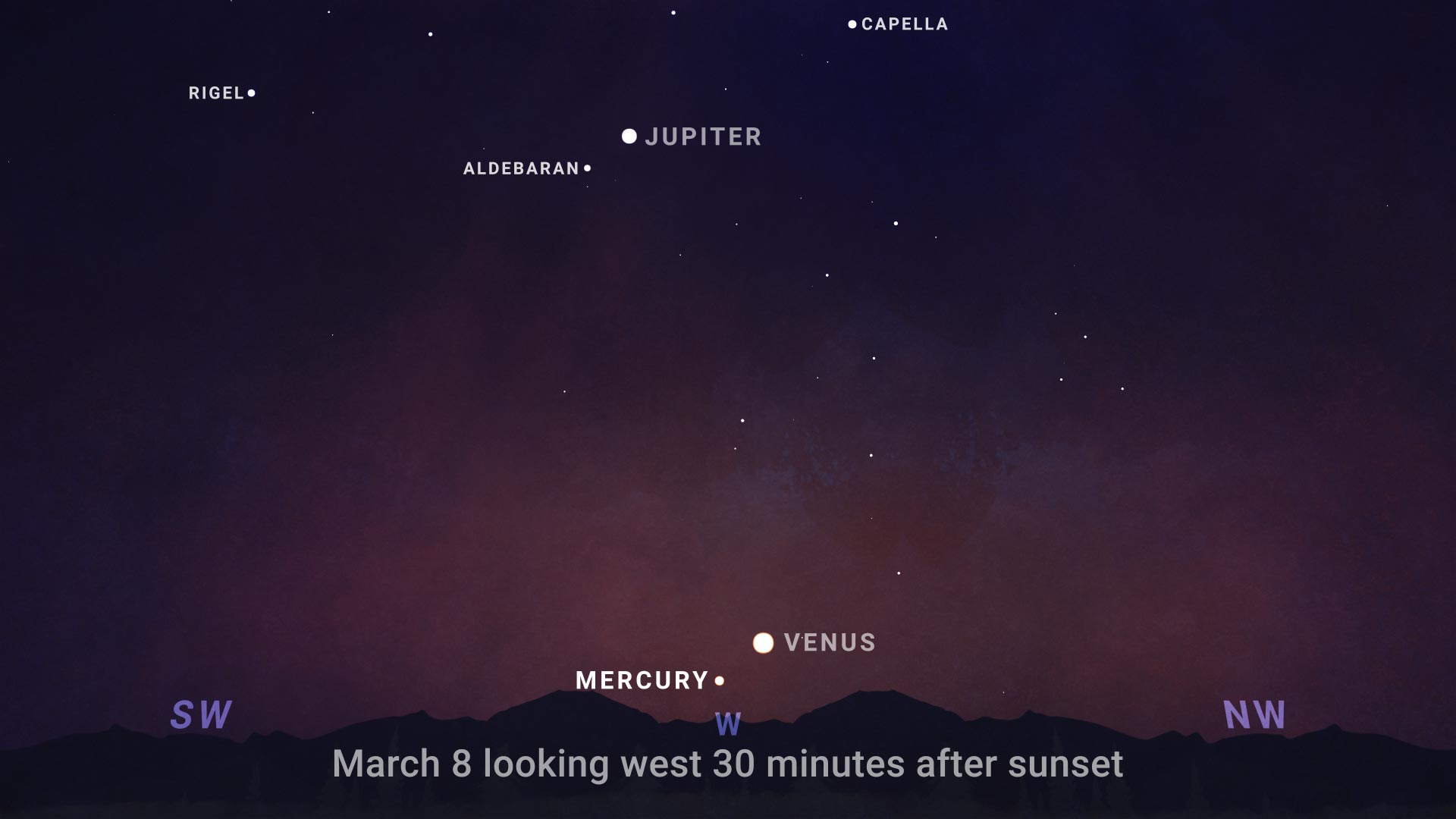
March also has the best opportunity this year for trying to spot fast-moving Mercury if you’re in the Northern Hemisphere. It’s only visible for a few weeks at a time every 3 to 4 months. This is because the speedy planet orbits the Sun in just 88 days, so it quickly shifts its position in the sky from day to day. It’s always visible either just after sunset or just before sunrise. On March 7th through 9th, look for Mercury beginning about 30 minutes after sunset in the west, about 10 degrees above the horizon.
You’ll want to ensure your view isn’t blocked by trees, buildings, or other obstructions. Observing from a large, open field, or the shore of a lake or the seaside can be helpful. Spying Mercury isn’t always easy, but catching the fleet-footed planet is a worthy goal for any skywatcher.
Total Lunar Eclipse
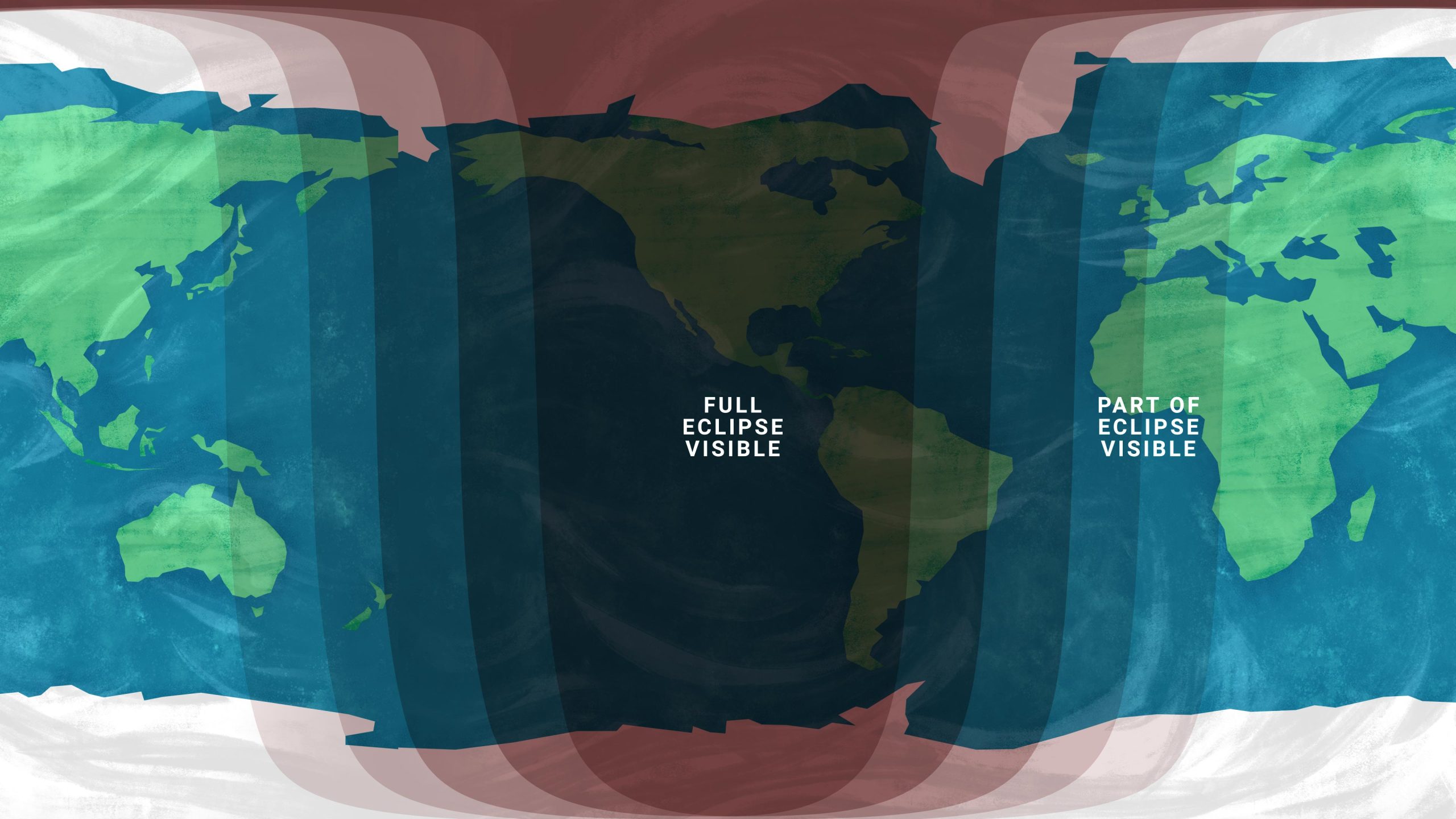
There’s a total lunar eclipse on the way this month, visible across the Americas. Lunar eclipses can be viewed from anywhere the Moon is above the horizon at the time. The show unfolds overnight on March 13th and into the 14th, depending on your time zone. Check the schedule for your area for precise timing.
Now, during a total lunar eclipse, we watch as the Moon passes through Earth’s shadow. It first appears to have a bite taken out of one side, but as maximum eclipse nears, the Moon transforms into a deep crimson orb. That red color comes from the ring of all the sunsets and sunrises you’d see encircling our planet if you were an astronaut on the lunar surface right then. Afterward, the eclipse plays out in reverse, with the red color fading, and the dark bite shrinking, until the Moon looks like its usual self again.
And here’s an interesting pattern: eclipses always arrive in pairs. A couple of weeks before or after a total lunar eclipse, there’s always a solar eclipse. This time, it’s a partial solar eclipse that will be visible across Eastern Canada, Greenland, and Northern Europe.
The Dark Side of the Moon
The Moon has a dark side, but it may not be what you think. As it orbits around Earth each month, the Moon is also rotating (or spinning). So, while we always see the same face of the Moon, sunlight sweeps across the lunar surface every month as it rotates.
This means there’s no permanently “dark” side. The Moon’s dark side faces Earth when the Moon passes between our planet and the Sun each month. This is the moment when the Moon is said to be “new,” as in a fresh start for its changing phases.
The new moon is also located quite close the Sun in the sky, making it more or less invisible, unless there’s a solar eclipse.
Nights around the new moon phase provide excellent opportunities for observing the sky – especially if you’re using a telescope or doing astrophotography. Without moonlight washing out the sky, you can better see faint stars, nebulas, the Milky Way, and distant galaxies. So next time someone mentions the “dark side of the Moon,” you’ll know there’s more to the story – and you might even discover some deep-sky treasures while the Moon takes its monthly break.
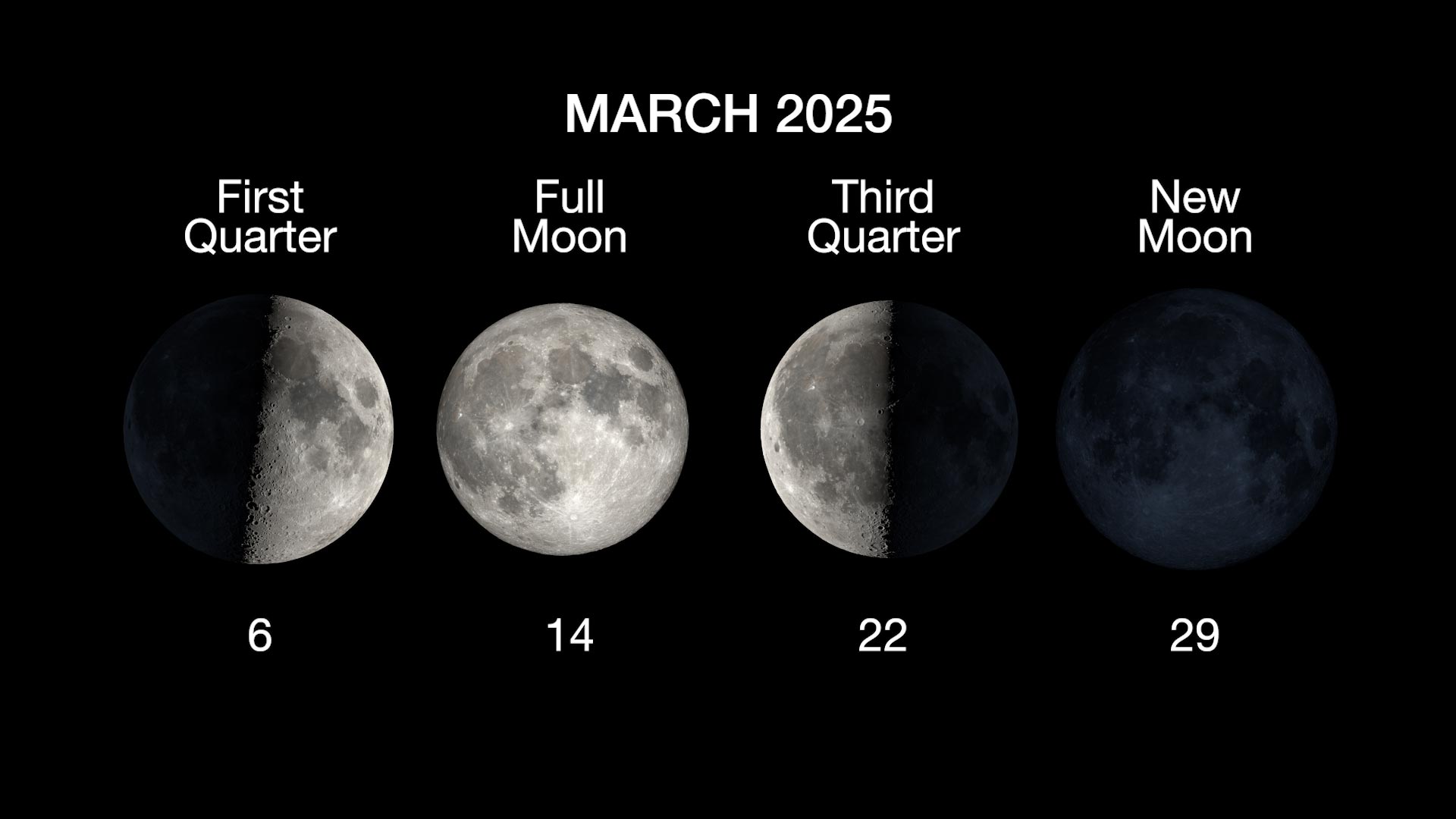
Above are the phases of the Moon for March. Stay up to date on all of NASA’s missions exploring the solar system and beyond at NASA Science. I’m Preston Dyches from NASA’s Jet Propulsion Laboratory, and that’s What’s Up for this month.
Never miss a breakthrough: Join the SciTechDaily newsletter.
Follow us on Google and Google News.
4 Comments
I thought the moon was locked tidally to planet earth.
“New moon: This is when the dark side of the Moon faces toward Earth.”
Whoever wrote this article should be embarrassed. The moon is totally locked to the Earth and therefore faces it with the same side all the time. It only appears dark because it’s in the shadow of the Earth.
This is a better explanation,thank you.
Why did you removed Itatchi from the picture?