
Negative Impacts on Some Skills Limited to High Media Use
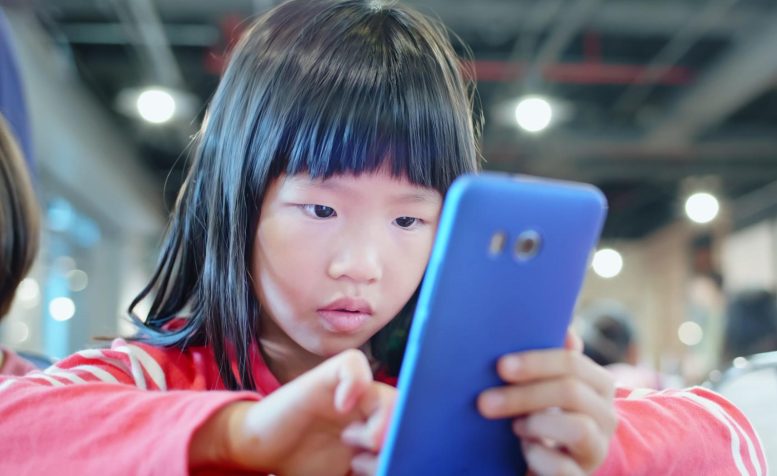
New research indicates that screen time doesn’t appear to have overwhelmingly negative impacts on preschoolers’ development, contrary to many parents’ concerns.
This study, focusing on children from underserved and minority backgrounds, revealed no direct correlation between the amount of time spent with TVs, smartphones, and tablets and their progress in language, literacy, and math skills.
Children who had very high levels of screen use – especially at nighttime – did have smaller gains in some social and behavioral skills, but this was not the majority of children.
“There’s been a lot of societal concern about the supposed harmful effects of screen time for young children, and it has really scared parents,” said Rebecca Dore, lead author of the study and director of research at The Ohio State University’s Crane Center for Early Childhood Research and Policy.
“These results suggest that we should stop demonizing screen media use and find better ways to support families and the education and development of children living in poverty.”
The study was published recently in the journal Translational Issues in Psychological Science.
Why This Research Matters for Low-Income Families
The issue is especially important for the low-income and minority families in this study, Dore said, because research suggests their children spend about twice as much time using screen media as their white and high-income peers.
“Lower-income and minority households often face a lot of obstacles that make it more difficult to limit screen time,” Dore said. “These results can help reassure parents that it is not uniformly and overwhelmingly negative.”
This research uses data collected in 2018-19 as part of a larger study evaluating the effects of a 15-month kindergarten transition intervention for children in low-income homes in the Columbus area. The study included 179 children who were anticipated to enter kindergarten the following year.
Trained research assistants helped families complete a 24-hour time diary detailing child media use, including when they started and stopped each session, what they were watching, and what device they used to access it.
Children’s language, literacy, and math skills, as well as social and behavioral skills, were assessed twice at their preschools, in the fall and again in the spring, to see how the students developed.
Children in the study averaged nearly two hours of screen use each day, and 46% of that was nighttime use (6 p.m. to 6 a.m.).
No Direct Impact on Academic Skills
Results showed no significant effects of screen use time on the academic skills assessed in the study.
High levels of screen media use were linked to smaller gains in social skills over the year of preschool, but only for those who used more than two hours of media a day.
“Some parents worry that every bit of media use is bad for their children, but we find that low to moderate levels of screen time don’t seem to matter,” Dore said. “It really has to be high levels before we start to see some problems.”
High levels of media use may hurt children because it displaces other more beneficial things they could be doing, such as interactions with peers or adults, she said.
The Influence of Nighttime Screen Use
Children who spent high amounts of time in front of screens at night – more than one hour – tended to have poorer peer social skills than those who used low or moderate levels of nighttime media.
That may be due to less or poorer quality sleep, which disrupts children’s ability to interact positively with their peers during the day, she said.
“Other studies have not been able to capture the potential effects of nighttime media use. And studies that did focus on nighttime media use have not investigated associations with social skills,” Dore said.
One advantage of this study was the use of the time diary, which may be more accurate than asking parents to recall their child’s media use on a typical day, as many studies do. The study also measured academic and social and behavioral skills twice, which allowed the researchers to see growth over time and how that was related to screen time.
Dore said the results should reassure parents who worry about their children’s media use. The American Academy of Pediatrics recommends that preschoolers spend less than one hour a day on screens, which is unrealistic, especially for low-income families.
“When many parents hear that their children shouldn’t use media more than one hour a day, they either feel guilty or just write the recommendation off because it is so out of balance with what’s feasible for their lives,” she said.
“Sure, parents should monitor screen time. But there are so many other bigger problems that these low-income families are facing. We need to move toward more evidence-based efforts to reduce the barriers to their children associated with living in poverty.”
Reference: “Does home media use predict preschoolers’ skill gains? A time diary study” by Rebecca Dore, Nan Xiao, Robin Sayers, Kelly Purtell and Laura Justice, 2023, Translational Issues in Psychological Science.
DOI: 10.1037/tps0000365
Other co-authors, all at Ohio State’s Crane Center, were Nan Xiao, Robin Sayers, Kelly Purtell and Laura Justice.
The study was supported by a grant from the U.S. Department of Education, Institute of Education Sciences.
Never miss a breakthrough: Join the SciTechDaily newsletter.
Follow us on Google and Google News.
3 Comments
“This study, focusing on children from underserved and minority backgrounds, revealed no direct correlation between the amount of time spent with TVs, smartphones, and tablets and their progress in language, literacy, and math skills.”
After Ms. Dore is fired for foolishness the Ohio researchers can contemplate the stupidity of “studying” a cohort of underachievers for the impact of screen time o intellectual development.
And for people on the autism spectrum it might even help with some social skills. My son (now 25) benefitted greatly and learned a lot by media. University of Illinois did a similar study around 15 years ago
Different types of media have different effects on the brain. Linear TV releases far less dopamine than a service like YouTube where you are always searching for the next good video. I wonder how the results would look if those types of activities were all sorted out.