
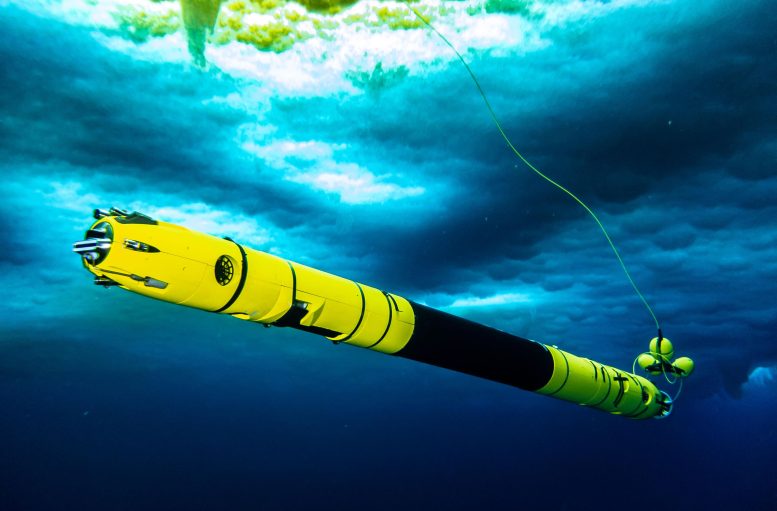
New data from an international expedition and underwater robot Icefin beneath the remote Thwaites Glacier, nicknamed the Doomsday Glacier, in Antarctica. It is one of the most critical glaciers in West Antarctica, and its potential collapse could trigger a significant rise in sea level, which could have catastrophic consequences for coastal communities worldwide.
Apparently, the rapid retreat of Thwaites Glacier in West Antarctica is driven by different processes under its floating ice shelf than researchers previously understood. Novel observations from where the ice enters the ocean show that while melting beneath much of the ice shelf is weaker than expected, melting in cracks and crevasses is much faster. Despite the suppressed melting the glacier is still retreating, and these findings provide an important step forward in understanding the glacier’s contribution to future sea-level rise.
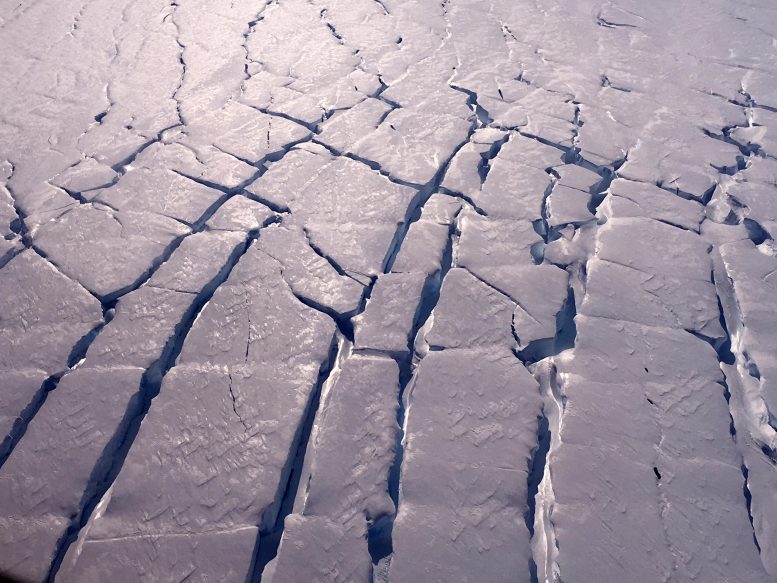
Two papers in the journal Nature this week (February 15, 2023) provide a clearer picture of the changes taking place under the glacier, which is the size of Great Britain or the US state of Florida and is one of the fastest-changing ice-ocean systems in Antarctica. Results show that although melting has increased beneath the floating ice shelf, the present rate of melting is slower than many computer models currently estimate.
A layer of fresher water between the bottom of the ice shelf and the underlying ocean, slows the rate of melting along flat parts of the ice shelf. But the authors were surprised to see the melting had formed stair-case-like topography across the bottom of the ice shelf. In these areas, as well as in cracks in the ice, rapid melting is occurring.
Thwaites Glacier is one of the fastest changing glaciers in Antarctica: the grounding zone — the point where it meets the seafloor — has retreated 14 km since the late 1990s. Much of the ice sheet is below sea level and susceptible to rapid, irreversible ice loss that could raise global sea-level by over half a meter within centuries.
https://youtu.be/ZZ61UoNTuAQ
The new data were collected as part of the MELT project, one of the projects in the UK-US International Thwaites Glacier Collaboration, one of the largest international field campaigns ever undertaken in Antarctica. The MELT team undertook observations of the grounding line (where the ice first meets the ocean) beneath the Thwaites Eastern Ice Shelf in order to understand how the ice and ocean interacts in this critical region.
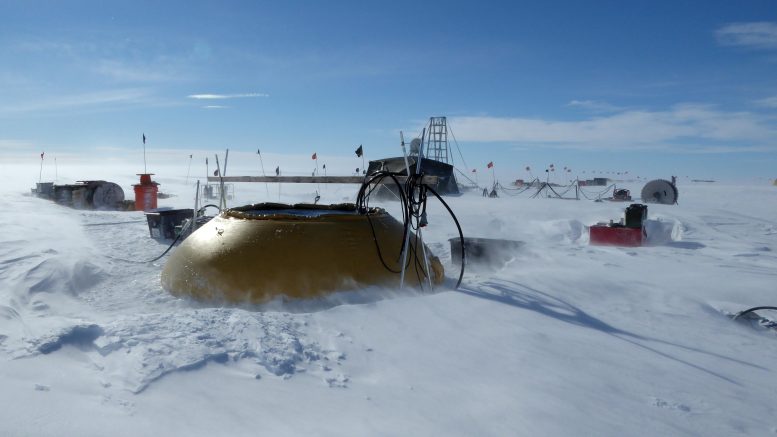
Dr. Peter Davis of the British Antarctic Survey (BAS) took ocean measurements through a 600m deep borehole around two kilometers from the grounding line, created by a hot water drill in late 2019. These measurements were compared with melt rate observations taken at five other sites underneath the ice shelf. Over a nine-month period, the ocean near the grounding line became warmer and saltier but the melt rate at the ice base averaged 2-5 m per year: less than previously modeled.
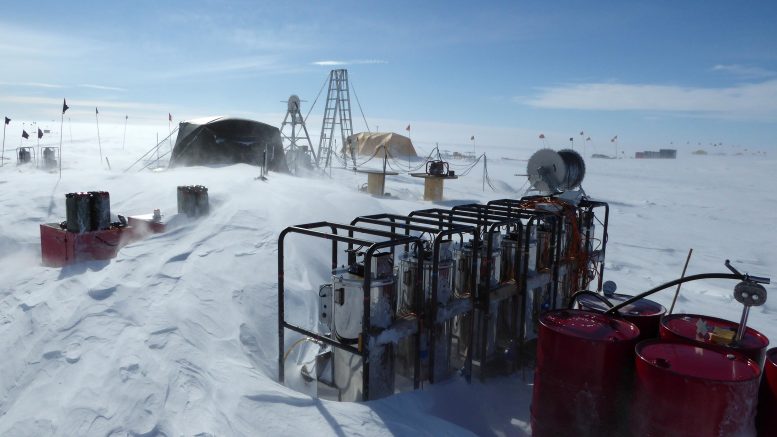
Dr. Peter Davis, who’s an oceanographer at BAS and lead author on one of the studies, says:
“Our results are a surprise but the glacier is still in trouble. If an ice shelf and a glacier are in balance, the ice coming off the continent will match the amount of ice being lost through melting and iceberg calving. What we have found is that despite small amounts of melting there is still rapid glacier retreat, so it seems that it doesn’t take a lot to push the glacier out of balance.”
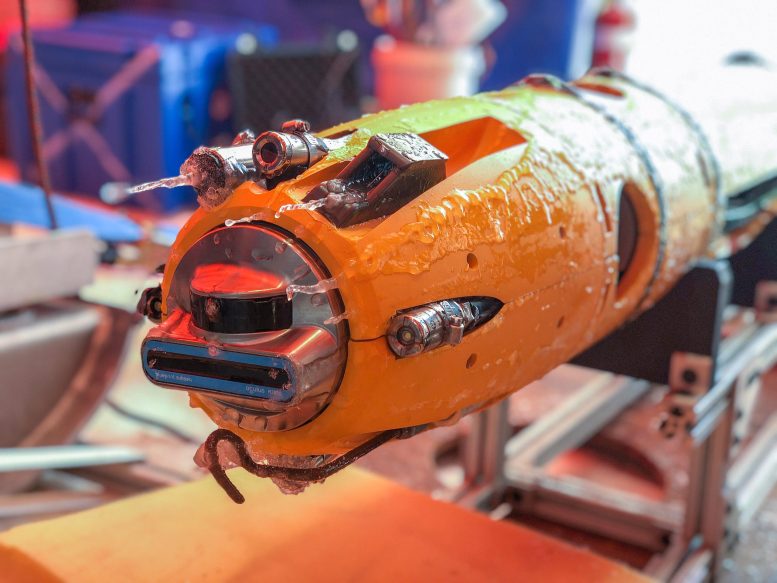
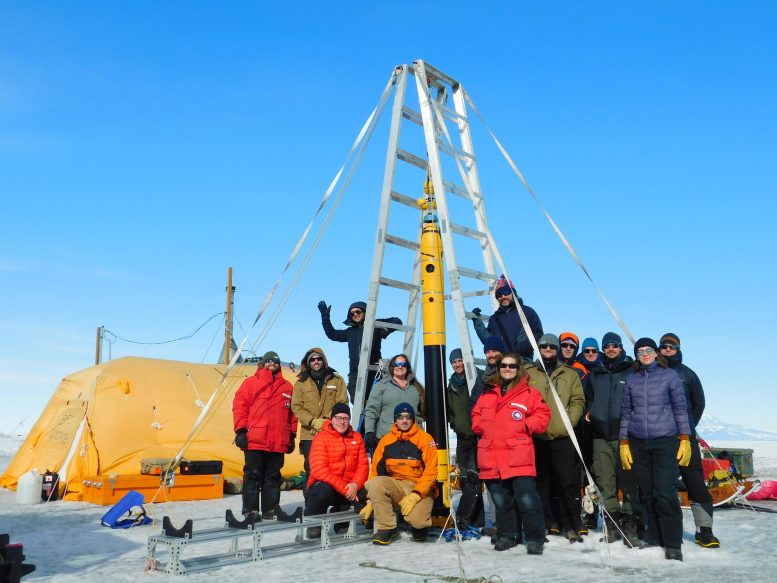
Dr. Britney Schmidt, of Cornell University in the US, and a team of scientists and engineers deployed a robot called Icefin through the 600m deep borehole. The vehicle is designed to access such grounding zones that were previously almost impossible to survey. The observations Icefin made of the seafloor and ice around the grounding zone provide more detail on the picture of how melting varies beneath the ice shelf. They found the staircases, called terraces, as well as crevasses in the ice base are melting rapidly. Melting is especially important in crevasses, as water funnels through them heat and salt can be transferred into the ice, widening the crevasses and rifts.
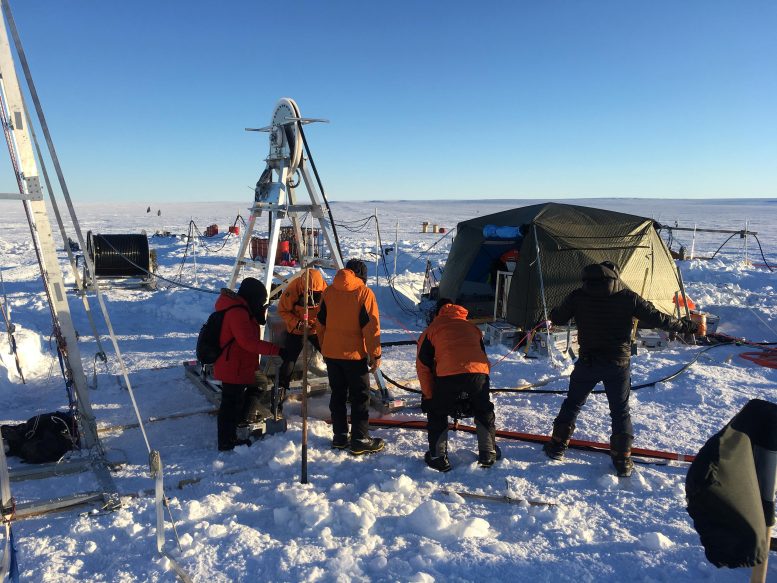
So, although the vertical melting along the base of the ice shelf was less than expected, melting along sloped ice in these cracks and terraces is much higher and may be a significant factor in ice loss across Thwaites Glacier, especially as major rifts are progressing across the ice shelf and may become the primary trigger for ice shelf collapse.
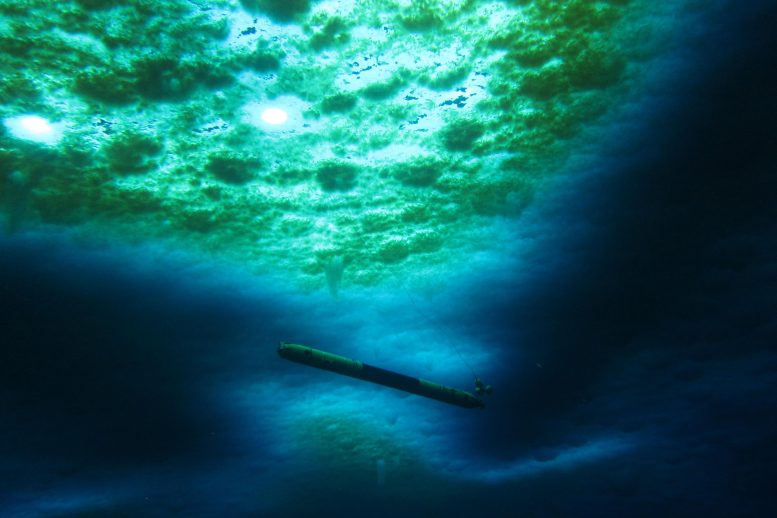
Dr. Britney Schmidt, who’s an Associate Professor at Cornell University and lead author of the second study, says:
“These new ways of observing the glacier allow us to understand that it’s not just how much melting is happening, but how and where it is happening that matters in these very warm parts of Antarctica. We see crevasses, and probably terraces, across warming glaciers like Thwaites. Warm water is getting into the cracks, helping wear down the glacier at its weakest points.”
References:
“Heterogeneous melting near the Thwaites Glacier grounding line” by B. E. Schmidt, P. Washam, P. E. D. Davis, K. W. Nicholls, D. M. Holland, J. D. Lawrence, K. L. Riverman, J. A. Smith, A. Spears, D. J. G. Dichek, A. D. Mullen, E. Clyne, B. Yeager, P. Anker, M. R. Meister, B. C. Hurwitz, E. S. Quartini, F. E. Bryson, A. Basinski-Ferris, C. Thomas, J. Wake, D. G. Vaughan, S. Anandakrishnan, E. Rignot, J. Paden and K. Makinson, 15 February 2023, Nature.
DOI: 10.1038/s41586-022-05691-0
“Suppressed basal melting in the eastern Thwaites Glacier grounding zone” by Peter E. D. Davis, Keith W. Nicholls, David M. Holland, Britney E. Schmidt, Peter Washam, Kiya L. Riverman, Robert J. Arthern, Irena Vanková, Clare Eayrs, James A. Smith, Paul G. D. Anker, Andrew D. Mullen, Daniel Dichek, Justin D. Lawrence, Matthew M. Meister, Elisabeth Clyne, Aurora Basinski-Ferris, Eric Rignot, Bastien Y. Queste, Lars Boehme, Karen J. Heywood, Sridhar Anandakrishnan and Keith Makinson, 15 February 2023, Nature.
DOI: 10.1038/s41586-022-05586-0
Never miss a breakthrough: Join the SciTechDaily newsletter.
Follow us on Google and Google News.
3 Comments
Why were the models overestimating the rate of melting?
Why is the melting taking place at the base of the ice rather than at the surface when the implication is that CO2 is warming the atmosphere?
Why isn’t there similar melting taking place in east Antarctica?
These climate research results might be better if researchers would had spent their childhood in Northern US or Canada. Many things they have discovered now, kids learn by heart or at school …
Answer to your question is surface is colder than the bottom. When sea water is cold but not frozen, warmer water goes to the bottom. In summer, the warmer sea water goes to the surface. You see, the water density depends on the temperature. So, warm water goes to bottom and ice melts there first.
Reason why is it slower, is the thermopause layer. This nothing new again, happens in Northern lakes every year. Water forms an insulation layer slowing the temp rise. There the error.
Paper did not say this phenomena would not happen elsewhere. It is just studied there because of the size of the glacier and scale of the consequences.
Because the whole climate change due to human existence is a LIE!
They can’t even wrap their brains around their nuts without cracking them. We exist upon the grace of GOD, not the whim of man. Everything on earth is dependent on the Sun The Electric Universe. Ask them why the ozone hole hasn’t gone away after spending Trillions of dollars to fix it. Ask them why there is 3 ozone holes now. Actually ask them why all the other planets are going through the same events as we are and they don’t know it.