
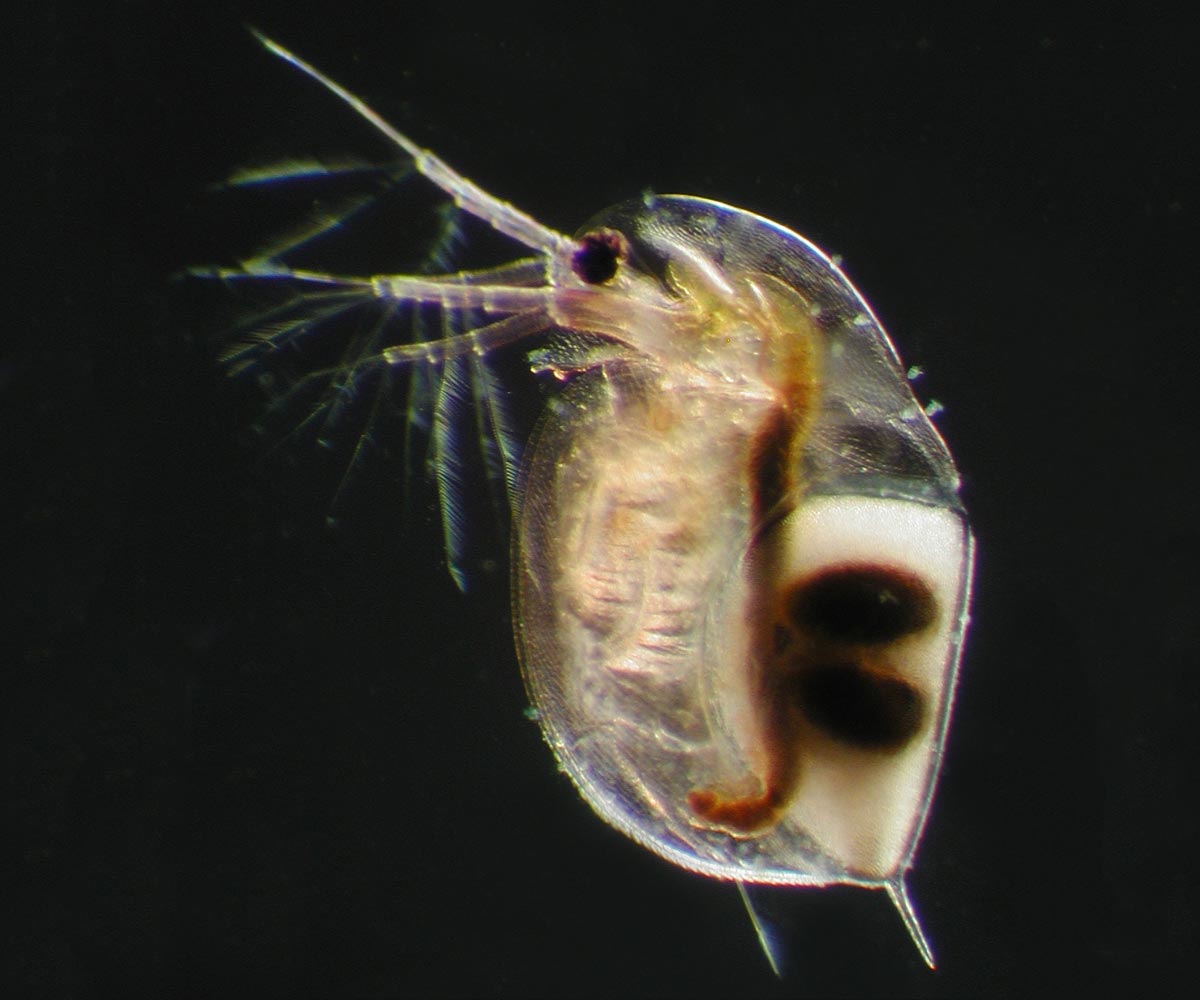
Why do predators sometimes lay dormant eggs — eggs which are hardy, but take a long time to hatch, and are expensive to produce?
That is the question that researchers from Singapore University of Technology and Design (SUTD) set out to answer in a recent paper published in Advanced Science, a cutting-edge research journal with an impact factor of 15.804 (2019 Journal Citation Reports).
The traditional answer is that these hardy eggs allow the population to survive harsh environmental conditions, like winter or drought. However, this does not explain why dormant eggs are laid even in non-seasonal habitats, such as tropical lakes.
The team of researchers led by Assistant Professor Kang Hao Cheong from SUTD, in collaboration with Dr. Eugene V. Koonin, senior investigator at the National Institutes of Health, have discovered an alternate explanation: Dormancy is a naturally occurring response to over-predation. In non-seasonal habitats, prey organisms, such as algae in a lake, grow to very large populations. This leads their predators, such as zooplankton, to consume them at a high rate and grow in population as well. Eventually, this leads to over-consumption. As the algae population collapses, little food is left for the large amount of zooplankton, which then begin to starve and die.
It is during this period of food scarcity that dormancy makes a lot of sense. If a zooplankton had laid hardy, slow-hatching dormant eggs in advance, those eggs would likely hatch after the prey populations had recovered, allowing them to survive and reproduce. On the other hand, if the zooplankton had only laid regular fast-hatching eggs, those eggs would likely hatch in the middle of the famine, and would not aid much in the recovery of the zooplankton population. Eventually, only those zooplankton which lay dormant eggs would dominate the population.
In discovering this explanation, the researchers were inspired by a phenomenon called Parrondo’s paradox. The paradox states that it is possible to alternate between a pair of losing strategies, such as losing bets in a gamble, and still end up winning. When food is plenty, the researchers realized that dormancy is similarly paradoxical.
“Why spend extra energy laying dormant eggs, when your competitors are saving energy by laying regular eggs? And why invest in eggs that take longer to hatch, when your competitors are laying eggs that will hatch faster and grow quickly into adults? That was what we needed to explain,” said Zhi-Xuan Tan, the lead author of the study. “Just like in Parrondo’s paradox, we had a pair of losing strategies: the strategy of laying dormant eggs, and the strategy of remaining dormant as an egg instead of hatching.”
As the researchers discovered, switching between these two losing strategies ensures survival against the food shortages created by over-predation.
The implications of this study could go beyond explaining why predators lay dormant eggs. “One of the first applications of Parrondo’s paradox was actually to explain a biological process: how molecular motors in our muscles could produce sustained directional movement”, observed Assistant Professor Kang Hao Cheong from SUTD, the principal investigator for this study. “We believe that the relevance of Parrondo’s paradox to biology might be wider still.”
For example, the researchers suggest that Parrondo’s paradox might also explain why bacteria-infecting viruses often alternate between a dormant lysogenic phase, where viruses incorporate their DNA into the bacterial genome, and an active and infectious lytic phase, which kills bacteria.
“Going further, we might even be able to explain the evolution of multicellular life,” said Assistant Professor Cheong. “How did unicellular organisms start co-operating enough to form multicellular organisms, when cheating and taking advantage of other cells could often yield better results? As co-operation is a losing strategy in this context, we suspect that Parrondo’s paradox might one day yield some answers.”
Reference: “Predator Dormancy is a Stable Adaptive Strategy due to Parrondo’s Paradox” by Zhi‐Xuan Tan, Jin Ming Koh, Eugene V. Koonin and Kang Hao Cheong, 12 December 2019, Advanced Science.
DOI: 10.1002/advs.201901559
Never miss a breakthrough: Join the SciTechDaily newsletter.
Follow us on Google and Google News.
1 Comment
I think the same probably applies to seeds produced by plants in extreme environments. If you have sporadic rainfall which allows some seed germination but the rains then fail, all seedlings will die out. but there are some seeds which don’t germinate easily which prevents total wipeout of that species. rainfall is just one criteria