
Close Menu
    Facebook X (Twitter) Instagram
    SciTechDaily
    • Biology
    • Chemistry
    • Earth
    • Health
    • Physics
    • Science
    • Space
    • Technology
    Facebook X (Twitter) Pinterest YouTube RSS
    SciTechDaily
    Home»Space»Dosis-3D: Hidden Science Aboard the International Space Station
    Space

    Dosis-3D: Hidden Science Aboard the International Space Station

    By European Space Agency (ESA)October 25, 2020No Comments3 Mins Read
    Facebook Twitter Pinterest Telegram LinkedIn WhatsApp Email Reddit
    Share
    Facebook Twitter LinkedIn Pinterest Telegram Email Reddit
    ISS Hidden Science
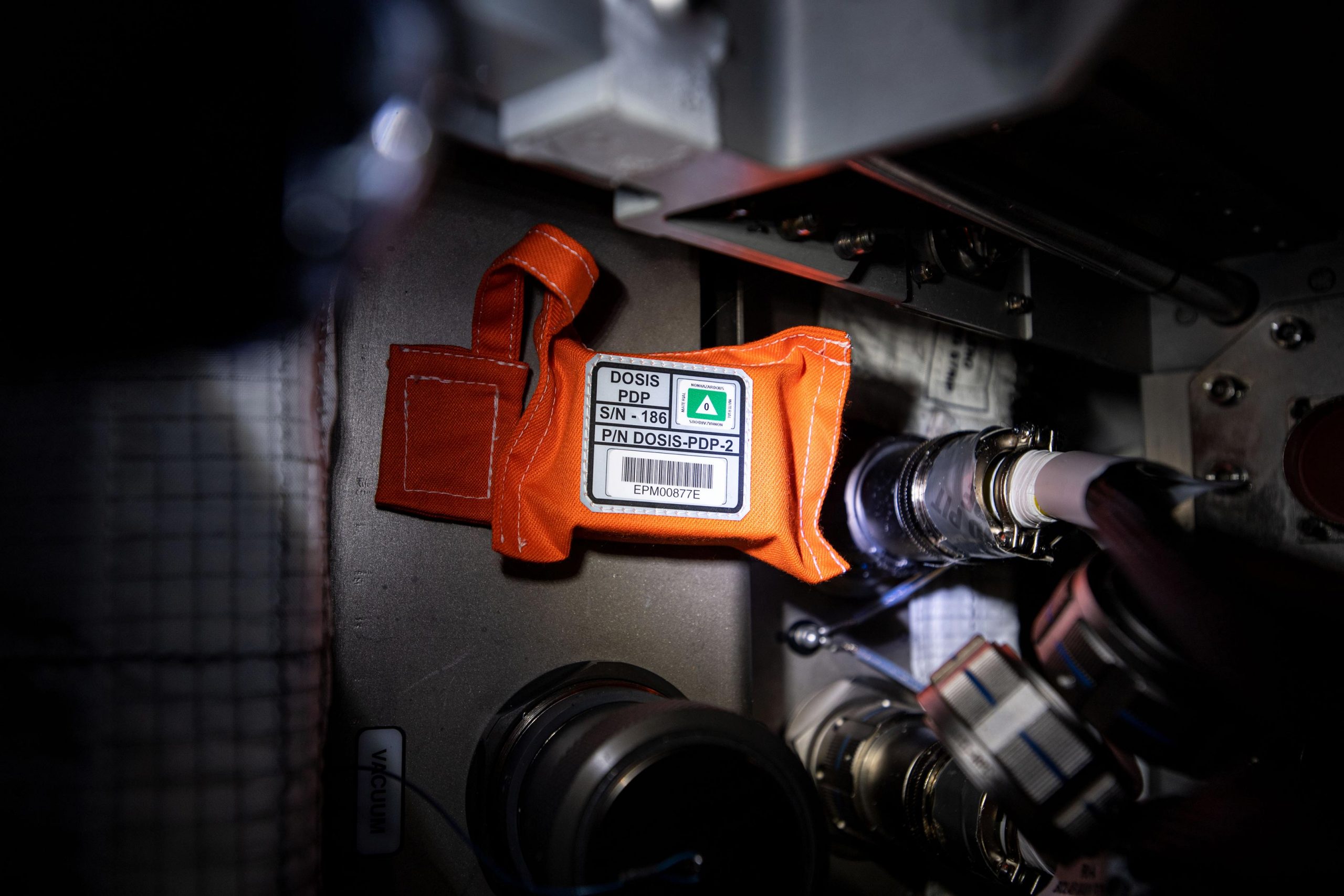
    Dotted around the International Space Station, these orange pouches collect information on radiation levels using a device called a dosimeter. The experiment has been monitoring radiation levels since 2009 and the current pouches are changed after each six-month crew rotation. This pouch has been placed on the left side of the Utility Interface Panel next to the Vacuum Connector on ESA’s Human Research Facility in ESA’s science laboratory Columbus. Credit: NASA

    The Soyuz MS-17 spacecraft arrived at the International Space Station just three hours after launch on October 14, 2020, with Roscosmos astronauts Sergei Ryzhikov and Sergei Kud-Sverchkov and NASA astronaut Kate Rubins on board.

    Aside from the human cargo, the Soyuz had space for some science, including one of ESA’s longest-running experiments, Dosis-3D.

    Dotted around the ISS, these orange pouches collect information on radiation levels using a device called a dosimeter. The experiment, in different forms, has been monitoring radiation levels since 2009 and the current pouches are changed after each six-month crew rotation. This pouch has been placed on the left side of the Utility Interface Panel next to the Vacuum Connector on ESA’s Human Research Facility in ESA’s science laboratory Columbus.

    Radiation levels in space can be 15 times higher than on Earth. As soon as humans leave the protective shield that is Earth’s atmosphere, space radiation becomes a serious concern. As we explore farther and head towards the Moon and even Mars on longer flights, defending ourselves against radiation becomes ever more important.

    Dosis-3D helps researchers understand space radiation and how it penetrates the Space Station walls. Active and passive radiation detectors are used to map radiation in all modules, and will help designers and engineers make future spacecraft more resistant to radiation, such as the modules for the lunar Gateway.

    Experiments like Dosis-3D often go overlooked as they sit passively in the corner, but as we approach the anniversary of 20 years of continuous habitation of the International Space Station, they are great examples of the kind of science that occurs on humankind’s outpost in space, and helps prepare for the future of human exploration.

    The orange-wrapped dosimeters are about the size of a pack of playing cards and attach to the walls of the Space Station with Velcro. The detectors record how much radiation has been absorbed in total during the period they are in space.

    In addition to the passive detectors shown, Dosis-3D uses active dosimeters that measure fluctuations in radiation levels over time. Data from all Station partners is shared to create as complete a picture of space radiation as possible.

    Never miss a breakthrough: Join the SciTechDaily newsletter.
    Follow us on Google and Google News.

    European Space Agency International Space Station NASA
    Share. Facebook Twitter Pinterest LinkedIn Email Reddit

    Related Articles

    International Collaboration: ESA, NASA, JAXA, Roscosmos Unite for SpaceX’s Crew-7 Mission

    Humanity’s Outpost in Space: Partners Pledge Extension of the International Space Station

    Splashdown! NASA SpaceX Crew-3 Astronauts Safely Return to Earth

    NASA, ESA Assign Astronauts to Space Station Mission on SpaceX Crew Dragon

    Astronauts Complete 6 Hour and 54 Minute Spacewalk To Install Space Station Upgrades

    Astronauts Raja Chari & Matthias Maurer Spacewalk Outside the International Space Station [Watch Live]

    The First-Ever Space Olympics Aboard the ISS! [Video]

    NASA Astronaut Gets a Good GRASP on Gravity

    Astronauts Chosen for NASA SpaceX Crew-3 Mission to Space Station

    Leave A Reply Cancel Reply

    • Facebook
    • Twitter
    • Pinterest
    • YouTube

    Don't Miss a Discovery

    Subscribe for the Latest in Science & Tech!

    Trending News

    Scientists Uncover Potential Brain Risks of Popular Fish Oil Supplements

    Scientists Discover a Surprising Way To Make Bread Healthier and More Nutritious

    After 60 Years, Scientists Uncover Unexpected Brain Effects of Popular Diabetes Drug Metformin

    New Research Uncovers Hidden Side Effects of Popular Weight-Loss Drugs

    Scientists Rethink Extreme Warming After Surprising Ocean Discovery

    Landmark Study Links Never Marrying to Significantly Higher Cancer Risk

    Researchers Discover Unknown Beetle Species Just Steps From Their Lab

    Largest-Ever Study Finds Medicinal Cannabis Ineffective for Anxiety, Depression, PTSD

    Follow SciTechDaily
    • Facebook
    • Twitter
    • YouTube
    • Pinterest
    • Newsletter
    • RSS
    SciTech News
    • Biology News
    • Chemistry News
    • Earth News
    • Health News
    • Physics News
    • Science News
    • Space News
    • Technology News
    Recent Posts
    • Scientists Discover Hidden Pathway Inside Catalysts That Defies Decades of Assumptions
    • Scientists Finally Crack Decades-Old Mystery of “Breathing” Lasers
    • “Like Liquid Metal”: Scientists Create Strange Shape-Shifting Material
    • Early Warning Signals of Esophageal Cancer May Be Hiding in Plain Sight
    • Researchers Have Discovered a THC-Free Cannabis Compound That May Replace Opioids
    Copyright © 1998 - 2026 SciTechDaily. All Rights Reserved.
    • Science News
    • About
    • Contact
    • Editorial Board
    • Privacy Policy
    • Terms of Use

    Type above and press Enter to search. Press Esc to cancel.