
Close Menu
    Facebook X (Twitter) Instagram
    SciTechDaily
    • Biology
    • Chemistry
    • Earth
    • Health
    • Physics
    • Science
    • Space
    • Technology
    Facebook X (Twitter) Pinterest YouTube RSS
    SciTechDaily
    Home»Technology»Early Detection of SARS-CoV-2 (COVID-19 Virus) With New Photonic Sensor System
    Technology

    Early Detection of SARS-CoV-2 (COVID-19 Virus) With New Photonic Sensor System

    By University of MalagaOctober 23, 2020No Comments3 Mins Read
    Facebook Twitter Pinterest Telegram LinkedIn WhatsApp Email Reddit
    Share
    Facebook Twitter LinkedIn Pinterest Telegram Email Reddit
    Robert Halir BIONAND
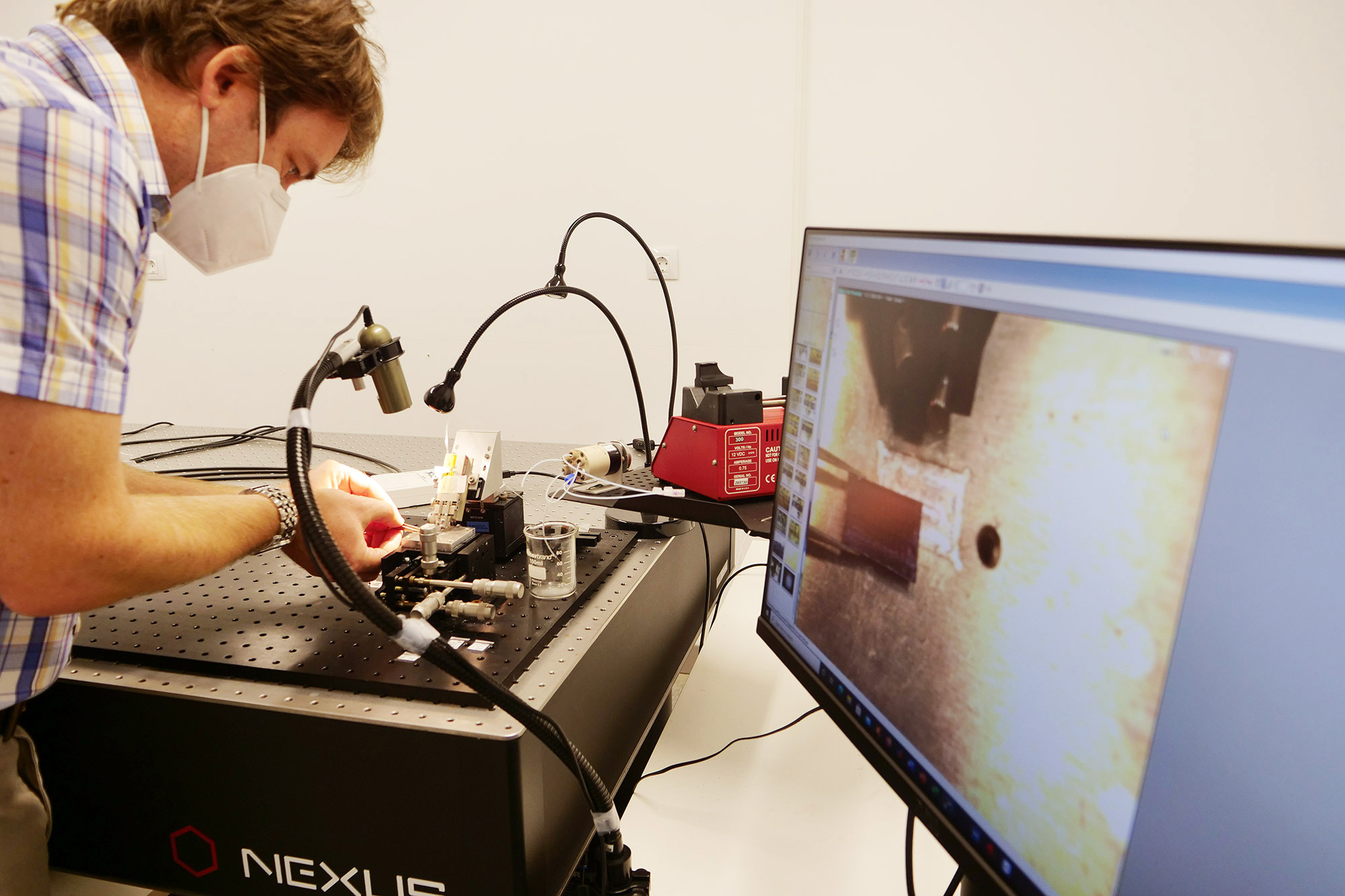
    Scientists of the University of Malaga are working in a new system based on photonic sensors could enable early detection of SARS-CoV-2. Credit: University of Malaga

    Scientists are working on the development of a new equipment, more functional and cheaper, that could be deployed in primary healthcare centers.

    Detecting SARS-CoV-2 virus and related antibodies is essential to control the COVID-19 pandemic. A multidisciplinary team of scientists from the University of Malaga, led by Robert Halir, researcher of the Department of Communications Engineering of the Higher Technical School of Telecommunications Engineering, aware of the limitations of current techniques, are developing a point-of-care detection system based on photonic sensors.

    “PCR techniques currently applied to detect the virus are reliable, but also slow and expensive, while serological assays, though simpler, lack precision and cannot provide quantitative results,” says Robert Halir, who explains that their system will precisely add functionality and, in the future, could offer real-time results at a lower cost. To this end, it has been funded with €95,000 under the COVID-19 Fund of the Government of Andalusia to work, for one year, towards demonstrating the viability of their system.
    COVID Photonic Sensors
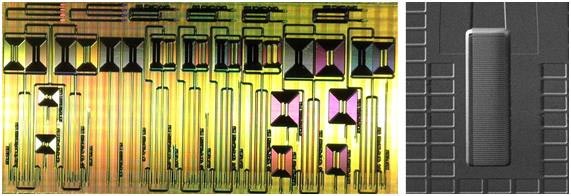
    The left image shows optical microscope of the chip, which is 1 cm wide approximately, and includes about ten sensors. The right image shows electronic microscope of the infrastructure used to inject light into the chip, which is 10 micron wide. Credit: University of Malaga

    The project was proposed by the Andalusian Centre for Nanomedicine and Biotechnology (BIONAND), and it is based on the collaboration of two R&D&I groups of the UMA: the “Biomimetic Dendrimers and Photonics Laboratory” and the “Photonics and Radiofrequency Laboratory,” led by professors Ezequiel Pérez-Inestrosa and Íñigo Molina-Fernández, respectively, both members of the Biomedical Research Institute of Malaga (IBIMA).

    The research team already has a real prototype of a sensing system based on photonic chips, and a measuring device, which is capable of detecting proteins in very low concentrations — inflammation and antibody biomarkers present in patients that are allergic to antibiotics. The prototype has been developed over the past four years and offers quantitative results in a matter of minutes. In fact, such is the sensitivity of the system that is capable of detecting changes in the refraction index of a one-hundred-millionth.

    This multidisciplinary project aims to adapt the system for the detection of SARS-CoV-2 and its antibodies, as well as optimize and reduce the price of the measuring device. To this end, they are going to work on two lines: keep improving the optical sensitivity of the sensor and develop chemical protocols so that only a specific protein that expresses SARS-CoV-2, or the antibodies to such protein, as appropriate, adhere to the surface of the waveguides. “If results are satisfactory, in the future we will be able to develop a completely functional point-of-care equipment to be deployed in primary healthcare centers,” says Halir. According to the researcher, cost reduction would be significant compared to PCR testing, because these tests could be performed directly by family doctors, thus saving the costs of being processed in specialized laboratories and, also, the time frame for results, which would be obtained in a fraction of an hour.

    On the other hand, regarding serological assays, the advantage would be the possibility of detecting lower concentrations of antibodies and, also, determining the exact number of antibodies a tested person has. “If we succeed, we believe that a commercial prototype could be developed in the near future,” says the researcher of the UMA.

    Video (in Spanish):


    Never miss a breakthrough: Join the SciTechDaily newsletter.
    Follow us on Google and Google News.

    Biomedical Engineering COVID-19 University of Malaga
    Share. Facebook Twitter Pinterest LinkedIn Email Reddit

    Related Articles

    “Wonder Material” Can Be Used to Detect COVID-19 Virus Quickly and Accurately

    Wearable Bioelectronics: Detecting COVID-19 With a Sticker on Your Skin

    COVID-19 Coronavirus Breathalyzer Test Developed

    Researchers Join Forces to Investigate the Airborne Transmission of Coronavirus Using a Supercomputer

    New Biomimetic Strategy Quickly Dissolves Blood Clots

    “Acoustic Tweezers” Use Sound Waves to Control Items

    Portable Diagnostics Use Vibration to Move Drops of Liquid

    4D Imaging of Breathing Lungs

    Researchers Study the Use of Photosystem-I as Photovoltaic Panels

    Leave A Reply Cancel Reply

    • Facebook
    • Twitter
    • Pinterest
    • YouTube

    Don't Miss a Discovery

    Subscribe for the Latest in Science & Tech!

    Trending News

    Your Blood Pressure Reading Could Be Wrong Because of One Simple Mistake

    Astronomers Stunned by Ancient Galaxy With No Spin

    Physicists May Be on the Verge of Discovering “New Physics” at CERN

    Scientists Solve 320-Million-Year Mystery of Reptile Skin Armor

    Scientists Say This Daily Walking Habit May Be the Secret to Keeping Weight Off After Dieting

    New Therapy Rewires the Brain To Restore Joy in Depression Patients

    Giant Squid Detected off Western Australia in Stunning Deep-Sea Discovery

    Popular Sugar-Free Sweetener Linked to Liver Disease, Study Warns

    Follow SciTechDaily
    • Facebook
    • Twitter
    • YouTube
    • Pinterest
    • Newsletter
    • RSS
    SciTech News
    • Biology News
    • Chemistry News
    • Earth News
    • Health News
    • Physics News
    • Science News
    • Space News
    • Technology News
    Recent Posts
    • Hidden Warm Water Beneath Antarctica Could Rapidly Raise Global Sea Levels
    • Scientists Revive Ancient Chemistry Trick To Engineer Next-Generation Glass
    • Scientists Use AI To Supercharge Ultrafast Laser Simulations by More Than 250x
    • Scientists Just Found a Surprising Way To Destroy “Forever Chemicals”
    • Popular Supplement Ingredient Linked to Shorter Lifespan in Men
    Copyright © 1998 - 2026 SciTechDaily. All Rights Reserved.
    • Science News
    • About
    • Contact
    • Editorial Board
    • Privacy Policy
    • Terms of Use

    Type above and press Enter to search. Press Esc to cancel.