
Close Menu
    Facebook X (Twitter) Instagram
    SciTechDaily
    • Biology
    • Chemistry
    • Earth
    • Health
    • Physics
    • Science
    • Space
    • Technology
    Facebook X (Twitter) Pinterest YouTube RSS
    SciTechDaily
    Home»Earth»Earth From Space: Flinders Ranges, South Australia [Video]
    Earth

    Earth From Space: Flinders Ranges, South Australia [Video]

    By European Space AgencyAugust 16, 20201 Comment2 Mins Read
    Facebook Twitter Pinterest Telegram LinkedIn WhatsApp Email Reddit
    Share
    Facebook Twitter LinkedIn Pinterest Telegram Email Reddit
    Flinders Ranges South Australia From Space
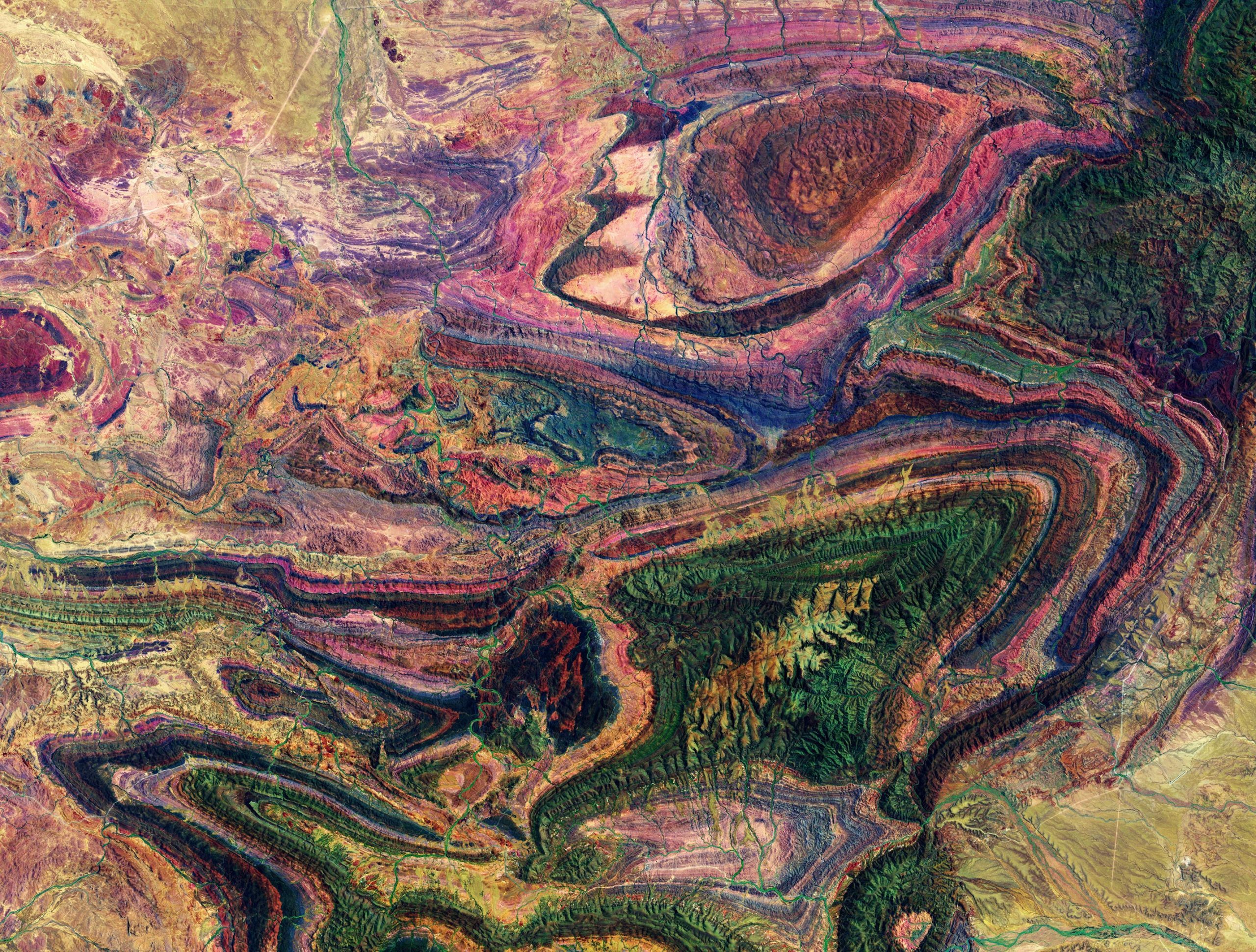
    This image of Flinders Ranges, South Australia, was captured on December 31, 2019, by the Copernicus Sentinel-2 mission – a two-satellite mission to supply the coverage and data delivery needed for Europe’s Copernicus program. The image was processed by selecting spectral bands that can be used for classifying geological features. Credit: Contains modified Copernicus Sentinel data (2019), processed by ESA, CC BY-SA 3.0 IGO

    The many colorful curves and folds of the Flinders Ranges – the largest mountain range in South Australia – are featured in this false-color image captured by the Copernicus Sentinel-2 mission.

    The Flinders mountains are a classic example of a folded mountain range, which are formed when two or more of Earth’s tectonic plates collide – folding and pushing layers of land into mountain ranges.

    The formation of the Flinders Range began to form around 800 million years ago, when an ancient sea deposited sediments into the Adelaide Geosyncline basin. Millions of years later, the sediments were folded into mountains, which have since eroded. However, the folded rocks remained and were uplifted to create the landscape as we see it today.

    The Flinders Ranges stretches for over 400 km across the Australian outback – from Port Pirie to Lake Callabonna. The first humans to inhabit the Flinders Ranges were the Adnyamathanha people, who have inhabited the range for tens of thousands of years.

    The area pictured here shows the Vulkathunha-Gammon Ranges National Park in the Northern Flinders Ranges. The rugged park’s main attractions include deep gorges, chasms and an impressive wilderness. Numerous creeks appear like veins across the entire image, while the straight, white lines visible in the bottom right are dirt roads.

    Slightly west of the image pictured here lies the Ediacara Hills, where some of the oldest fossil evidence of animal life was discovered.

    The flora of the Flinders Ranges are largely species who have adapted to a semi-arid environment, including sugar gum tree, cypress-pine and mallee. Since the eradication of dingoes in the area, the number of red kangaroos, western grey kangaroos and wallaroos in the mountains has increased.

    This image was captured on December 31, 2019, by the Copernicus Sentinel-2 mission – a two-satellite mission to supply the coverage and data delivery needed for Europe’s Copernicus program. The image was processed by selecting spectral bands that can be used for classifying geological features.

    Never miss a breakthrough: Join the SciTechDaily newsletter.
    Follow us on Google and Google News.

    European Space Agency Geography
    Share. Facebook Twitter Pinterest LinkedIn Email Reddit

    Related Articles

    Breathtaking View of Andros, Bahamas From Space [Video]

    Stunning Views of Houston Texas From Copernicus Sentinel-1 Satellite

    Earth From Space: Bolivian Highland Heart [Video]

    Flevoland, Netherlands From Space: One of the Largest Land Reclamation Projects in the World

    Earth From Space: Lake George, Uganda – A Center for Biological Diversity [Video]

    Deforestation in Bolivia Spied From Space Satellite

    Earth From Space: Japanese Archipelago [Video]

    Earth From Space: Faroe Islands [Video]

    Earth From Space: Tromsø, Norway [Video]

    1 Comment

    1. Clyde Spencer on August 17, 2020 9:17 am

      “The flora of the Flinders Ranges are largely species WHO have adapted …”

      Since when are plants elevated to person-hood and found deserving of a personal pronoun?

      Reply
    Leave A Reply Cancel Reply

    • Facebook
    • Twitter
    • Pinterest
    • YouTube

    Don't Miss a Discovery

    Subscribe for the Latest in Science & Tech!

    Trending News

    Scientists Say This Simple Supplement May Actually Reverse Heart Disease

    Warming Oceans Could Trigger a Dangerous Methane Surge

    This Simple Movement Could Be Secretly Cleaning Your Brain

    Male Birth Control Breakthrough: Scientists Find Way To Turn Sperm Production Off and Back On

    A Common Vitamin Could Hold the Key to Treating Fatty Liver Disease

    New Research Shows Vitamin B12 May Hold the Key to Healthy Aging

    These Simple Daily Habits Can Quickly Improve Blood Pressure and Heart Risk Factors

    A Common Nutrient May Play a Surprising Role in Anxiety

    Follow SciTechDaily
    • Facebook
    • Twitter
    • YouTube
    • Pinterest
    • Newsletter
    • RSS
    SciTech News
    • Biology News
    • Chemistry News
    • Earth News
    • Health News
    • Physics News
    • Science News
    • Space News
    • Technology News
    Recent Posts
    • Why Some Brains Switch Gears Faster Than Others
    • Beavers Turn Rivers Into Powerful Carbon Sinks, Study Finds
    • Do Parrots Really Use Names? Scientists Say the Answer May Surprise You
    • A Simple Vitamin May Hold the Key to Treating Rare Genetic Diseases
    • Your Muscles Remember Inactivity – and Aging Makes It Worse
    Copyright © 1998 - 2026 SciTechDaily. All Rights Reserved.
    • Science News
    • About
    • Contact
    • Editorial Board
    • Privacy Policy
    • Terms of Use

    Type above and press Enter to search. Press Esc to cancel.