
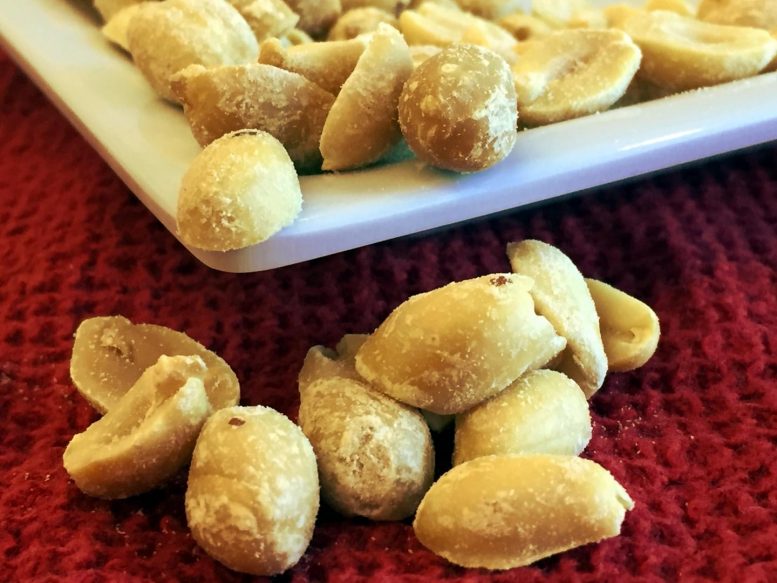
- Peanut consumption was linked with a lower risk of ischemic stroke and cardiovascular disease in a Japanese population study.
- Peanut consumption was not, however, linked to a lower risk of hemorrhagic stroke or ischemic heart disease.
- Incorporating even small amounts of peanuts (4-5 peanuts/day) into your diet may be protective for ischemic stroke and cardiovascular disease.
Asian men and women living in Japan who ate peanuts (on average 4-5 peanuts/day) had a lower risk of having an ischemic stroke or a cardiovascular disease event compared to those who did not eat peanuts, according to new research published today in Stroke, a journal of the American Stroke Association, a division of the American Heart Association.
While previous studies have linked peanut consumption with improved cardiovascular health among Americans, researchers in this study specifically examined the link between peanut consumption and the incidence of different types of stroke (ischemic and hemorrhagic) and cardiovascular disease events (such as stroke and ischemic heart disease) among Japanese men and women.

“We showed for the first time a reduced risk for ischemic stroke incidence associated with higher peanut consumption in an Asian population,” said lead study author Satoyo Ikehara, Ph.D., specially appointed associate professor of public health in the department of social medicine at the Osaka University Graduate School of Medicine in Suita, Japan. “Our results suggest that adding peanuts to your diet has a beneficial effect on the prevention of ischemic stroke.”
Heart-Healthy Nutrients in Peanuts
Peanuts are rich in heart-healthy nutrients, such as “monounsaturated fatty acids, polyunsaturated fatty acids, minerals, vitamins and dietary fiber that help lower risk of cardiovascular disease by reducing risk factors, including high blood pressure, high blood levels of ’bad’ cholesterol, and chronic inflammation,” Ikehara said.
Researchers examined the frequency of how often people reported eating peanuts in relation to stroke occurrence and cardiovascular disease. The analysis includes people who were recruited in two phases, in 1995 and 1998-1999, for a total of more than 74,000 Asian men and women, ages 45 to 74, from the Japan Public Health Center-based Prospective Study. Participants completed a comprehensive lifestyle survey, which included a questionnaire about the frequency of peanut consumption. They were followed for approximately 15 years – through 2009 or 2012, depending on when they were originally enrolled.
The incidence of stroke and ischemic heart disease were determined by linking with 78 participating hospitals in the areas included in the study.
Researchers adjusted for other health conditions, smoking, diet, alcohol consumption, and physical activity, as detailed by participants in the questionnaires. According to medical records, researchers noted 3,599 strokes (2,223 ischemic and 1,376 hemorrhagic) and 849 cases of ischemic heart disease developed during the follow-up period.
The levels of peanut consumption were ranked in four quartiles, with 0 peanuts a day as the least intake compared to 4.3 unshelled peanuts a day (median) as the highest. Compared to a peanut-free diet, researchers found eating about 4-5 unshelled peanuts per day was associated with:
- 20% lower risk of ischemic stroke;
- 16% lower risk of total stroke; and
- 13% lower risk of having cardiovascular disease (this included both stroke and ischemic heart disease).
- A significant association was not found between peanut consumption and a lower risk of hemorrhagic stroke or ischemic heart disease.
The link between peanut consumption and lowered risk of stroke and cardiovascular disease was consistent in both men and women.
Simple Dietary Change, Big Public Health Potential
“The beneficial effect of peanut consumption on risk of stroke, especially ischemic stroke was found, despite the small quantity of peanuts eaten by study participants,” Ikehara said. “The habit of eating peanuts and tree nuts is still not common in Asian countries. However, adding even a small amount to one’s diet could be a simple yet effective approach to help reduce the risk of cardiovascular disease.”
The American Heart Association recommends eating about five servings of unsalted nuts per week; one serving is ½ ounce (2 tablespoons) of nuts. Besides peanuts, the Association also says other healthy nut options include unsalted cashews, walnuts, pecans, macadamia nuts, and hazelnuts.
Several limitations were noted in the study, including the validity and reliability of peanut consumption measurements in the data collection and analysis. Bias caused by these measurements may lead to errors in the association. However, a measurement error correction analysis was performed, and the associations proved to be accurate.
References:
“Peanut Consumption and Risk of Stroke and Ischemic Heart Disease in Japanese Men and Women: The JPHC Study” by Satoyo Ikehara, Hiroyasu Iso, Yoshihiro Kokubo, Kazumasa Yamagishi, Isao Saito, Hiroshi Yatsuya, Takashi Kimura, Norie Sawada, Motoki Iwasaki, Shoichiro Tsugane and the JPHC Study Group, 9 September 2021, Stroke.
DOI: 10.1161/STROKEAHA.120.031212
“Eating Well to Prevent Stroke: Peanuts Are on the Plate” by Walter N. Kernan, 9 September 2021, Stroke.
DOI: 10.1161/STROKEAHA.121.036172
The study was funded by the National Cancer Center Research and Development Fund and a Grant-in-Aid for Cancer Research from the Ministry of Health, Labor and Welfare of Japan.
Never miss a breakthrough: Join the SciTechDaily newsletter.
Follow us on Google and Google News.
1 Comment
What about published evidence that peanut consumption promotes cancer metastasis in Asians (India)? Please give readers a big picture when you can. Thank you.