
Close Menu
    Facebook X (Twitter) Instagram
    SciTechDaily
    • Biology
    • Chemistry
    • Earth
    • Health
    • Physics
    • Science
    • Space
    • Technology
    Facebook X (Twitter) Pinterest YouTube RSS
    SciTechDaily
    Home»Science»Eco-Friendly Superfood: Food-Grade Wheatgrass Variety Released for Public Use
    Science

    Eco-Friendly Superfood: Food-Grade Wheatgrass Variety Released for Public Use

    By American Society of AgronomyJune 30, 2020No Comments3 Mins Read
    Facebook Twitter Pinterest Telegram LinkedIn WhatsApp Email Reddit
    Share
    Facebook Twitter LinkedIn Pinterest Telegram Email Reddit
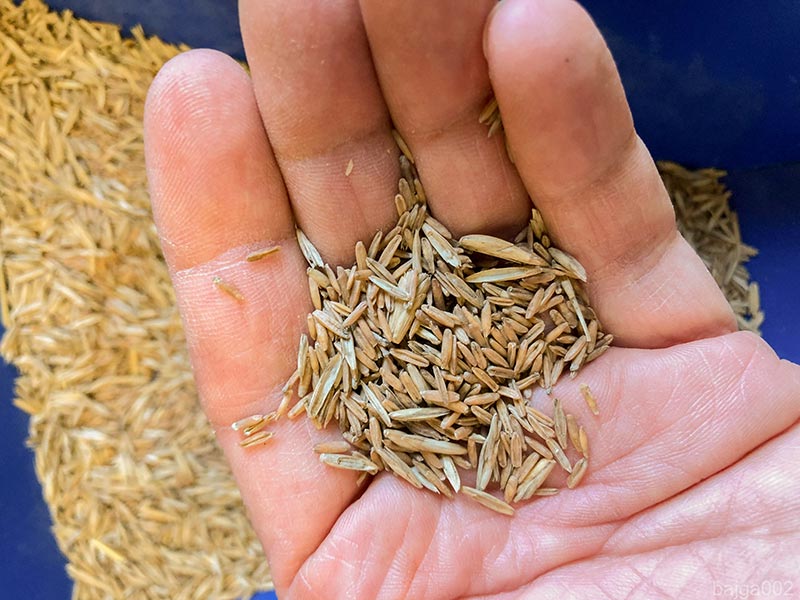
    Wheatgrass Seed
    MN-Clearwater wheatgrass seed, whose grain threshes freely from the hulls 63% of the time. Credit: Brett Heim

    Wheatgrass is packed with beneficial nutrients, which makes the crop a popular superfood. And now, more farmers will have access to growing this beneficial crop.

    Historically, wheatgrass has been used as a crop in animal feed. However, a partnership between The Land Institute and the University of Minnesota changed that.

    The University of Minnesota recently released the first food-grade wheatgrass variety for public use. Now, this eco-friendly and cost-effective crop can be commonly grown as human food, too.

    “The Land Institute has been breeding intermediate wheatgrass since 2002,” explains James Anderson, a professor at the University of Minnesota. “Developed using germplasm provided by The Land Institute in 2011, this variety of wheatgrass is the first to be available for public use.”
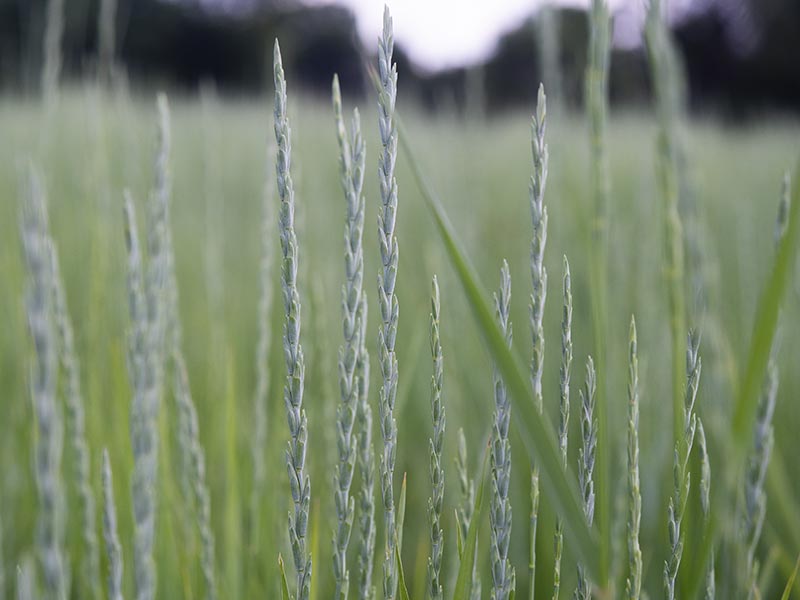
    Wheatgrass Spikes
    MN-Clearwater wheatgrass spikes prior to their pollen shed. Credit: Prabin Bajgain

    The new variety, called MN-Clearwater, was produced by crossing seven wheatgrass parents with desired qualities. These qualities include high grain yield and seed size, which are ideal for farmers. Breeders have been successful in the domestication of this perennial crop that provides benefits to both farmers and the environment.

    “Because wheatgrass is a perennial, it’s known to be a soil builder,” said Anderson. “It provides soil cover throughout the year.”

    Soil coverage prevents soil and nutrient runoff during heavy rainfall. Wheatgrass also has deep, dense roots that capture nutrients before it gets into the groundwater. This helps to protect groundwater-based water systems.

    Other benefits of this new wheatgrass variety compared to other crops like corn and soybeans, are:

    • Less soil loss from the field;
    • Fewer chemicals and fertilizers entering the groundwater system; and
    • Improved carbon storage.

    There are also economic advantages for the farmer growing wheatgrass. As a perennial crop, wheatgrass uses less fertilizer and machinery than annual crops.

    “Wheatgrass can lower the growth of certain weed species,” explains Anderson. Natural weed control also reduces potential costs for herbicides.

    For farmers, the big advantage is that they only must plant once every three years and will have multiple harvests off of the one crop.

    “But the farmer isn’t the only one who benefits,” explains Anderson. “As the first food-grade wheatgrass, food processors and consumers can see a benefit, too.”

    Wheatgrass Plant Breeding Nursery
    Wheatgrass plant breeding nursery in St. Paul, MN. Credit: Prabin Bajgain

    End-users are always searching for new items. MN-Clearwater wheatgrass provides new flavors and nutritional properties that can be added to food products.

    The harvested wheatgrass goes well with wheat-based products. It can be used as a replacement for wheat, but it is best used with it. By using both wheat and wheatgrass as ingredients, the product can maintain its baking and functional properties while offering new flavors.

    The first registered food product using the MN-Clearwater wheatgrass was a beer from Patagonia Provisions, and other products include several locally brewed beers and a limited-edition cereal from Cascadian Farm.

    Reference: “‘MN‐Clearwater’, the first food‐grade intermediate wheatgrass (Kernza perennial grain) cultivar” by Prabin Bajgain, Xiaofei Zhang, Jacob M. Jungers, Lee R. DeHaan, Brett Heim, Craig C. Sheaffer, Donald L. Wyse and James A. Anderson, 14 May 2020, Journal of Plant Registrations.
    DOI: 10.1002/plr2.20042

    More information about MN-Clearwater, the first food-grade wheatgrass variety for public use, can be found in the Journal of Plant Registrations using the DOI link above. Funding for this work was provided by the Initiative for Renewable Energy & the Environment, Minnesota Department of Agriculture, The Forever Green Initiative, and General Mills Foundation.

    Never miss a breakthrough: Join the SciTechDaily newsletter.
    Follow us on Google and Google News.

    Agriculture American Society of Agronomy Food Science Nutrition Plant Science
    Share. Facebook Twitter Pinterest LinkedIn Email Reddit

    Related Articles

    Breeding Better Seeds: Sustainable, More Nutritious Food Production Under the Specter of Global Warming

    Making Wheat/Gluten and Peanuts Less Allergenic

    Keeping California a Powerhouse of Almond Production While Improving Environmental Quality

    Should Ripe Tomatoes Go in the Fridge? Scientific Testing Seeks to Resolve the Debate

    How Lasers and Vibrations Could Guarantee the Perfect Avocado

    Uniting Irrigation Science and Agronomy: Water Management Grows Farm Profits

    Mapping Millet Genetics to Enable Better Varieties for Farmers in Developing Countries

    Game Changer: New Chemical Could Protect Crops From Drought

    Complicated Tradeoffs With Alfalfa and Potassium – Yield, Quality & Nutrition

    Leave A Reply Cancel Reply

    • Facebook
    • Twitter
    • Pinterest
    • YouTube

    Don't Miss a Discovery

    Subscribe for the Latest in Science & Tech!

    Trending News

    Scientists Say This Natural Hormone Reverses Obesity by Targeting the Brain

    35-Million-Year-Old Mystery: Strange Arachnid Discovered Preserved in Amber

    Is AI Really Just a Tool? It Could Be Altering How You See Reality

    JWST Reveals a “Forbidden” Planet With a Baffling Composition

    The Protein “Sabotaging” Aging Muscle Recovery Could Be Key to Surviving Aging

    This Diet–Gut Interaction Could Transform Fat Into a Calorie-Burning Machine

    Scientists Discover Hidden Virus Linked to Colorectal Cancer

    Scientists Discover 132-Million-Year-Old Dinosaur Tracks on South Africa’s Coast

    Follow SciTechDaily
    • Facebook
    • Twitter
    • YouTube
    • Pinterest
    • Newsletter
    • RSS
    SciTech News
    • Biology News
    • Chemistry News
    • Earth News
    • Health News
    • Physics News
    • Science News
    • Space News
    • Technology News
    Recent Posts
    • Scientists Create “Optical Tornadoes” That Twist Light Into a Swirling Vortex
    • Scientists Uncover Hidden Superconductivity in Material Once Thought Only Magnetic
    • Scientists Baffled by Bizarre “Living Fossil” From 275 Million Years Ago
    • 500 Million Years Ago, Life Changed Forever: Scientists Reveal the DNA Changes That Helped Animals Move Onto Land
    • Surprise RNA Discovery Challenges Long-Held Beliefs About How Genes Work
    Copyright © 1998 - 2026 SciTechDaily. All Rights Reserved.
    • Science News
    • About
    • Contact
    • Editorial Board
    • Privacy Policy
    • Terms of Use

    Type above and press Enter to search. Press Esc to cancel.