
Close Menu
    Facebook X (Twitter) Instagram
    SciTechDaily
    • Biology
    • Chemistry
    • Earth
    • Health
    • Physics
    • Science
    • Space
    • Technology
    Facebook X (Twitter) Pinterest YouTube RSS
    SciTechDaily
    Home»Earth»Ecologically Important El Bibane Lagoon Photographed by Astronaut Aboard the Space Station
    Earth

    Ecologically Important El Bibane Lagoon Photographed by Astronaut Aboard the Space Station

    By NASA Earth ObservatoryDecember 29, 20203 Comments2 Mins Read
    Facebook Twitter Pinterest Telegram LinkedIn WhatsApp Email Reddit
    Share
    Facebook Twitter LinkedIn Pinterest Telegram Email Reddit
    El Bibane Lagoon Annotated
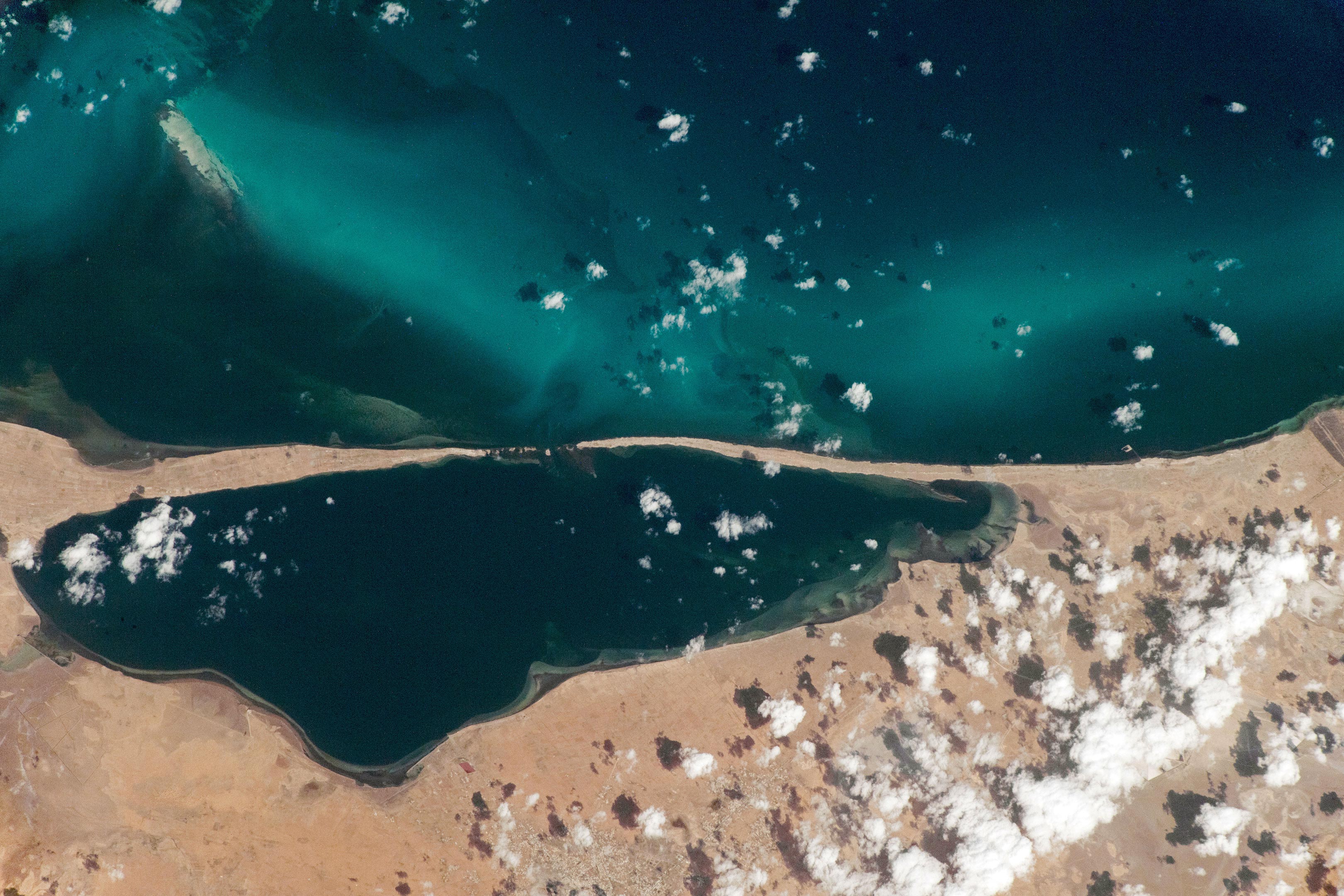
    October 25, 2020. An astronaut on the International Space Station captured this photo of the lagoon on the eastern shore of Tunisia.

    An astronaut aboard the International Space Station (ISS) took this photograph of a 30-kilometer (20-mile) long lagoon on the eastern shore of Tunisia. A narrow sand bar separates it from the Mediterranean Sea. The small town of Al Marsá appears as a slightly darker zone at the head of the lagoon.

    The lagoon is ecologically important. Fish grow to maturity in this protected nursery and then swim out to sea via narrow openings near the middle of the sand bar, making Bibane one of the best known fishing grounds in Tunisia. It is also an important breeding site for migratory shore birds and has been consequently declared a RAMSAR site, a designation for protected wetlands of international ecological significance.

    Bathymetric maps show that the long line of lighter-toned shallow water offshore is a drowned shoreline. A small island, barely above sea level, marks the end of this shoreline. This shore was exposed to active wave action when sea level was lower on several occasions in the past million years.

    This area has been featured in studies of microtopography on Mars. Although not visible from the space station, thin layers of algae form on the salt flats surrounding these coastal lagoons. Known as algal mats, these features have been suggested as possible analogs for small features observed on Mars by the Curiosity rover.

    Astronaut photograph ISS064-E-424 was acquired on October 25, 2020, with a Nikon D5 digital camera using a 460-millimeter lens and is provided by the ISS Crew Earth Observations Facility and the Earth Science and Remote Sensing Unit, Johnson Space Center. The image was taken by a member of the Expedition 64 crew. The image has been cropped and enhanced to improve contrast, and lens artifacts have been removed. The International Space Station Program supports the laboratory as part of the ISS National Lab to help astronauts take pictures of Earth that will be of the greatest value to scientists and the public, and to make those images freely available on the Internet. Additional images taken by astronauts and cosmonauts can be viewed at the NASA/JSC Gateway to Astronaut Photography of Earth. Caption by Justin Wilkinson, Texas State University, JETS Contract at NASA-JSC.

    Never miss a breakthrough: Join the SciTechDaily newsletter.
    Follow us on Google and Google News.

    Astronaut Ecology Geography International Space Station Mediterranean Sea NASA NASA Earth Observatory
    Share. Facebook Twitter Pinterest LinkedIn Email Reddit

    Related Articles

    Eroded Beauty in the Sahara Desert Revealed in Stunning Astronaut Photo

    Paleozoic Plymouths: Plymouth, Massachusetts, and Plymouth, England, Share a Historical Connection Even Older Than the First Thanksgiving

    NASA Picturing Earth: Behind the Scenes [Video]

    Fisheye Over Sinai: Capturing the Intersection of Two Continents From Space

    Socked in Stratovolcano: Astronaut on ISS Captures Incredible View of Uninhabited Atlasov Island

    NASA Picturing Earth: Astronaut Photography In Focus [Video]

    Coloring the Great Salt Lake – Astronaut Takes Beautiful Photograph From Space Station

    Aurora, Meet Airglow: Two of Earth’s Most Colorful Atmospheric Phenomena Meet in Stunning Photo From Space Station

    Dazzling Photo of Chinese Port Cities at Night Taken by an Astronaut on the International Space Station

    3 Comments

    1. The 10th Man on December 30, 2020 7:23 am

      Its too bad this beautiful area is controlled by mouth breathing Ignoramuses. They are too concerned with killing each other then protecting the nature that supports them.

      Reply
    2. Paul on January 2, 2021 3:42 am

      Would you be kind enough to provide more details on how the fish tastes and who cooks within this time of Pandemic

      Reply
    3. Tomáš Hruška on March 7, 2021 3:30 pm

      Vary Karlovy, KarLOVjaN.OVO,sOVO, slOVO. iViiiVii
      Tak jest vaří wallachia

      Reply
    Leave A Reply Cancel Reply

    • Facebook
    • Twitter
    • Pinterest
    • YouTube

    Don't Miss a Discovery

    Subscribe for the Latest in Science & Tech!

    Trending News

    Mezcal “Worm” in a Bottle Mystery: DNA Testing Reveals a Surprise

    New Research Reveals That Your Morning Coffee Activates an Ancient Longevity Switch

    This Is What Makes You Irresistible to Mosquitoes

    Shockingly Powerful Giant Octopuses Ruled the Seas 100 Million Years Ago

    Scientists Stunned by New Organic Molecules Found on Mars

    Rewriting Dinosaur Evolution: Scientists Unearth Remarkable 150-Million-Year-Old Stegosaur Skull

    Omega-3 Supplements Linked to Cognitive Decline in Surprising New Study

    First-of-Its-Kind Discovery: Homer’s Iliad Found Embedded in a 1,600-Year-Old Egyptian Mummy

    Follow SciTechDaily
    • Facebook
    • Twitter
    • YouTube
    • Pinterest
    • Newsletter
    • RSS
    SciTech News
    • Biology News
    • Chemistry News
    • Earth News
    • Health News
    • Physics News
    • Science News
    • Space News
    • Technology News
    Recent Posts
    • Male Birth Control Breakthrough: Scientists Find Way To Turn Sperm Production Off and Back On
    • A Common Vitamin Could Hold the Key to Treating Fatty Liver Disease
    • New Research Shows Vitamin B12 May Hold the Key to Healthy Aging
    • Scientists Map Thousands of Brain Connections With RNA Barcodes
    • This Gene Tweak Turns Strawberries Into Healthier, Tastier Superfruit
    Copyright © 1998 - 2026 SciTechDaily. All Rights Reserved.
    • Science News
    • About
    • Contact
    • Editorial Board
    • Privacy Policy
    • Terms of Use

    Type above and press Enter to search. Press Esc to cancel.