
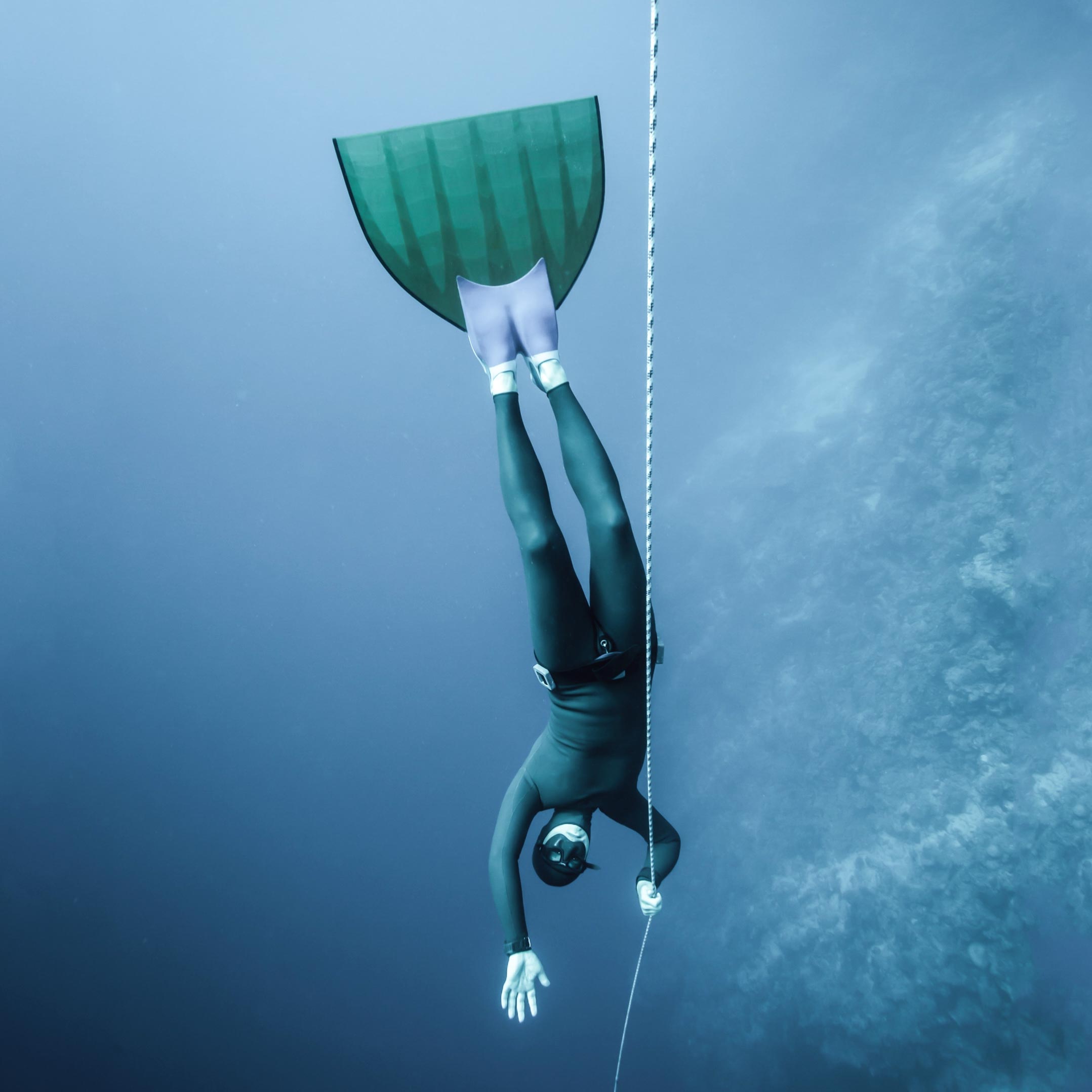
Elite freedivers’ ability to survive near-zero brain oxygen levels could unlock new insights for heart surgery and human endurance.
Elite freedivers who dive unaided in open sea, have brain oxygen levels even lower than seals during their deepest dives, new research at the University of St Andrews has found.
The divers, who reached depths of 107 meters (358 feet), had brain oxygen levels that would be expected to normally induce unconsciousness and had heart rates as low as those of seals, whales, and dolphins while in the water.
The new findings, published in Philosophical Transactions of the Royal Society B on June 28, 2021, are helping scientists understand the physiology of marine mammals and could help find new ways to treat human cardiac patients as well as increase the safety of freedivers.
Potential for Medical Innovation
It could provide information on how freedivers have conditioned themselves to tolerate bouts of extremely low oxygen and brain oxygen delivery to help understand how pre-treatment (pre-conditioning) for surgical procedures could be carried out.
It might be possible to develop these surgical procedures to improve protection of the brain and heart during cardiac surgery, and for post-conditioning therapeutic intervention after events such as a cardiac event.
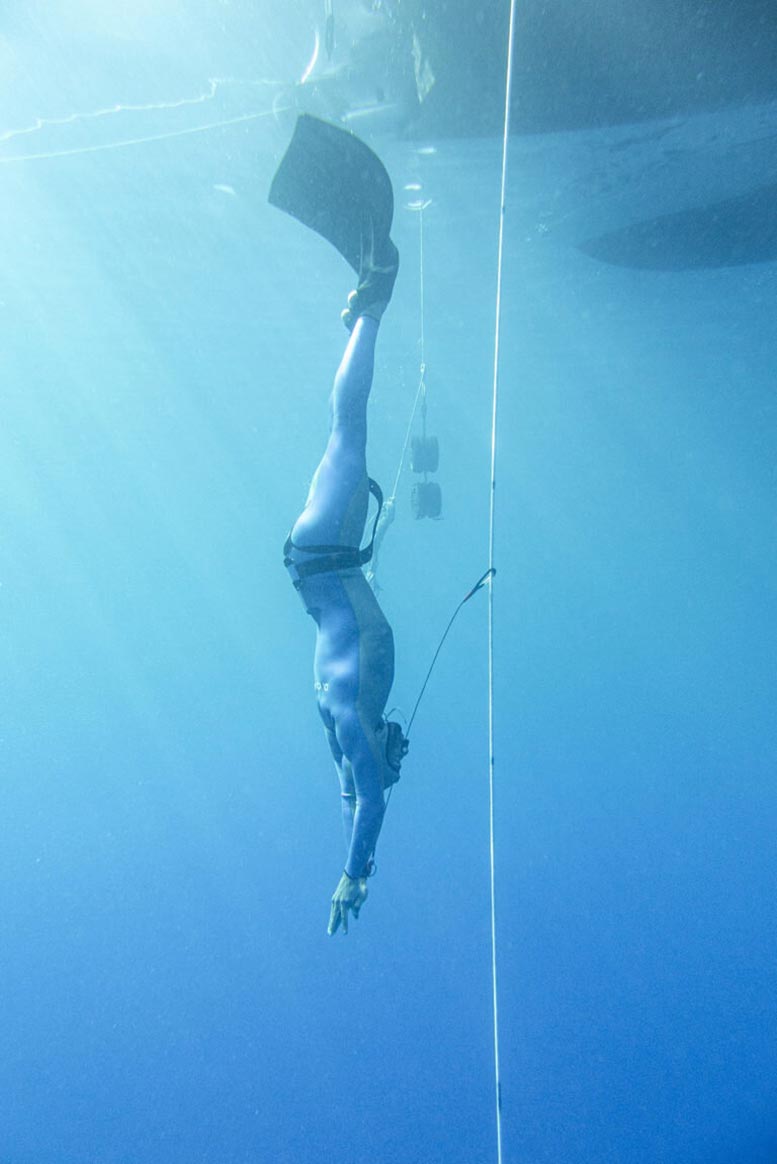
Project Leader Professor Erika Schagatay, of Mid Sweden University, who has researched freediving for three decades, said: “Before now, understanding the effects on these exceptional divers’ brains and cardiovascular systems during such deep dives, and just how far these humans push their bodies, was not possible, as all research was done during simulated dives in the lab.
“The diver can reach a point where hypoxic (low oxygen) blackout occurs, and the diver then needs to be rescued. One of the main aims of the research is to warn the diver and safety personnel of an imminent blackout.”
Using a device that works in a similar way to a smartwatch – using light-emitting LEDs in contact with the skin to measure heart rate, blood volume, and oxygen levels in the brain – the team from the University of St Andrews, Mid Sweden University, Carnegie Mellon University and University of Tokyo created a system that could be worn by the world’s best freedivers during their dives.
The wearable human biomedical technology can measure the physiology of these elite athletes on dives up to depths of at least 107m.
Elite human freedivers achieve some of the most exceptional feats of human endurance, in what is one of the world’s most extreme sports. Making dives lasting more than four minutes and reaching depths of more than 100m on a single breath-hold, freedivers push the limits of what the human body can tolerate.
Lead researcher Dr. Chris McKnight, of the Sea Mammal Research Unit (SMRU) at the University of St Andrews, said: “The divers showed exceptional physiological responses during their dives.
“We measured heart rates as low as 11 beats per minute and blood oxygenation levels, which are normally 98 percent oxygenated, drop to 25 percent, which is far beyond the point at 50 percent at which we expect people to lose consciousness and equivalent to some of the lowest values measured at the top of Mount Everest.”

Engineering for the Deep: Making Data Collection Possible
An existing, non-invasive human bio-medical technology device, using near-infrared spectroscopy (NIRS), developed by Dutch collaborators Artinis Medical Systems, was adapted by researchers at the University of St Andrews to withstand the extreme pressure of deep dives in the open ocean.
Lead engineer on the project Steve Balfour of SMRU Instrumentation at the University of St Andrews, said: “It’s fantastic to be involved in such an exciting and challenging engineering project.
“To see the end-product descending to such depths and returning unique data makes the sleepless nights worth it.”
Dr. McKnight added: “Beyond the exceptional physiological responses that freedivers display and the extremes they can tolerate, they may be a very informative physiological group. Their physiological reactions are so unique and the conditions they’re exposed to are not easily replicated, so they offer a unique way of understanding how the body responds to low blood oxygen, low brain oxygenation, and severe cardiovascular suppression.
“Our instrument now allows us to study unique physiological responses while these incredible athletes do their maximal performances.”
Professor Jana Kainerstorfer, who is leading the Biophotonics lab at Carnegie Mellon University, said: “NIRS is a powerful tool which has extensively been used for measuring brain function in healthy subjects as well as clinical populations.
“Recent advances in miniaturizing NIRS devices have enabled measurements of brain function in more natural environments. The application of NIRS to study diving physiology is particularly exciting and will help us understand how brain function can be maintained under such extreme environmental conditions.”
Reference: “When the human brain goes diving: using near-infrared spectroscopy to measure cerebral and systemic cardiovascular responses to deep, breath-hold diving in elite freedivers” by J. Chris McKnight, Eric Mulder, Alexander Ruesch, Jana M. Kainerstorfer, Jingyi Wu, Naser Hakimi, Steve Balfour, Mathijs Bronkhorst, Jörn M. Horschig, Frank Pernett, Katsufumi Sato, Gordon D. Hastie, Peter Tyack and Erika Schagatay, 28 June 2021, Philosophical Transactions of the Royal Society B.
DOI: 10.1098/rstb.2020.0349
Never miss a breakthrough: Join the SciTechDaily newsletter.
Follow us on Google and Google News.