
Close Menu
    Facebook X (Twitter) Instagram
    SciTechDaily
    • Biology
    • Chemistry
    • Earth
    • Health
    • Physics
    • Science
    • Space
    • Technology
    Facebook X (Twitter) Pinterest YouTube RSS
    SciTechDaily
    Home»Science»Evidence That Giraffes Are a Highly Socially Complex Species – As Socially Sophisticated As Elephants
    Science

    Evidence That Giraffes Are a Highly Socially Complex Species – As Socially Sophisticated As Elephants

    By University of BristolAugust 3, 20211 Comment3 Mins Read
    Facebook Twitter Pinterest Telegram LinkedIn WhatsApp Email Reddit
    Share
    Facebook Twitter LinkedIn Pinterest Telegram Email Reddit
    Mother Rothschild’s Giraffe Tending to Her Baby
    A mother Rothschild’s giraffe tending to her baby. The photo was taken in Soysambu Conservancy, in the Rift Valley region of Kenya. Giraffes are attentive mothers to their offspring, and all female adults in a group are invested in each others’ offspring. Credit: Zoe Muller

    Scientists at the University of Bristol have discovered evidence that giraffes are a highly socially complex species.

    Traditionally, giraffes were thought to have little or no social structure, and only fleeting, weak relationships. However, in the last ten years, research has shown that giraffe social organization is much more advanced than once thought.

    In a paper published on August 2, 2021, in the journal Mammal Review, Zoe Muller, of Bristol’s School of Biological Sciences, has demonstrated that giraffes spend up to 30% of their lives in a post-reproductive state.  This is comparable to other species with highly complex social structures and cooperative care, such as elephants and killer whales which spend 23% and 35% of their lives in a post-reproductive state respectively. In these species, it has been demonstrated that the presence of post-menopausal females offers survival benefits for related offspring.

    The Grandmother Hypothesis in Giraffes

    In mammals – including humans – this is known as the ‘Grandmother hypothesis’ which suggests that females live long past menopause so that they can help raise successive generations of offspring, thereby ensuring the preservation of their genes. Researchers propose that the presence of post-reproductive adult female giraffes could also function in the same way, and supports the author’s assertion that giraffes are likely to engage in cooperative parenting, along matrilines, and contribute to the shared parental care of related kin. 
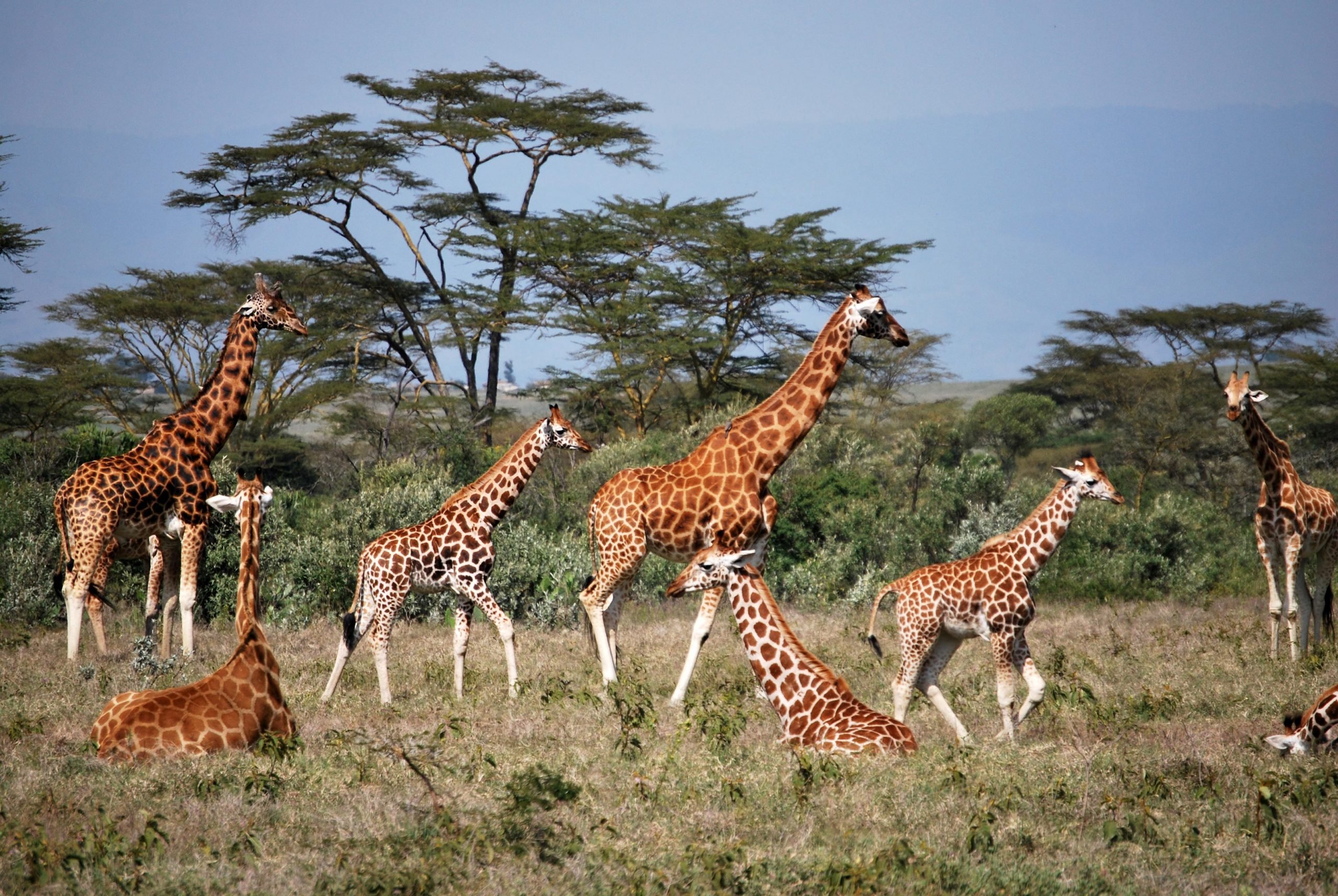
    Giraffes in Group
    Giraffes in a group. Credit: Zoe Muller

    Zoe said: “It is baffling to me that such a large, iconic and charismatic African species has been understudied for so long. This paper collates all the evidence to suggest that giraffes are actually a highly complex social species, with intricate and high-functioning social systems, potentially comparable to elephants, cetaceans, and chimpanzees.

    “I hope that this study draws a line in the sand, from which point forwards, giraffes will be regarded as intelligent, group-living mammals which have evolved highly successful and complex societies, which have facilitated their survival in tough, predator-filled ecosystems.” 

    For scientists to recognize giraffes as a socially complex species, Zoe has suggested eight key areas for future research, including the need to understand the role that older, post-reproductive adults play in society and what fitness benefits they bring for group survival.

    Zoe added: “Recognising that giraffes have a complex cooperative social system and live in matrilineal societies will further our understanding of their behavioral ecology and conservation needs.

    “Conservation measures will be more successful if we have an accurate understanding of the species’ behavioral ecology. If we view giraffes as a highly socially complex species, this also raises their ‘status’ towards being a more complex and intelligent mammal that is increasingly worthy of protection.”

    Reference: “A review of the social behaviour of the giraffe Giraffa camelopardalis: a misunderstood but socially complex species” by Zoe Muller and Professor Stephen Harris, 2 August 2021, Mammal Review.
    DOI: 10.1111/mam.12268

    Never miss a breakthrough: Join the SciTechDaily newsletter.
    Follow us on Google and Google News.

    University of Bristol Zoology
    Share. Facebook Twitter Pinterest LinkedIn Email Reddit

    Related Articles

    Ancient “Terror Beasts” Unearthed in Greenland: 518-Million-Year-Old Giant Predator Worms Challenge History

    Warning – Scientists Uncover Hidden Dangers of Feeding Dogs Raw Meat

    Long-Standing Question Answered – How Mass Extinction Paved the Way for Oysters and Clams

    Evolution’s Whiplash: Plesiosaurs Doubled Their Neck-Length by Gaining New Vertebrae

    Scientists Discover That Extremely Rare Collection of 160-Million-Year-Old Sea Spider Fossils Are Closely Related to Living Species

    Remarkable Chinese Fossil Reveals Reptiles Using Whale-Like Filter Feeding 250 Million Years Ago

    How an Ancient Herbivore Ate Their Way to Extinction

    Skipping Evolution: The Kangaroos That Didn’t Hop

    What Was the Purpose of the Mysterious Ancient Stone Spheres? Scientists Finally Have an Answer

    1 Comment

    1. The 10th Man on August 3, 2021 6:48 am

      It is amazing what you can learn if you stop killing things and watch them instead.

      Reply
    Leave A Reply Cancel Reply

    • Facebook
    • Twitter
    • Pinterest
    • YouTube

    Don't Miss a Discovery

    Subscribe for the Latest in Science & Tech!

    Trending News

    Millions of People Have Osteopenia Without Realizing It – Here’s What You Need To Know

    Researchers Discover Boosting a Single Protein Helps the Brain Fight Alzheimer’s

    World-First Study Reveals Human Hearts Can Regenerate After a Heart Attack

    Why Your Dreams Feel So Real Sometimes and So Strange Other Times

    This Simple Home Device May Boost Brain Power in Adults Over 40

    Enormous Prehistoric Insects Puzzle Scientists

    Scientists Develop Bioengineered Chewing Gum That Could Help Fight Oral Cancer

    After 37 Years, the World’s Longest-Running Soil Warming Experiment Uncovers a Startling Climate Secret

    Follow SciTechDaily
    • Facebook
    • Twitter
    • YouTube
    • Pinterest
    • Newsletter
    • RSS
    SciTech News
    • Biology News
    • Chemistry News
    • Earth News
    • Health News
    • Physics News
    • Science News
    • Space News
    • Technology News
    Recent Posts
    • This New “Sound Laser” Could Measure Gravity With Stunning Precision
    • Quantum Breakthrough: New Algorithm Solves “Impossible” Materials in Seconds
    • Could the Universe’s Hidden Shape Solve One of Physics’ Biggest Mysteries?
    • Rewriting Dinosaur Evolution: Scientists Unearth Remarkable 150-Million-Year-Old Stegosaur Skull
    • Scientists Identify Two Simple Treatments for Cancer-Related Cognitive Impairment
    Copyright © 1998 - 2026 SciTechDaily. All Rights Reserved.
    • Science News
    • About
    • Contact
    • Editorial Board
    • Privacy Policy
    • Terms of Use

    Type above and press Enter to search. Press Esc to cancel.