
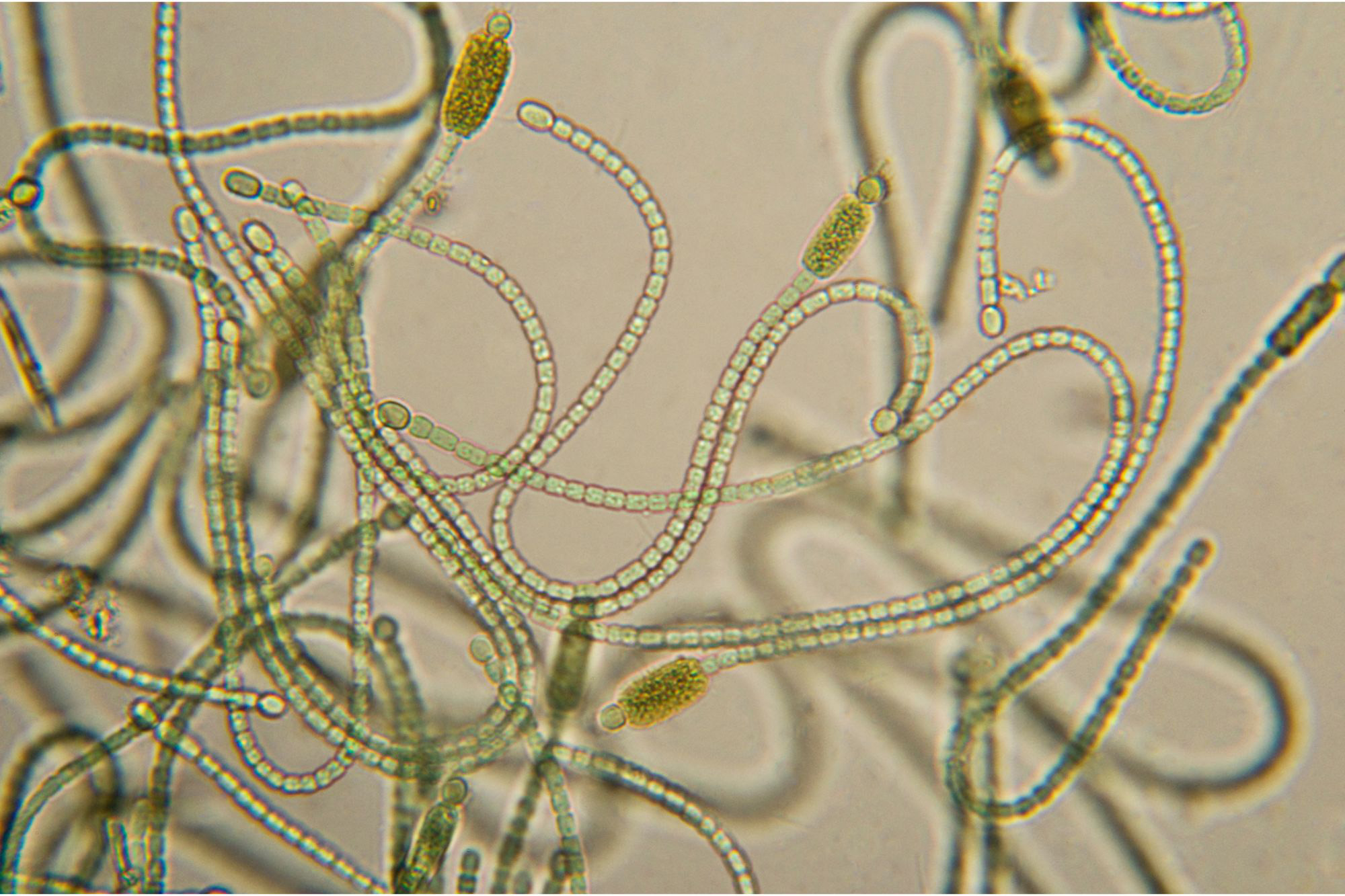
Nitrogen is a nutrient essential for all life on Earth. Despite the abundance of nitrogen gas (N2) in the atmosphere, it remains largely inaccessible to many life forms until it undergoes nitrogen fixation. This vital process transforms dinitrogen into ammonium, an important source of inorganic nitrogen.
While there are bacteria that are able to reduce dinitrogen to ammonium, researchers at the University of Rhode Island, Institut de Ciències del Mar in Barcelona, University of California at Santa Cruz, and the Massachusetts Institute of Technology have discovered nitrogen-fixing symbiotic organisms exhibiting behaviors similar to organelles. In fact, researchers posit these symbiotic organisms – UCYN-A, a species of cyanobacteria – may be evolving organelle-like characteristics. Their study was recently published in the journal Cell.
Symbiotic Relationship and Its Implications
UCYN-A live in a symbiotic relationship with a closely related group of marine algae, B. bigelowii, in areas of the open ocean that are often low in nutrients. Most nitrogen-fixing bacteria have mechanisms to regulate dinitrogen use when fixed sources of nitrogen are available, alleviating the high energetic cost of this process. However, UCYN-A have lost the genes allowing this and are able to fix nitrogen gas into ammonium even in nutrient-rich environments. The host, in-turn, provides it with carbon fixed photosynthetically by its chloroplasts.
The study details how researchers found a size relationship between UCYN-A and their symbiotic partner cells – consistent with the size relationships between other organelles and their hosts. As organelles get larger, so do their host cells – eventually dividing and replicating. Mathematical modeling revealed the metabolic trade-offs which regulate the relative cell size through nutrient acquisition and exchange.
Evolutionary Path of Nitrogen-Fixing Organelles
“It requires lots of energy as well as electrons to fix nitrogen gas, to make it into something useful,” said Keisuke Inomura, assistant professor of oceanography at URI’s Graduate School of Oceanography and one of the study’s lead authors. “If UCYN-A are moving along the evolutionary path toward developing into nitrogen-fixing organelles and we find cells aside from B. bigelowii also have such organelles, or are evolving similarly, it could be a game-changer.”
While organelles such as mitochondria and chloroplasts are much further along on the evolutionary spectrum, researchers contend that what they are seeing may be a snapshot of the evolutionary process of bacterial-derived organelles that are nitrogen-fixing.
“Our study focuses on a much more recent symbiotic relationship that emerged about 100 million years ago, allowing us to explore the evolution of organelle formation in its early stages,” explained Francisco Cornejo, co-lead author and postdoc researcher in the department of marine biology and oceanography at the Institut de Ciències del Mar.
Researchers note, however, that more study is needed to demonstrate whether this is the case.
“The surprisingly tight size relationship between UCYN-A and its host can be explained by the resource economy of the partners. It suggests that UCYN-A may be on the path to becoming an organelle: whether it may already be so is the subject of ongoing research,” said Michael J. Follows, professor of earth, atmospheric and planetary sciences at MIT and a member of the research team.
Reference: “Metabolic trade-offs constrain the cell size ratio in a nitrogen-fixing symbiosis” by Francisco M. Cornejo-Castillo, Keisuke Inomura, Jonathan P. Zehr and Michael J. Follows, 11 March 2024, Cell.
DOI: 10.1016/j.cell.2024.02.016
Never miss a breakthrough: Join the SciTechDaily newsletter.
Follow us on Google and Google News.