
Close Menu
    Facebook X (Twitter) Instagram
    SciTechDaily
    • Biology
    • Chemistry
    • Earth
    • Health
    • Physics
    • Science
    • Space
    • Technology
    Facebook X (Twitter) Pinterest YouTube RSS
    SciTechDaily
    Home»Science»Mind Mingle: Brain Synchrony in Family Dynamics
    Science

    Mind Mingle: Brain Synchrony in Family Dynamics

    By University of EssexApril 16, 2024No Comments3 Mins Read
    Facebook Twitter Pinterest Telegram LinkedIn WhatsApp Email Reddit
    Share
    Facebook Twitter LinkedIn Pinterest Telegram Email Reddit
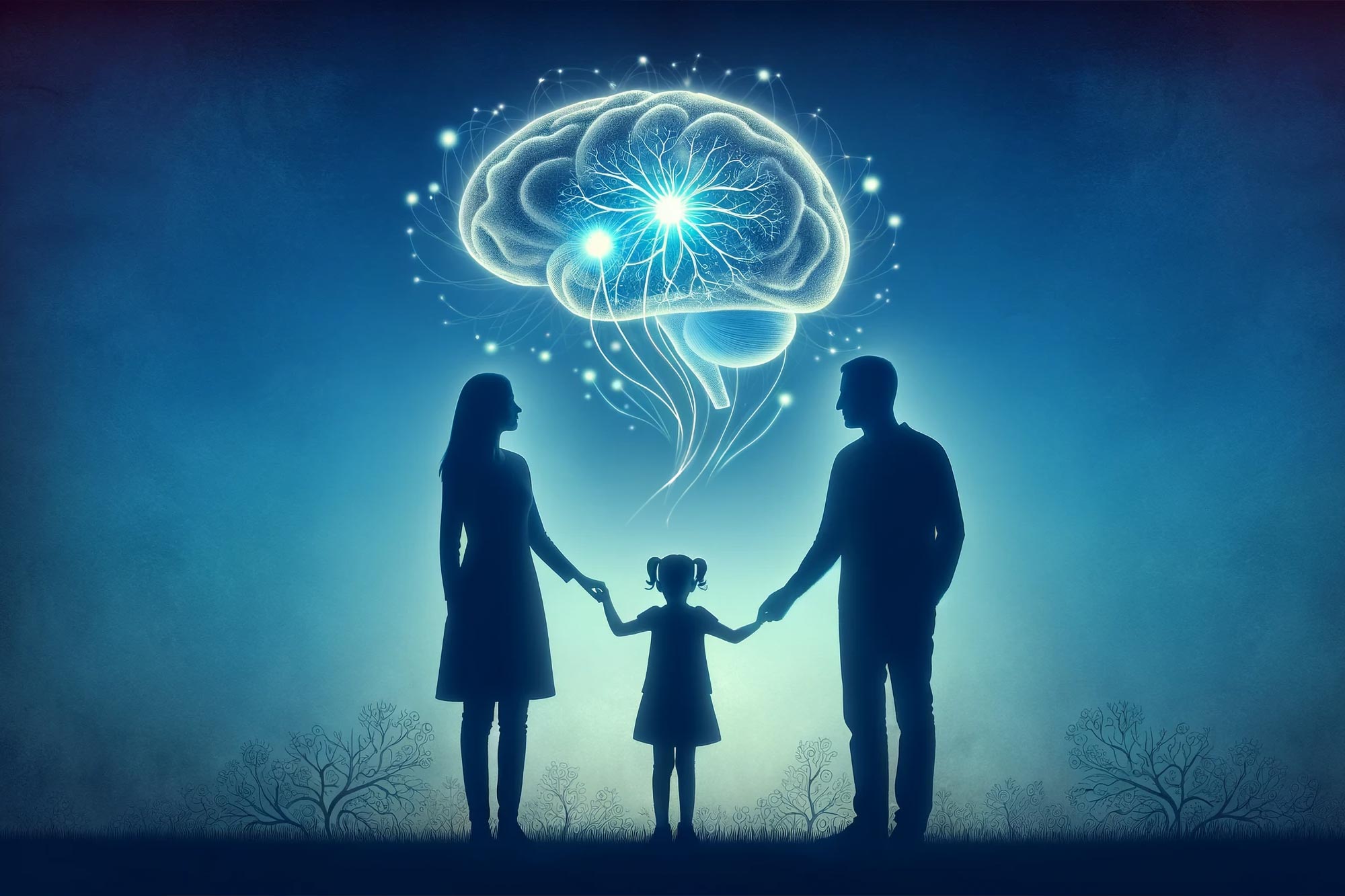
    Parents Child Brain Art Concept
    A study found that mothers with insecure attachments have heightened brain-to-brain synchrony with their children, suggesting a compensatory mechanism for relationship challenges. Credit: SciTechDaily.com

    More synchrony between parents and children may not always be better, new research has revealed.

    For the first time a new University of Essex study looked at behavioural and brain-to-brain synchrony in 140 families with a special focus on attachment.

    It looked at how they feel and think about emotional bonds whilst measuring brain activity as mums and dads solved puzzles with their kids.

    The study – published in the journal Developmental Science – discovered that mums with insecure attachment traits showed more brain-to-brain synchrony with their children.

    Importance of Attachment

    Dr. Pascal Vrticka, from the Department of Psychology, said: “For secure child attachment development, sensitive and mutually attuned interactions with parents are crucial.

    “If the parent, here the mother, has more insecure attachment traits it may be more difficult for the dyad to achieve optimal behavioral synchrony.

    “Increased brain-to-brain synchrony may reflect a neural compensation mechanism to overcome otherwise less attuned interaction elements.”

    The study also discovered different behavioral and brain-to-brain synchrony patterns depending on whether the parent was a mum or a dad.

    Gender Differences in Synchrony

    Fathers and children showed stronger brain-to-brain synchrony, whereas mums and their kids had stronger behavioral synchrony.

    These findings suggest higher father-child brain-to-brain synchrony may reflect a neural compensation strategy to counteract a relative lack of behavioral synchrony.

    It hopes this research will springboard studies into parent-child relationships and open up new avenues for intervention and prevention.

    Future Research and Applications

    It comes as Dr. Vrticka prepares to work with the NHS to explore family relationships.

    He added: “Together with the East Suffolk and North Essex NHS Foundation Trust, we will soon start looking at synchrony within families with neurodivergent children and children with experiences of care and adoption.

    “Our aim is to find behavioral and neurobiological correlates of an optimal range of synchrony to help all families with their relationships and child attachment development.

    “In doing so, we must appreciate that not only low but also high synchrony can signal interaction and relationship difficulties.”

    Methodology of the Study

    Attachment was assessed in parents with an interview and in children with a story completion task.

    Brain-to-brain synchrony between parents and children was studied with functional near-infrared spectroscopy (fNIRS) hyper scanning.

    Finally, the parent-child interaction was video-recorded and coded for behavioral synchrony.

    Reference: “Visualizing the invisible tie: Linking parent–child neural synchrony to parents’ and children’s attachment representations” by Trinh Nguyen, Melanie T. Kungl, Stefanie Hoehl, Lars O. White and Pascal Vrtička, 24 March 2024, Developmental Science.
    DOI: 10.1111/desc.13504

    The study was led by Dr. Trinh Nguyen who now works at the Italian Institute of Technology in Rome, Italy, and Dr. Melanie Kungl from the University of Erlangen-Nuremberg, Germany – along with colleagues from Vienna, Berlin, and Leipzig.

    Never miss a breakthrough: Join the SciTechDaily newsletter.
    Follow us on Google and Google News.

    Brain Neuroscience Psychology University of Essex
    Share. Facebook Twitter Pinterest LinkedIn Email Reddit

    Related Articles

    Sparking Creativity: Meditation and Training Are Better Than Drugs and Alcohol

    One Brain Region Teaches Another During Sleep, Converting New Data Into Enduring Memories

    Researchers Demonstrate Brainwave Synchronization Without Physical Presence

    More Accurate Than Test Scores: Scientists Discover a New Way To Measure Learning

    Physicist Claims To Have Solved the Mystery of Consciousness

    Nostalgia Can Relieve Pain: Viewing Images From Childhood Reduces Pain Perception

    Nostalgia Pain Relief: Viewing Images From Childhood Reduces Pain Perception

    “Hijacked” by Arousal: How a Racing Heart May Alter Decision-Making Brain Circuits

    Listening to Mozart Can Make You Smarter but No More Than Justin Bieber

    Leave A Reply Cancel Reply

    • Facebook
    • Twitter
    • Pinterest
    • YouTube

    Don't Miss a Discovery

    Subscribe for the Latest in Science & Tech!

    Trending News

    Your Blood Pressure Reading Could Be Wrong Because of One Simple Mistake

    Astronomers Stunned by Ancient Galaxy With No Spin

    Physicists May Be on the Verge of Discovering “New Physics” at CERN

    Scientists Solve 320-Million-Year Mystery of Reptile Skin Armor

    Scientists Say This Daily Walking Habit May Be the Secret to Keeping Weight Off After Dieting

    New Therapy Rewires the Brain To Restore Joy in Depression Patients

    Giant Squid Detected off Western Australia in Stunning Deep-Sea Discovery

    Popular Sugar-Free Sweetener Linked to Liver Disease, Study Warns

    Follow SciTechDaily
    • Facebook
    • Twitter
    • YouTube
    • Pinterest
    • Newsletter
    • RSS
    SciTech News
    • Biology News
    • Chemistry News
    • Earth News
    • Health News
    • Physics News
    • Science News
    • Space News
    • Technology News
    Recent Posts
    • Mixing Edible Cannabis and Alcohol May Impair Driving More Than Scientists Expected
    • Scientists Reverse Stroke Damage Using Stem Cells in Breakthrough Study
    • Eating One Egg a Day Could Cut Alzheimer’s Risk by 27%
    • Hidden Warm Water Beneath Antarctica Could Rapidly Raise Global Sea Levels
    • Scientists Revive Ancient Chemistry Trick To Engineer Next-Generation Glass
    Copyright © 1998 - 2026 SciTechDaily. All Rights Reserved.
    • Science News
    • About
    • Contact
    • Editorial Board
    • Privacy Policy
    • Terms of Use

    Type above and press Enter to search. Press Esc to cancel.