
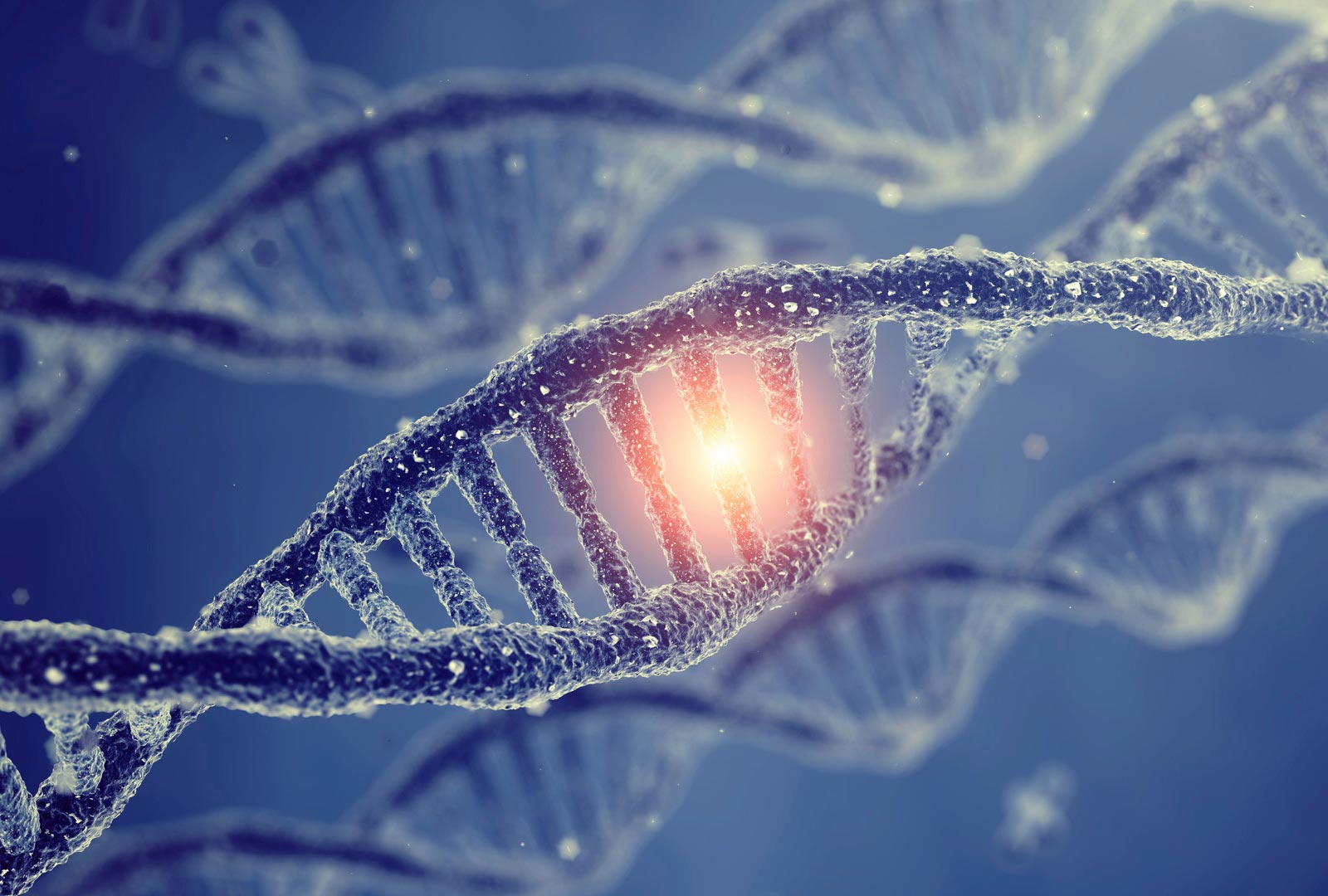
New research challenges the long-standing idea that most fixed genetic mutations are neutral.
For many years, scientists studying evolution have believed that most genetic changes influencing how genes and proteins evolve are essentially neutral. These mutations were thought to be neither harmful nor helpful, allowing them to pass through natural selection without much notice.
A new study from the University of Michigan challenges this long-held view.
As species evolve, mutations arise and sometimes become fixed, meaning every member of a population eventually carries the same change. The Neutral Theory of Molecular Evolution argues that most fixed mutations fall into this neutral category. Harmful mutations are expected to be removed by natural selection, and beneficial ones are considered so uncommon that neutral changes should dominate, explains evolutionary biologist Jianzhi Zhang.
Zhang and his team set out to test this assumption. Their analysis revealed that beneficial mutations appear far more often than the Neutral Theory allows. At the same time, the actual rate at which mutations become fixed is much too low to match the high number of advantageous changes the researchers documented.
Environmental Shifts and the Fate of Mutations
To explain the mismatch in their results, the researchers propose that a mutation that helps an organism in one setting can become harmful when conditions shift. Because environments often change, these useful mutations may disappear before they have time to become fixed in a population. The work, funded by the U.S. National Institutes of Health, appears in the journal Nature Ecology and Evolution.
“We’re saying that the outcome was neutral, but the process was not neutral,” said Zhang, U-M professor of ecology and evolutionary biology. “Our model suggests that natural populations are not truly adapted to their environments because environments change very quickly, and populations are always chasing the environment.”
Zhang says their new theory, called Adaptive Tracking with Antagonistic Pleiotropy, tells us something about how well all living things are adapted to their environments.
“I think this has broad implications. For example, humans. Our environment has changed so much, and our genes may not be the best for today’s environment because we went through a lot of other different environments. Some mutations may be beneficial in our old environments, but are mismatched to today,” Zhang said.
“At any time when you observe a natural population, depending on when the last time the environment had a big change, the population may be very poorly adapted or it may be relatively well adapted. But we’re probably never going to see any population that is fully adapted to its environment, because a full adaptation would take longer than almost any natural environment can remain constant.”
From Morphology to Molecules
The Neutral Theory of Molecular Evolution was first proposed in the 1960s. Previously, scientists studied evolution based on the morphology and physiology, or appearance, of organisms. But starting in the 1960s, scientists were able to start sequencing proteins, and later, genes. This prompted researchers to look at evolution at the molecular level.
To measure beneficial mutation rates, Zhang and colleagues investigated large deep mutational scanning datasets produced by his and other labs. In this kind of scanning, the scientists created many mutations on a specific gene or region of the genome in model organisms such as yeast and E. coli.
The researchers then followed the organism over many generations, comparing them against the wild type, or the most common version existing in nature, of the organisms. This allowed the researchers to measure their growth and compare their growth rate to the wild type, which is how they estimated the effect of the mutation.
They found that more than 1% of mutations are beneficial, orders of magnitude greater than what the Neutral Theory allows. This amount of beneficial mutations would lead to more than 99% of fixations being beneficial and a rate of gene evolution that is much higher than the rate that is observed in nature. The researchers realized they had made a mistake in assuming an organism’s environment remained constant.
Putting Changing Environments to the Test
To investigate the impacts of a changing environment, Zhang’s research team compared two groups of yeast. One group evolved in a constant environment for 800 generations (each generation lasted 3 hours), while the second group evolved in a changing environment, in this case composed of 10 different kinds of media, or solution, that the yeast grew in. The second yeast group grew in the first media for 80 generations, in the second media for another 80 generations, and so on, for a total of 800 generations as well.
The researchers found that there were far fewer beneficial mutations in the second group compared to the first. Although the beneficial mutations occurred, they didn’t have a chance to become fixed before the environment shifted.
“This is where the inconsistency comes from. While we observe a lot of beneficial mutations in a given environment, those beneficial mutations do not have a chance to be fixed because as their frequency increases to a certain level, the environment changes,” Zhang said. “Those beneficial mutations in the old environment might become deleterious in the new environment.”
However, Zhang says there is a caveat: The data they used came from yeast and E. coli, two unicellular organisms in which it’s relatively easy to measure the fitness effects of mutations. Deep mutational scanning data collected from multicellular organisms would tell whether their findings from unicellular organisms apply to multicellular organisms such as humans. Next, the researchers are planning a study to understand why it takes so long for organisms to fully adapt to a constant environment.
Reference: “Adaptive tracking with antagonistic pleiotropy results in seemingly neutral molecular evolution” by Siliang Song, Piaopiao Chen, Xukang Shen and Jianzhi Zhang, 14 November 2025, Nature Ecology & Evolution.
DOI: 10.1038/s41559-025-02887-1
The study was funded by the National Institutes of Health.
Never miss a breakthrough: Join the SciTechDaily newsletter.
Follow us on Google and Google News.
3 Comments
“Their analysis revealed that beneficial mutations appear far more often than the Neutral Theory allows.”
I think that there is a sampling problem. Assuming a symmetrical, normal distribution of mutations within the existing population, both beneficial and harmful on the tails of the statistical distribution, many of the harmful mutations will be extinguished even before birth, leading to spontaneous abortions, or even killing the mother if the mutation results in a fetus too large to be birthed. If an individual with a harmful mutation survives birthing, then it has to survive the dangerous juvenile phase, where it doesn’t have the necessary speed, strength, and agility to avoid predation, and a disability like impaired mobility makes the juvenile even more vulnerable, leading to an early removal from the gene pool. Lastly, if a mutation impairs reproductive ability, the genes will never be passed on to another generation. All considered, if one only samples the survivors, which is all that is available to sample among adults, then it will appear that beneficial mutations arise more frequently than harmful mutations, when the reality is that harmful mutations are just extinguished more frequently and quickly.
Here is some actual scieitific facts. Adaptations credited to evolution are actually epigenetic/epigenome-derived gene expression modifications. These by their logisitics have an intelligent design signature.
So millions of years has transpired? A simple experiment will show it true or false. Here it is. Merely, take actual preserved dinosaur collagen from their fossils and give them a Carbon 14 test. It shoule be depleted whuile regular carbon atoms are still present. There you go/ It’s that easy. So easy a caveman can do it.
One other test with the dinosaur collagen would be to check the chirality of it. Collagen is a protein. If it is 50/50 then a lot of time has passed. It is tis nearly all left-handed molecules, then mere thousands of years has passed.
If the two above experiments are not friendly to deep time, then there has not been enough time for evolution to have happened.
Look at all my knowledge and I didn’t even stay at a Holiday Inn Express last night. Who is like the Flip? Decades of scientific study with any compensation for it.
This has been a public service annoucement by the Herbster.
As far as I know, it IS depleted of C14. If you are implying otherwise, you need to provide a reliable source demonstrating otherwise.