
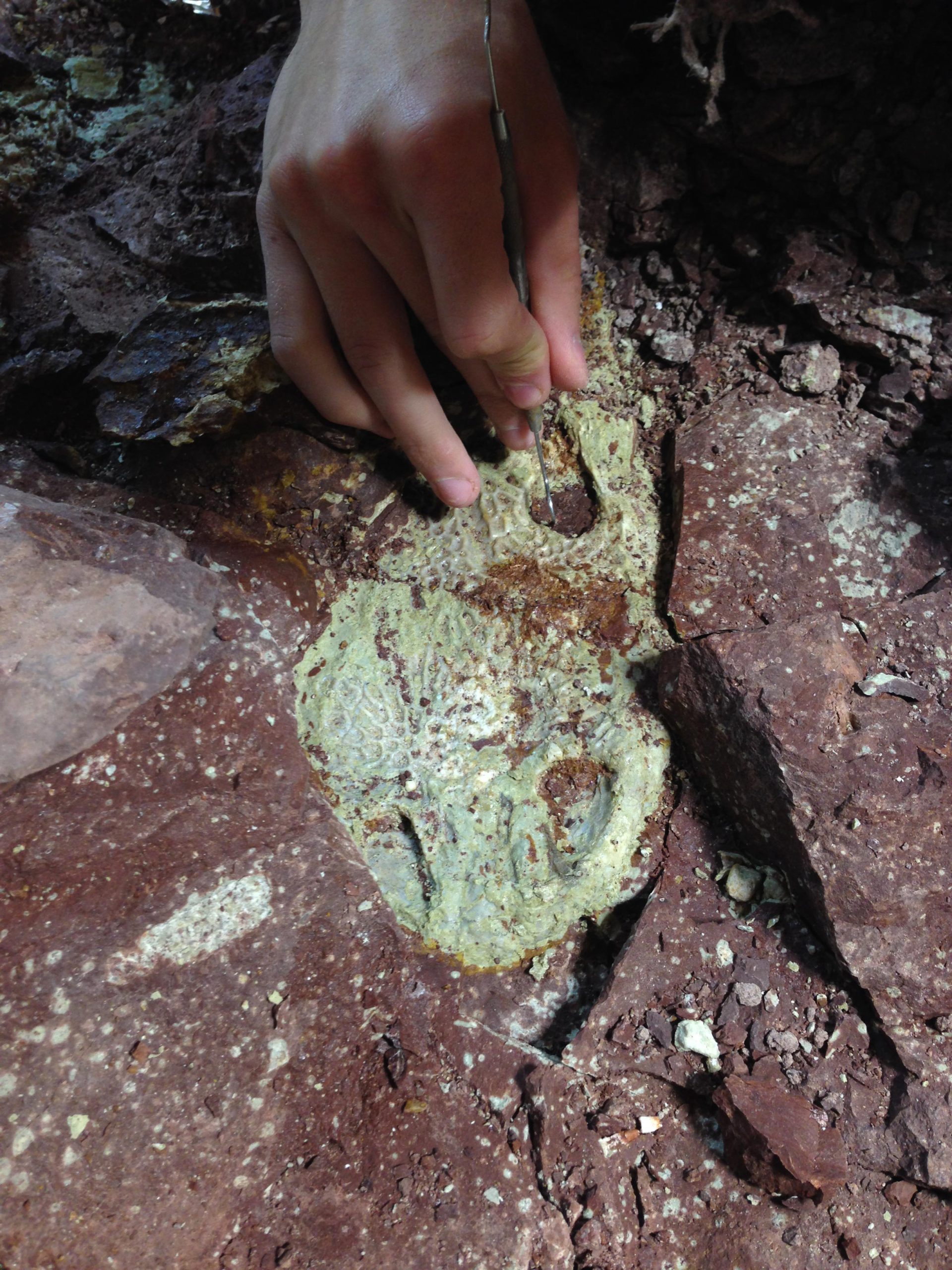
An in-depth assessment reveals that dozens of giant amphibians died on an ancient floodplain.
Around 230 million years ago, dozens of amphibians died together on an ancient floodplain, according to a study published on April 2, 2025, in the open-access journal PLOS One by Aaron M. Kufner of the University of Wisconsin–Madison and colleagues.
During the early Age of Dinosaurs, alligator-sized amphibians known as metoposaurid temnospondyls were widespread in freshwater environments. Fossil sites with large clusters of these animals are not uncommon, but understanding how these bonebeds formed has been challenging, often due to limited contextual evidence or insufficient analysis.
A Unique Fossil Site: Nobby Knob
In this study, Kufner and colleagues perform an in-depth assessment of a site called Nobby Knob in Dubois, Wyoming, where fossil remains of a temnospondyl called Buettnererpeton bakeri were found in rocks dating to roughly 230 million years ago. Fine-grained ancient soils and finely layered sediments indicate that these fossils were buried in a floodplain setting.
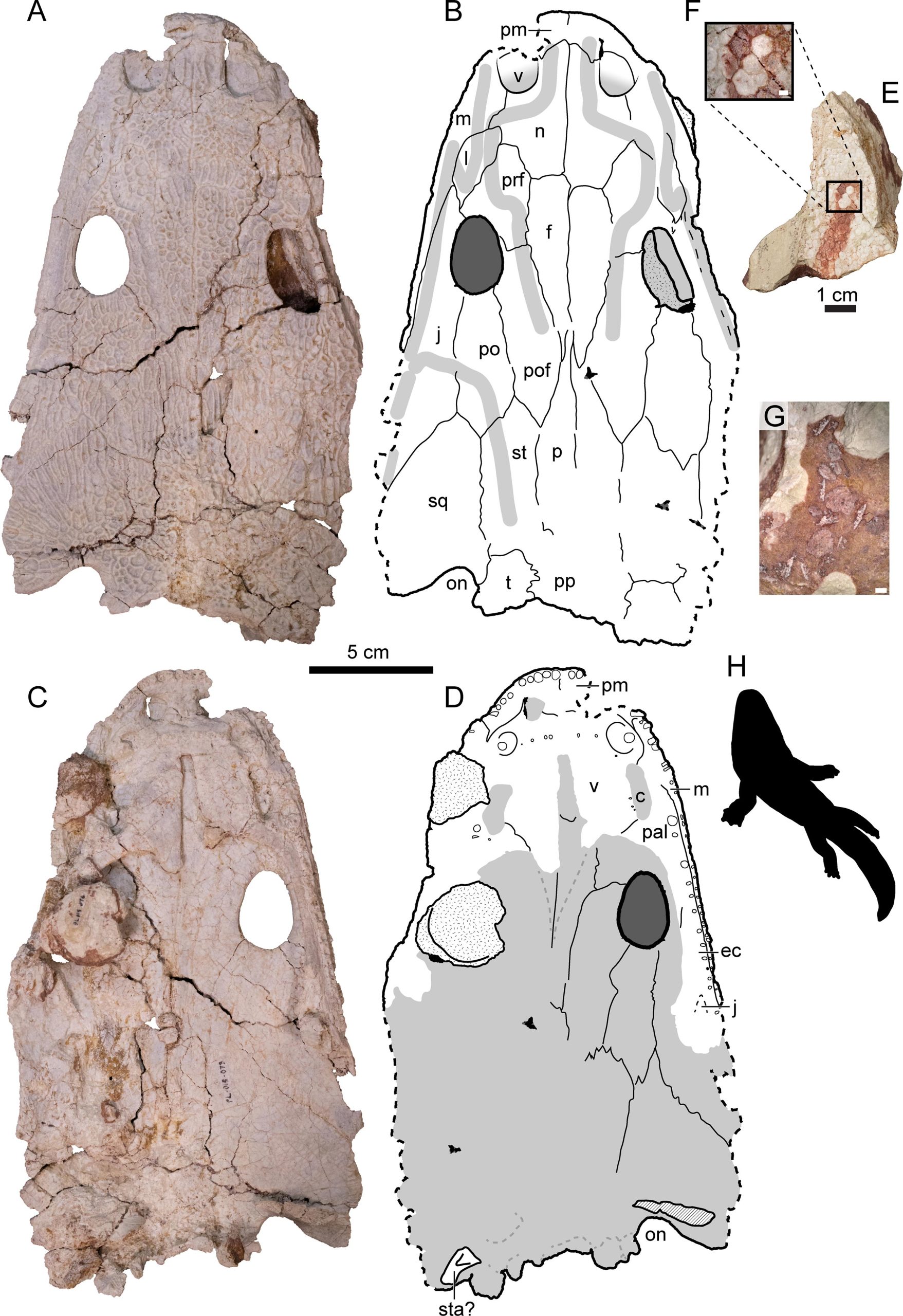
Unlike similar sites, the water was evidently very calm, since even very delicate parts of the skeletons are preserved intact, and the bones aren’t arranged in any pattern that would suggest strong currents. The authors conclude that these animals may have concentrated in this area as a breeding colony or because of restricted waterways due to drought and were ultimately buried together where they died.
Scientific Significance and Future Research
This assemblage represents more than of half of the known fossils of Buettnererpeton, providing an excellent opportunity for future study of the species. Whether or not this kind of die-off was common among temnospondyls is difficult to assess since few other sites have received this level of detailed examination and there is limited data regarding how temnospondyl burial varies with different environments. The authors suggest these as directions for future research.
“This assemblage is a snapshot of a single population rather than an accumulation over time,” said Kufner, “that more than doubles the number of known Buettnererpeton bakeri individuals.” Whether or not this kind of die-off was common among temnospondyls is difficult to assess considering most bonebeds of this group represent accumulations that were transported from the site of death. Few other metoposaurid sites have received this level of detailed examination highlighting the importance of mapping and systematic data collection duringthe excavation and preparation of mass mortality beds. The Nobby Knob fossil assemblage provides an excellent opportunity for future research into Late Triassic ecosystems and metoposaurid biology.
Reference: “A new metoposaurid (Temnospondyli) bonebed from the lower Popo Agie Formation (Carnian, Triassic) and an assessment of skeletal sorting” by Aaron M. Kufner, Max E. Deckman, Hannah R. Miller, Calvin So, Brandon R. Price and David M. Lovelace, 2 April 2025, PLOS ONE.
DOI: 10.1371/journal.pone.0317325
Funding: A David B. Jones Foundation grant awarded to DML helped fund the excavation of this material.
Never miss a breakthrough: Join the SciTechDaily newsletter.
Follow us on Google and Google News.