
Close Menu
    Facebook X (Twitter) Instagram
    SciTechDaily
    • Biology
    • Chemistry
    • Earth
    • Health
    • Physics
    • Science
    • Space
    • Technology
    Facebook X (Twitter) Pinterest YouTube RSS
    SciTechDaily
    Home»Biology»Fatal Fats: Columbia Researchers Discover Rare Lipids Triggering Cell Death
    Biology

    Fatal Fats: Columbia Researchers Discover Rare Lipids Triggering Cell Death

    By Columbia UniversityFebruary 19, 2024No Comments3 Mins Read
    Facebook Twitter Pinterest Telegram LinkedIn WhatsApp Email Reddit
    Share
    Facebook Twitter LinkedIn Pinterest Telegram Email Reddit
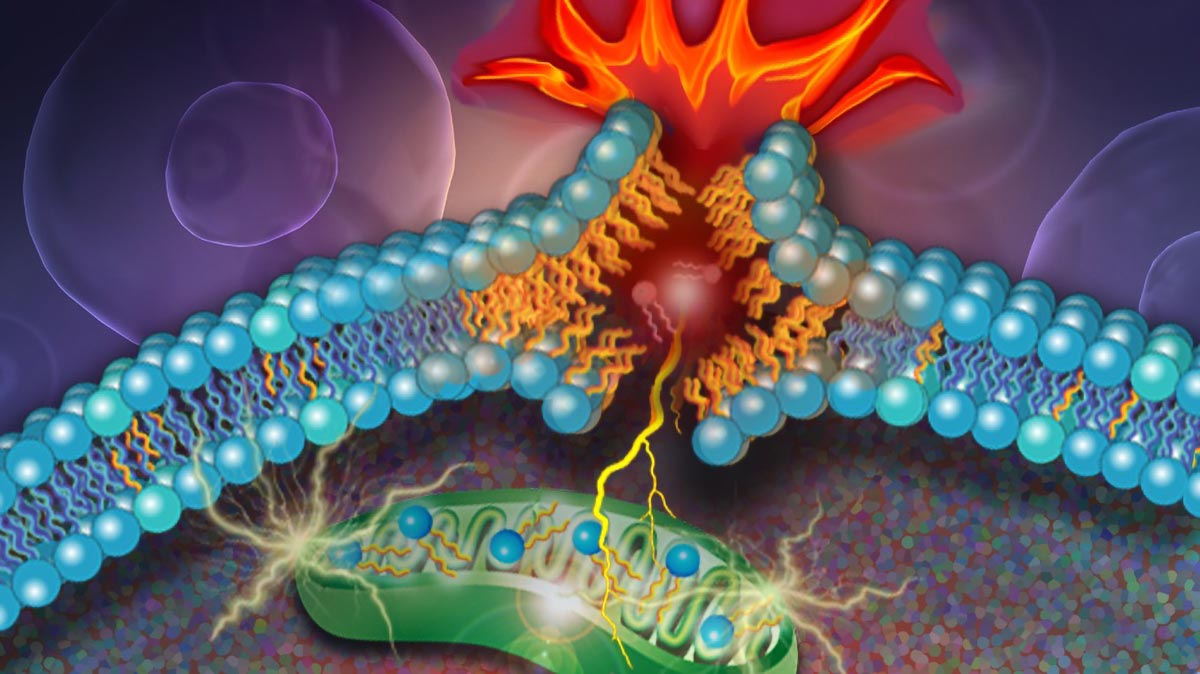
    diPUFA Phospholipid Ferroptosis
    Illustration of a diPUFA phospholipid, a type of lipid with two polyunsaturated fatty acyl tails, breaking through a cell’s outer lipid layer as the cell dies. New research has shown that diPUFA phospholipids are a key driver of a form of cell death known as ferroptosis. Credit: Nicoletta Barolini/Columbia University

    Scientists have discovered that a rare lipid type plays a pivotal role in ferroptosis, a form of cell death. This finding sheds light on the mechanisms of cell death in ferroptosis and opens up possibilities for treating diseases by either preventing or inducing ferroptosis.

    Columbia researchers have found that a rare type of lipid is a key driver of ferroptosis, a form of cell death discovered by Columbia professor Brent Stockwell.

    The findings provide new detail on how cells die during ferroptosis and could improve understanding of how to stop ferroptosis in contexts where it is harmfully occurring– in neurodegenerative diseases, for example– or induce it in contexts where it could be useful, such as using it to kill dangerous cancer cells.

    Lipids and Ferroptosis: A New Understanding

    The new research found that a rare type of lipid with two polyunsaturated fatty acyl tails, called a diPUFA phospholipid, was present in a range of contexts where ferroptosis was occurring, including in aging brains and Huntington disease-affected brain tissue. The finding indicates that the lipid is efficient at promoting ferroptosis.

    The research was conducted by professors in Columbia’s Department of Biological Sciences, Department of Chemistry, and the Columbia University Irving Medical Center.

    Stockwell first discovered ferroptosis in 2012, when he found that certain cells were dying because their lipid layers were collapsing– an unusual form of cell death that differs from the most common kind, which begins with the cell forming blisters on its outer surface.

    Advancements in Ferroptosis Research

    Since that discovery, researchers in Stockwell’s lab and elsewhere have continued to investigate ferroptosis, discovering that it can occur naturally in aging cells, in pathological contexts, and can be induced to treat disease. Another paper out this month with several co-authors found that a gene named PHLDA2 can sometimes promote ferroptosis by attacking a different lipid, and that this gene can block some tumors from forming. Together, these papers show that specific lipids promote ferroptosis, so defining the driver lipids in specific cancers is important.

    “The discovery that these diPUFA lipids are important drivers of ferroptosis deepens our understanding of this form of cell death, and these lipids’ role in controlling a cell’s homeostasis in general,” Stockwell said. “Harnessing these lipids may eventually help us identify where ferroptosis has occurred and deliberately manipulate them to either induce cell death or stop it. This can begin to give us both understanding and the power to control cell death.”

    Reference: “Phospholipids with two polyunsaturated fatty acyl tails promote ferroptosis” by Baiyu Qiu, Fereshteh Zandkarimi, Carla T. Bezjian, Eduard Reznik, Rajesh Kumar Soni, Wei Gu, Xuejun Jiang and Brent R. Stockwell, 15 February 2024, Cell.
    DOI: 10.1016/j.cell.2024.01.030

    Never miss a breakthrough: Join the SciTechDaily newsletter.
    Follow us on Google and Google News.

    Cell Biology Columbia University Molecular Biology Popular
    Share. Facebook Twitter Pinterest LinkedIn Email Reddit

    Related Articles

    The Secret to Grow More Arms – Eat More…if You’re a Sea Anemone

    Optical Illusions Have Long Mystified Neuroscientists – Now Explained in a Fly’s Eyes

    Terahertz Radiation Can Disrupt Proteins in Living Cells – Contradicting Conventional Belief

    DNA May Not Be the Blueprint for Life – Just a Scrambled List of Ingredients

    “Superpower” Discovered in Squids: They Can Massively Edit Their Own Genetics

    Genetic Analysis Shows Life’s Earliest Evolution Was More Complicated Than Previously Suspected

    New Discovery Reveals Fat Cells Are Sensitive to Sunlight, May Explain Winter Weight Gain

    Scientists Discover a Gene for Brain Size

    Scientists Grow Human Brain Tissue in a 3D Culture System

    Leave A Reply Cancel Reply

    • Facebook
    • Twitter
    • Pinterest
    • YouTube

    Don't Miss a Discovery

    Subscribe for the Latest in Science & Tech!

    Trending News

    Scientists Discover Cheap, Natural Remedy for High Blood Pressure

    Earth’s Upper Atmosphere Is Cooling Fast and Scientists Finally Know Why

    32,000 Olympic Pools of Magma Nearly Erupted Beneath Atlantic Island

    Exercise Changes the Heart in a Way Researchers Never Expected

    Too Much Sleep May Age Your Body Faster, New Study Warns

    Scientists Uncover Promising New Strategy To Stop Parkinson’s in Its Tracks

    Experts Reveal the Surprising Cancer Link Behind a Common Vitamin

    This Strange “Golden Orb” Found 2 Miles Deep Stumped Scientists for Years

    Follow SciTechDaily
    • Facebook
    • Twitter
    • YouTube
    • Pinterest
    • Newsletter
    • RSS
    SciTech News
    • Biology News
    • Chemistry News
    • Earth News
    • Health News
    • Physics News
    • Science News
    • Space News
    • Technology News
    Recent Posts
    • The Type of Alcohol You Drink Could Affect How Long You Live
    • 19-Year Study Reveals the Surprising Truth About Sitting and Dementia
    • This Common Vitamin May Help Stop Prediabetes From Turning Into Diabetes
    • Canada’s Billion-Year-Old Rocks Could Hold the Future of Clean Energy
    • Climate Change Is Quietly Choking Rivers Across the Planet
    Copyright © 1998 - 2026 SciTechDaily. All Rights Reserved.
    • Science News
    • About
    • Contact
    • Editorial Board
    • Privacy Policy
    • Terms of Use

    Type above and press Enter to search. Press Esc to cancel.