
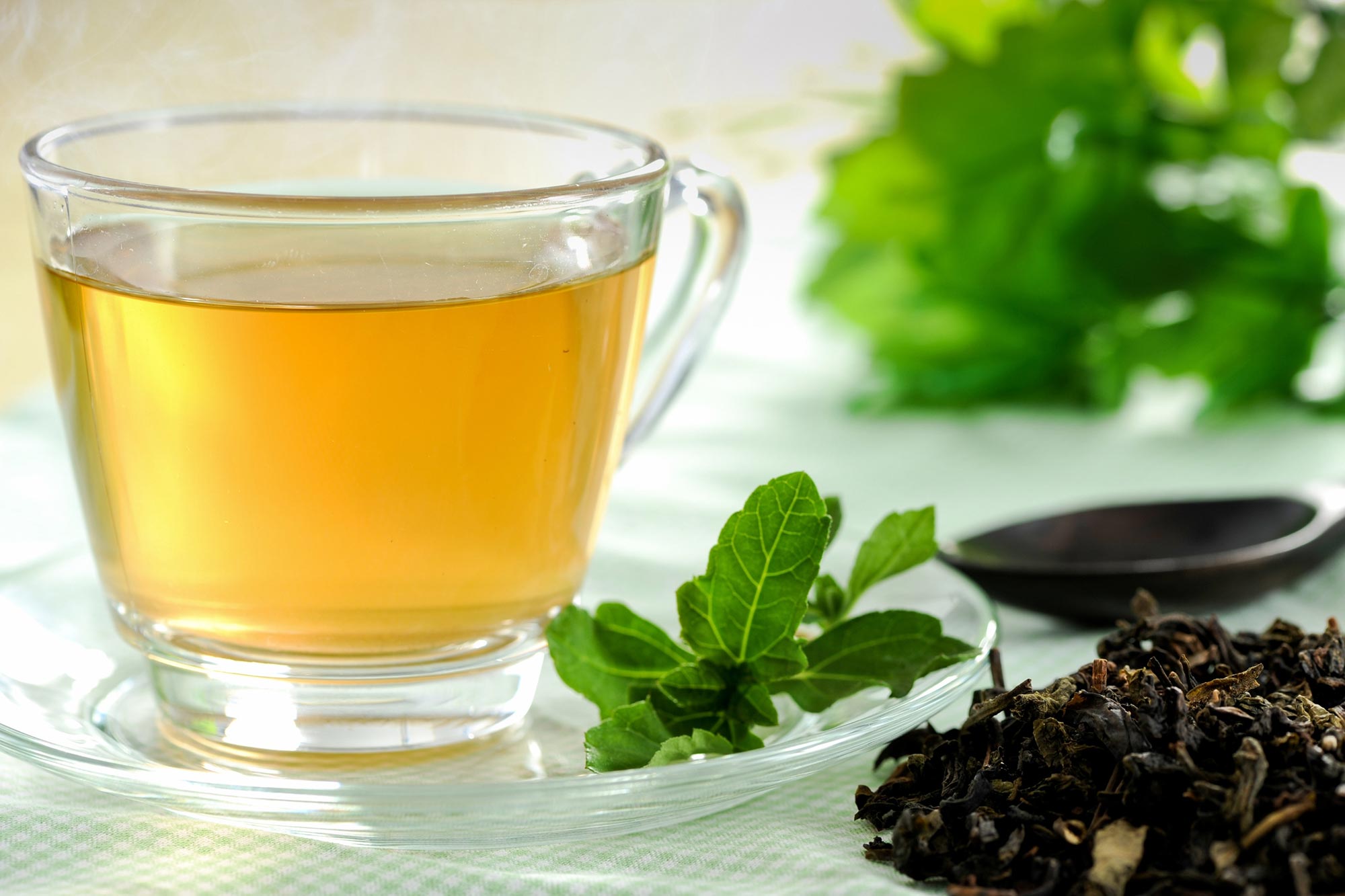
You’d think the complex flavor in a quality cup of tea would depend mainly on the tea varieties used to make it. However, recent research published in the journal Current Biology shows that the making of a delicious cup of tea depends on another key ingredient: the collection of microbes found on tea roots. By altering that assemblage, the authors showed that they could make good-quality tea even better.
“Significant disparities in microbial communities, particularly nitrogen metabolism-related microorganisms, were identified in the roots of tea plants with varying qualities through microbiomics,” says Tongda Xu of Fujian Agriculture and Forestry University in Fujian, China. “Crucially, through the isolation and assembly of a synthetic microbial community from high-quality tea plant roots, we managed to notably enhance the amino acid content in various tea plant varieties, resulting in an improvement in tea quality.”

Challenges in Tea Cultivation and Microbial Solutions
China harbors a wealth of genetic resources for growing tea plants. But, the researchers explain, that improving the quality of tea through molecular genetic breeding methods is challenging. There’s interest in finding other ways to modify and enhance tea, perhaps including the use of microbial agents. Earlier studies showed that soil microbes living in plant roots affect the way nutrients are taken up and used within plants. In the new study, the researchers wanted to learn more about how specifically root microbes affect tea quality.
They found that the microbes in tea roots affected their uptake of ammonia, which in turn influenced the production of theanine, which is key for determining a tea’s taste. They also saw variations in the microbes colonizing different teas. By comparing tea varieties with different amounts of theanine, they identified a set of microbes that looked promising for altering nitrogen metabolism and boosting theanine levels.
They next constructed a synthetic microbial community, dubbed SynCom, that closely mirrored the one found in association with a high-theanine tea variety called Rougui. When they applied SynCom to tea roots, they found it boosted theanine levels. The microbes also allowed Arabidopsis thaliana, a plant commonly used in basic biological studies, to better tolerate low nitrogen conditions.
Broad Implications for Agriculture
“The initial expectation for the synthetic microbial community derived from high-quality tea plant roots was to enhance the quality of low-quality tea plants,” says study co-author Wenxin Tang. “However, to our astonishment, we discovered that the synthetic microbial community not only enhances the quality of low-quality tea plants but also exerts a significant promoting effect on certain high-quality tea varieties. Furthermore, this effect is particularly pronounced in low-nitrogen soil conditions.”

The findings suggest that synthetically produced microbial communities could improve teas, especially when grown in nitrogen-deficient soil conditions, they say. Because tea trees require lots of nitrogen, the discovery could help to reduce the use of chemical fertilizers while promoting the quality of tea trees. The findings may have important implications for agricultural crops more broadly.
“Based on our current experimental findings, the inclusion of the SynCom21 microbial community has not only improved the absorption of ammonium nitrogen in different tea varieties but also enhanced the uptake of ammonium nitrogen in Arabidopsis thaliana,” Xu says. “This suggests that the ammonium nitrogen uptake-promoting function of SynCom21 may be applicable to various plants, including other crops.”
For instance, they say, it may allow for growing rice with improved qualities including greater protein content. They now plan to further optimize SynCom and assess its use in field trials. They also hope to learn more about how root microbes affect other secondary metabolites in tea trees.
Reference: “Root microbiota of tea plants regulate nitrogen homeostasis and theanine synthesis to influence tea quality” by Wei Xin, Jianming Zhang, Yongdong Yu, Yunhe Tian, Hao Li, Xiaolu Chen, Wei Li, Yanlin Liu, Ting Lu, Biyun He, Yan Xiong, Zhenbiao Yang, Tongda Xu and Wenxin Tang, 15 February 2024, Current Biology.
DOI: 10.1016/j.cub.2024.01.044
This work was supported by Fujian Agriculture and Forestry University.
Never miss a breakthrough: Join the SciTechDaily newsletter.
Follow us on Google and Google News.
1 Comment
Ice. The secret is ice.