
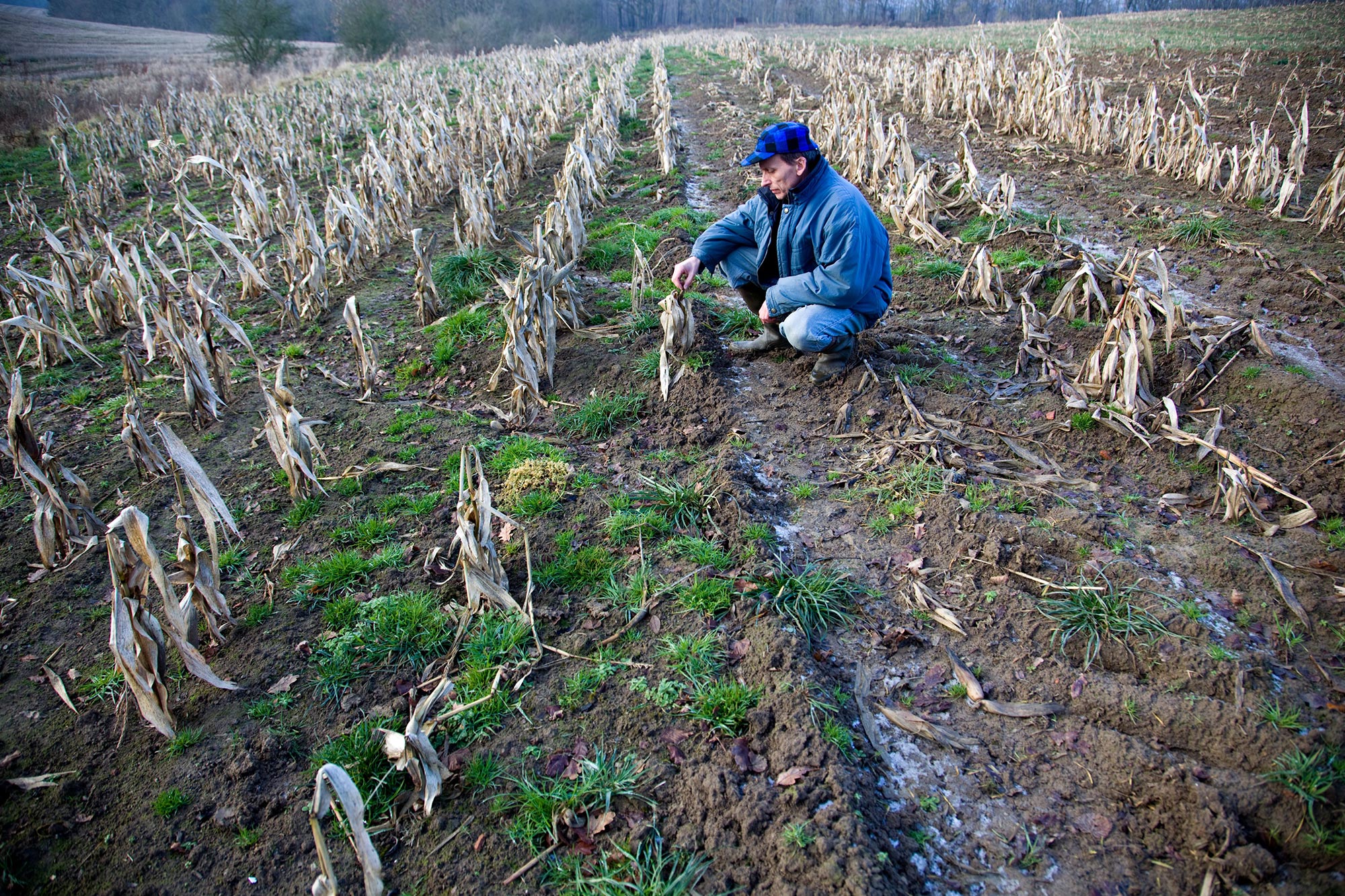
Research reveals a global threat to food security from potassium deficiency in soils, highlighting the imbalance between potassium removal and replenishment, the critical role of potassium in crop yields, and the need for sustainable management and policy coordination.
Potassium deficiency in agricultural soils is a largely unrecognized but potentially significant threat to global food security if left unaddressed, finds new research involving researchers at UCL, University of Edinburgh, and the UK Centre for Ecology & Hydrology.
The study, published today (February 19) in Nature Food, found that more potassium is being removed from agricultural soils than is being added, throughout many regions of the world. It also gives a series of recommendations for how to mitigate the issue.
Potassium is a vital nutrient for plant growth that helps with photosynthesis and respiration, the lack of which can inhibit plant growth and reduce crop yields. Farmers often spread potassium-rich fertilizers over their fields to replenish the depleted nutrient, but supply issues can inhibit its use, and there are lingering questions about its environmental impact.
The researchers report that globally, about 20% of agricultural soils face severe potassium deficiency, with particular regions likely to experience more critical shortages, including 44% of agricultural soils in South-East Asia, 39% in Latin America, 30% in Sub-Saharan Africa, and 20% in East Asia, largely due to more intensive agricultural practices.
Co-author Professor Mark Maslin (UCL Geography) said: “Potassium is critical to sustaining the crop yields that keep the world fed, and its depletion poses a significant threat to the food security of millions of people around the world. This is an overlooked issue that needs to be addressed with a range of actions as the world population continues to grow.”
Farmers often rely on potash as a fertilizer to replenish their field’s potassium, but the price of the mineral can be quite volatile. Potash production is highly concentrated, with just twelve countries dominating the nearly £12 billion international market for potassium fertilizers, with Canada, Russia, Belarus, and China producing 80% of the world’s total raw potash.
The researchers highlight how in April 2022, the price of potash increased 500% above the previous year following a “perfect storm” of factors, including rising fertilizer demand, escalating fuel prices, recovery from the pandemic, a range of government actions around the world, and the Russian invasion of Ukraine. Russia and Belarus together export about 42% of the world’s potash supply, but following the Russian invasion of Ukraine in 2022, the UK, US, Canada, and the EU imposed import sanctions on the two countries, disrupting global supplies and exacerbating the price spike.
Since the initial price spike, the cost of potash has fallen by about 50%, but remains elevated, raising concerns that farmers will not be able to access sufficient fertilizer to maintain food supplies under the current system.
Co-author Dr Peter Alexander of the University of Edinburgh said: “The volatility of potash prices has major implications across the global food system. Access to potassium is vital for farmers to maintain their crop yields, but the recent high cost of potash makes it more difficult for the most vulnerable to obtain.”
This market concentration and vulnerability is one of the reasons the researchers have called for better potassium management and a robust intergovernmental coordination mechanism. Currently, there are no national or international policies or regulations governing the sustainable management of soil potassium akin to the systems that are being established for other vital crop nutrients like nitrogen and phosphorus.
In 2021, global potash consumption reached 45 million tonnes, with global production projected to rise to about 69 million tonnes in 2025 with new projects starting up in Belarus, Canada, Russia, Australia, Eritrea, and the UK. However, potash mining has raised human rights concerns and has significant impacts on the environment. Potash mining generates millions of tonnes of refuse mostly composed of sodium chloride salts, which can leach into soils and salinize soil and water tables, harming plants and animals.
The impacts of potassium fertilizer runoff into local ecosystems are poorly understood, and the researchers recommend more studies about its effects.
Lead author Will Brownlie of the UK Centre for Ecology & Hydrology, said: “The environmental impact of potash mining and use in agriculture is something that needs greater scrutiny. There’s much that we still don’t understand about the effects that artificial potassium enrichment has on nearby ecosystems. By wisely handling nutrients like nitrogen, phosphorus, and potassium together, we can reap multiple benefits, prevent pollution, boost crop yields, and minimize nutrient loss. It’s about coordinating our approach for better farming outcomes.”
The researchers put forward six recommendations for policies and practices to prevent potential crop yield declines, safeguard farmers from price volatility, and address environmental concerns. The recommendations include:
- Setting up a global assessment of current potassium stocks and flows to identify the most at-risk countries and regions
- Establishing national capabilities for monitoring, predicting, and responding to potassium price fluctuations
- Helping farmers maintain sufficient soil potassium levels with further research about the yield implications of limited potassium in various crops and soils
- Evaluating the environmental effects of potash mining and developing sustainable application practices
- Developing a global circular potassium economy that minimizes the use and maximizes the reuse and recycling of the nutrient
- Increasing intergovernmental cooperation through the UN and other agencies to develop global policy coordination akin to what’s been developed for nitrogen
Reference: “Global food security threatened by potassium neglect” by Will J. Brownlie, Peter Alexander, Mark Maslin, Miguel Cañedo-Argüelles, Mark A. Sutton and Bryan M. Spears, 19 February 2024, Nature Food.
DOI: 10.1038/s43016-024-00929-8
Never miss a breakthrough: Join the SciTechDaily newsletter.
Follow us on Google and Google News.
1 Comment
A requirement to process at least a portion of the concentrated brine produced by desalinating seawater would solve that problem and provide sodium for sodium battery tech.