
Close Menu
    Facebook X (Twitter) Instagram
    SciTechDaily
    • Biology
    • Chemistry
    • Earth
    • Health
    • Physics
    • Science
    • Space
    • Technology
    Facebook X (Twitter) Pinterest YouTube RSS
    SciTechDaily
    Home»Space»Faulty Atlas V Valve Leads to Rescheduling of NASA’s Boeing Starliner Crew Flight Test
    Space

    Faulty Atlas V Valve Leads to Rescheduling of NASA’s Boeing Starliner Crew Flight Test

    By NASAMay 8, 2024No Comments3 Mins Read
    Facebook Twitter Pinterest Telegram LinkedIn WhatsApp Email Reddit
    Share
    Facebook Twitter LinkedIn Pinterest Telegram Email Reddit
    NASA Boeing Crew Flight Test ULA Rocket
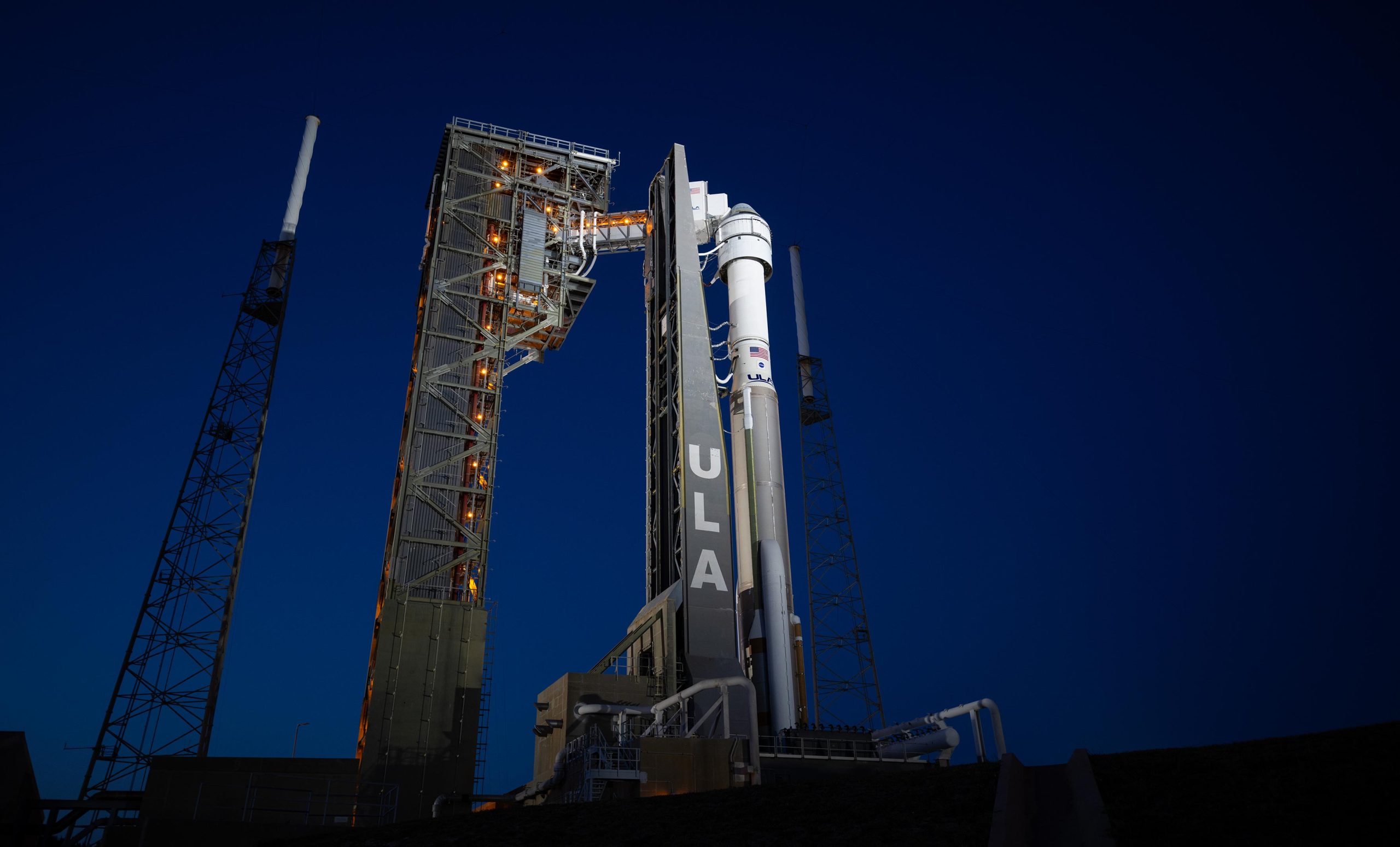
    A United Launch Alliance Atlas V rocket with Boeing’s CST-100 Starliner spacecraft aboard is seen on the launch pad illuminated by spotlights at Space Launch Complex 41 at Cape Canaveral Space Force Station in Florida. The picture was taken on Test, Sunday, May 5, 2024, ahead of NASA’s Boeing Crew Flight. Credit: NASA/Joel Kowsky

    NASA’s Boeing Crew Flight Test to the International Space Station has been postponed to no earlier than May 17 due to a faulty valve in the Atlas V rocket’s upper stage. The United Launch Alliance will replace the valve after discovering issues during prelaunch checks. Astronauts Butch Wilmore and Suni Williams remain in quarantine at NASA Kennedy, awaiting the next launch opportunity.

    NASA’s Boeing Crew Flight Test now is targeted to launch no earlier than 6:16 p.m. EDT Friday, May 17, to the International Space Station. Following a thorough data review completed on Tuesday, ULA (United Launch Alliance) decided to replace a pressure regulation valve on the liquid oxygen tank on the Atlas V rocket’s Centaur upper stage.

    ULA plans to roll the rocket, with Boeing’s Starliner spacecraft, back to its Vertical Integration Facility at Cape Canaveral Space Force Station in Florida on Wednesday, May 8, to begin the replacement. The ULA team will perform leak checks and functional checkouts in support of the next launch attempt.

    The oscillating behavior of the valve during prelaunch operations, ultimately resulted in mission teams calling a launch scrub on May 6. After the ground crews and astronauts Butch Wilmore and Suni Williams safely exited from Space Launch Complex-41, the ULA team successfully commanded the valve closed and the oscillations were temporarily dampened. The oscillations then re-occurred twice during fuel removal operations. After evaluating the valve history, data signatures from the launch attempt, and assessing the risks relative to continued use, the ULA team determined the valve exceeded its qualification and mission managers agreed to remove and replace the valve.


    NASA, Boeing, and United Launch Alliance officials discussed details of a scrub decision made ahead of the first launch attempt for NASA’s Boeing Crew Flight Test. Participants in the briefing included Ken Bowersox, associate administrator, NASA’s Space Operations Mission Directorate; Steve Stich, manager, NASA’s Commercial Crew Program; Tory Bruno, president and CEO, United Launch Alliance; Dana Weigel, manager, NASA’s International Space Station Program and Mark Nappi, vice president and program manager, Boeing’s Commercial Crew Program. Credit: NASA/Chris Chamberland

    Mission managers discussed the details leading to the decision to scrub the May 6 launch opportunity during a news conference (see video above) shortly after the scrub call at NASA’s Kennedy Space Center in Florida.

    Wilmore and Williams will remain in crew quarters at NASA Kennedy in quarantine until the next launch opportunity. The duo will be the first to launch aboard Starliner to the space station as part of the agency’s Commercial Crew Program.

    Never miss a breakthrough: Join the SciTechDaily newsletter.
    Follow us on Google and Google News.

    Boeing Starliner NASA Rocket
    Share. Facebook Twitter Pinterest LinkedIn Email Reddit

    Related Articles

    Last Minute Glitch Throws NASA’s Boeing Starliner Launch Plans off Course

    Helium Leak Forces NASA to Delay Boeing Starliner Launch Again

    NASA and Boeing Progress Continues Toward July Launch of Second Starliner Flight Test

    Boeing’s Starliner Completes Full Space Station Mission Simulation

    NASA and Boeing Target New Launch Date for Next Starliner Test Flight to Space Station

    NASA, Boeing Announce Astronaut Changes for Upcoming Starliner Crew Flight Test

    FORTIS Rocket Ready for Launch, Set to Study Extra-Galactic Dust

    Unmanned Orbital Sciences Corp Spacecraft Explodes During Launch

    NASA Confiscates Stolen Rocket Engine

    Leave A Reply Cancel Reply

    • Facebook
    • Twitter
    • Pinterest
    • YouTube

    Don't Miss a Discovery

    Subscribe for the Latest in Science & Tech!

    Trending News

    Popular Supplement Ingredient Linked to Shorter Lifespan in Men

    Scientists May Have Found a Way To Repair Nerve Damage in Multiple Sclerosis

    “Totally Unexpected” – Scientists Discover Pancreatic Cancer’s Fatal Addiction

    A Strange Quantum Effect May Explain One of Biology’s Greatest Mysteries

    James Webb Telescope Reveals the Universe’s Hidden Cosmic Web in Stunning Detail

    Scientists Identify Simple Supplement That Greatly Reduces Alzheimer’s Damage

    You May Have a Dangerous Type of Cholesterol Even if Your Tests Look Normal

    Your Blood Pressure Reading Could Be Wrong Because of One Simple Mistake

    Follow SciTechDaily
    • Facebook
    • Twitter
    • YouTube
    • Pinterest
    • Newsletter
    • RSS
    SciTech News
    • Biology News
    • Chemistry News
    • Earth News
    • Health News
    • Physics News
    • Science News
    • Space News
    • Technology News
    Recent Posts
    • You’re Breathing Plastic: Study Finds 4% of City Air Pollution Is Microplastics
    • Cancer Mystery Solved: Scientists Discover How Melanoma Becomes “Immortal”
    • Scientists Uncover Cancer-Fighting Power of Popular Fatty Liver Drug
    • Beyond Pain Relief: Scientists Discover a Protein That Could Stop Osteoarthritis in Its Tracks
    • NASA’s New AI Processor Is 500x Faster Than Current Space Computers
    Copyright © 1998 - 2026 SciTechDaily. All Rights Reserved.
    • Science News
    • About
    • Contact
    • Editorial Board
    • Privacy Policy
    • Terms of Use

    Type above and press Enter to search. Press Esc to cancel.