
Close Menu
    Facebook X (Twitter) Instagram
    SciTechDaily
    • Biology
    • Chemistry
    • Earth
    • Health
    • Physics
    • Science
    • Space
    • Technology
    Facebook X (Twitter) Pinterest YouTube RSS
    SciTechDaily
    Home»Health»Fear of COVID-19: Psychological, Not Environmental Factors Are Important
    Health

    Fear of COVID-19: Psychological, Not Environmental Factors Are Important

    By University of ViennaJune 17, 2021No Comments3 Mins Read
    Facebook Twitter Pinterest Telegram LinkedIn WhatsApp Email Reddit
    Share
    Facebook Twitter LinkedIn Pinterest Telegram Email Reddit
    COVID Nightmare
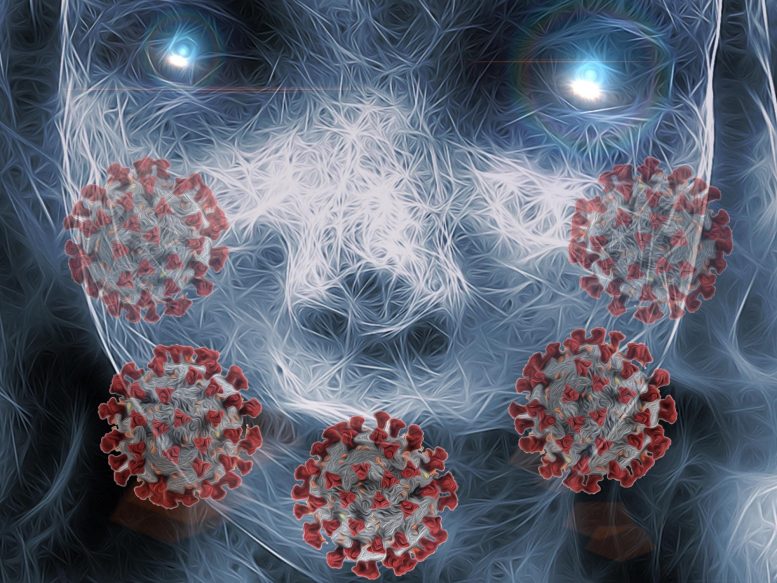
    An international study found that individual psychological factors, rather than environmental ones, have a stronger predictive influence on fear and health outcomes during COVID lockdowns.

    Fear and perceived health during lockdowns were better predicted by psychological factors than environmental ones, according to a multi-country COVID-19 study.

    During pandemics, protective behaviors need to be motivated by effective communication. A critical factor in understanding a population’s response to such a threat is the fear it elicits, since fear both contributes to motivating protective responses, but can also lead to panic-driven behaviors. Furthermore, lockdown measures affect well-being, making it important to identify protective factors that help to maintain high perceived levels of health during restrictions. An international team of researchers led by scientists from the University of Vienna has now identified psychological predictors of fear and health during the lockdowns. The result of the study, published in PLOS ONE: Individual psychological variables have a much better predictive power than environmental variables.

    The current publication aims to identify predictors of fear and perceived health during stay-at-home orders in response to the COVID-19 pandemic. “This way we can predict how different people and populations will react to external threats and restrictions,” explains Stephanie Eder from the Faculty of Psychology.

    Researchers from the University of Vienna in collaboration with scientists from the University of Wroclaw (PL), University of Barcelona (ESP), Charles University and Jan Evangelista Purkyne University (CZ) have investigated 533 participants during the ‘first wave’ of the COVID-19 pandemic in Europe.

    Psychological Predictors Identified by Machine Learning

    Utilizing machine-learning models, they identified psychological predictors of fear and health during the lockdowns. Fear can be predicted very well when worries about shortages in supply, perceived infectability to diseases in general, germ aversion, and infections in the immediate social sphere are taken into account. Predictors of perceived health include higher perceived infectability to diseases in general, attachment security, physical activity and younger age; suggesting that older populations with high perceived infectability and insecure attachment may be most vulnerable during these uncertain times.

    Interestingly, environmental variables such as the local severity of lockdown restrictions and mortality had no predictive value for either of the target variables. “We could show the value of ‘micro-level’, psychological factors over macro-scale environmental conditions when predicting a population’s response to a crisis and when designing behavioral interventions for specific target groups,” says Eder.

    Reference: “Predicting fear and perceived health during the COVID-19 pandemic using machine learning: A cross-national longitudinal study” by Stephanie Josephine Eder, David Steyrl, Michal Mikolaj Stefanczyk, Michał Pieniak, Judit Martínez Molina, Ondra Pešout, Jakub Binter, Patrick Smela, Frank Scharnowski and Andrew A. Nicholson, 11 March 2021, PLOS ONE.
    DOI: 10.1371/journal.pone.0247997

    Never miss a breakthrough: Join the SciTechDaily newsletter.
    Follow us on Google and Google News.

    Behavioral Science COVID-19 Mental Health Public Health Stress University of Vienna
    Share. Facebook Twitter Pinterest LinkedIn Email Reddit

    Related Articles

    How Has the COVID-19 Pandemic Affected Our Sleep and Our Dreams?

    During COVID-19 Pandemic, Increased Screen Time Linked With Increased Mental Distress

    National Poll: COVID Pandemic Has Negatively Impacted Teens’ Mental Health – Expert Recommendations

    Depression and Stress Could Dampen Efficacy of COVID-19 Vaccines: Interventions Could Boost Immunity

    How to Mitigate the Impact of a COVID Lockdown on Mental Health

    Psychological Distress: Acute Depression, Stress & Anxiety Higher During Peak of COVID-19 Pandemic

    Why Time Outdoors Is Crucial to Your Health, Even During the COVID-19 Pandemic

    Why Quarantines Are So Difficult to Implement: Lessons From the 1800s

    Self-Quarantine Compliance Tied to Compensation in Israel

    Leave A Reply Cancel Reply

    • Facebook
    • Twitter
    • Pinterest
    • YouTube

    Don't Miss a Discovery

    Subscribe for the Latest in Science & Tech!

    Trending News

    First-of-Its-Kind Discovery: Homer’s Iliad Found Embedded in a 1,600-Year-Old Egyptian Mummy

    Beyond Inflammation: Scientists Uncover New Cause of Persistent Rheumatoid Arthritis

    A Simple Molecule Could Unlock Safer, Easier Weight Loss

    Scientists Just Built a Quantum Battery That Charges Almost Instantly

    Researchers Unveil Groundbreaking Sustainable Solution to Vitamin B12 Deficiency

    Millions of People Have Osteopenia Without Realizing It – Here’s What You Need To Know

    Researchers Discover Boosting a Single Protein Helps the Brain Fight Alzheimer’s

    World-First Study Reveals Human Hearts Can Regenerate After a Heart Attack

    Follow SciTechDaily
    • Facebook
    • Twitter
    • YouTube
    • Pinterest
    • Newsletter
    • RSS
    SciTech News
    • Biology News
    • Chemistry News
    • Earth News
    • Health News
    • Physics News
    • Science News
    • Space News
    • Technology News
    Recent Posts
    • After Decades, MIT Researchers Capture the First 3D Atomic View of a Mysterious Material
    • Your Favorite Fishing Spot Is Turning Brown – and the Fish Are Changing
    • 380-Million-Year-Old Fish Fossil Reveals Secrets of Life’s First Steps Onto Land
    • Mezcal “Worm” in a Bottle Mystery: DNA Testing Reveals a Surprise
    • Scientists Turn Red Lettuce Green, Unlocking Hidden Nutrients
    Copyright © 1998 - 2026 SciTechDaily. All Rights Reserved.
    • Science News
    • About
    • Contact
    • Editorial Board
    • Privacy Policy
    • Terms of Use

    Type above and press Enter to search. Press Esc to cancel.