
Quantum materials are worldwide in the focus of research activities within diverse scientific disciplines. This material class appears to be increasingly complex and rich in physical phenomena such as magnetism, superconductivity, or topology, and is therefore extremely promising for technological advances in the fields of information processing, sensors, computing, and many more. Also at TU Dresden, quantum materials research plays an important role. With the establishment of the Cluster of Excellence ct.qmat – Complexity and Topology in Quantum Materials together with the Julius-Maximilians-University Würzburg, the field has gained even more impact.
The extraordinary properties in quantum materials often require special, hardly achievable conditions such as low temperatures, extremely strong magnetic fields, or high pressure. Scientists are therefore looking for materials that exhibit their exotic properties even at room temperature, without external magnetic fields, and under normal atmospheric pressure. Especially promising are the so-called magnetic topological insulators (MTI). They are considered a source of novel quasiparticles and unprecedented quantum phenomena, but their experimental implementation is very challenging.
Dr. Anna Isaeva is an associate member of the Cluster of Excellence ct.qmat and Junior Professor for Synthesis and Crystal Growth of Quantum Materials at TU Dresden and the Leibniz Institute for Solid State and Materials Research Dresden (IFW). Together with her group, she works at the interface of chemistry, physics, and crystallography on the identification of new quantum materials.
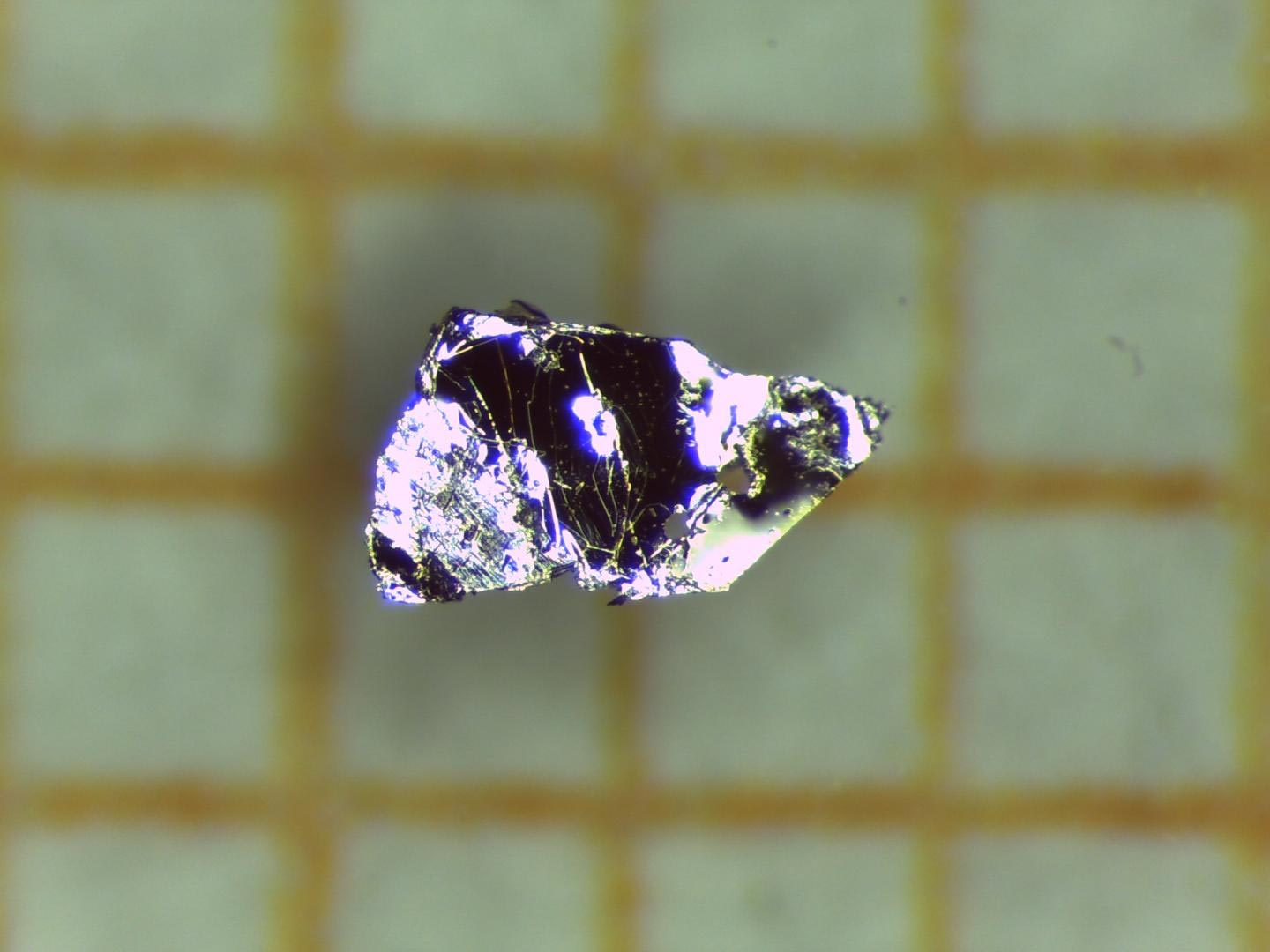
In a large international cooperation of over 40 scientists from over 20 research institutions, Dr. Isaeva’s team is significantly involved in the discovery of a new, promising quantum material. Together with Dr. Alexander Zeugner from the Leibniz Institute for Solid State and Materials Research Dresden, the scientists at TU Dresden developed the first crystal growing technique for the first intrinsically magnetic topological material: manganese-bismuth telluride (MnBi2Te4) and characterized the physical properties of the crystals. The research cooperation was able to prove both in theory, led by the Donostia International Physics Center in Spain, and in spectroscopic experiments, headed by the University of Würzburg, that MnBi2Te4 is the first antiferromagnetic topological insulator (AFMTI) below its Néel temperature.
The significance of this discovery for the scientific community is huge: An MTI crystal has an edge state on its surface that may realize a quantized Hall conductivity even without an external magnetic field. In addition, the fabrication of an AFMTI makes an important contribution to the booming field of antiferromagnetic spintronics. The new research area of magnetic van der Waals materials could also benefit from novel two-dimensional ferromagnets.
Dr. Isaeva’s team has already further optimized the synthesis protocol for the new material so that MnBi2Te4 single crystals can be produced more easily. Research teams worldwide have joined the study of the interaction of magnetism and topology in MnBi2Te4. Recent findings show that there are even more structural derivatives of MnBi2Te4, which are relevant in the context of MTI.
“We witness the emergence of a new family of magnetic topological insulators that rely on intrinsic magnetization rather than on the magnetic doping approach. There is a lot of competition among the teams worldwide, which has also triggered a flood of new publications on the subject,” says Jun.-Prof. Dr. Anna Isaeva, referring to three subsequent articles of her own team.
Reference: “Prediction and observation of an antiferromagnetic topological insulator” by M. M. Otrokov, I. I. Klimovskikh, H. Bentmann, D. Estyunin, A. Zeugner, Z. S. Aliev, S. Gaß, A. U. B. Wolter, A. V. Koroleva, A. M. Shikin, M. Blanco-Rey, M. Hoffmann, I. Rusinov, A. Yu. Vyazovskaya, S. V. Eremeev, Yu. M. Koroteev, V. Kuznetsov, F. Freyse, J. Sanchez-Barriga, I. R. Amiraslanov, M. B. Babanly, N. T. Mamedov, N. A. Abdullayev, V. N. Zverev, A. Alfonsov, V. Kataev, B. Büchner, E. Schwier, S. Kumar, A. Kimura, L. Petaccia, G. Di Santo, R. C. Vidal, S. Schatz, K. Kißner, M. Ünzelmann, C. H. Min, S. K. Moser, T. R. F. Peixoto, F. Reinert, A. Ernst, P. M. Echenique, A. Isaeva and E. V. Chulkov, 18 December 2019, Nature.
DOI: 10.1038/s41586-019-1840-9
arXiv: 1809.07389
The research group for Synthesis and Crystal Growth of Quantum Materials was founded in 2019 as a joint appointment between the Technische Universität Dresden and the Leibniz Institute for Solid State and Materials Research Dresden. Jun.-Prof. Dr. Anna Isaeva focuses on the materials aspects of inorganic compounds, primarily, on the explorative synthesis and comprehensive characterization of topologically non-trivial materials. The findings contribute largely to the running cooperative projects: the Dresden Collaborative Research Center 1143, the Excellence Cluster ct.qmat, the Priority Program 1666 and the Research Training Group 1621.
Never miss a breakthrough: Join the SciTechDaily newsletter.
Follow us on Google and Google News.