
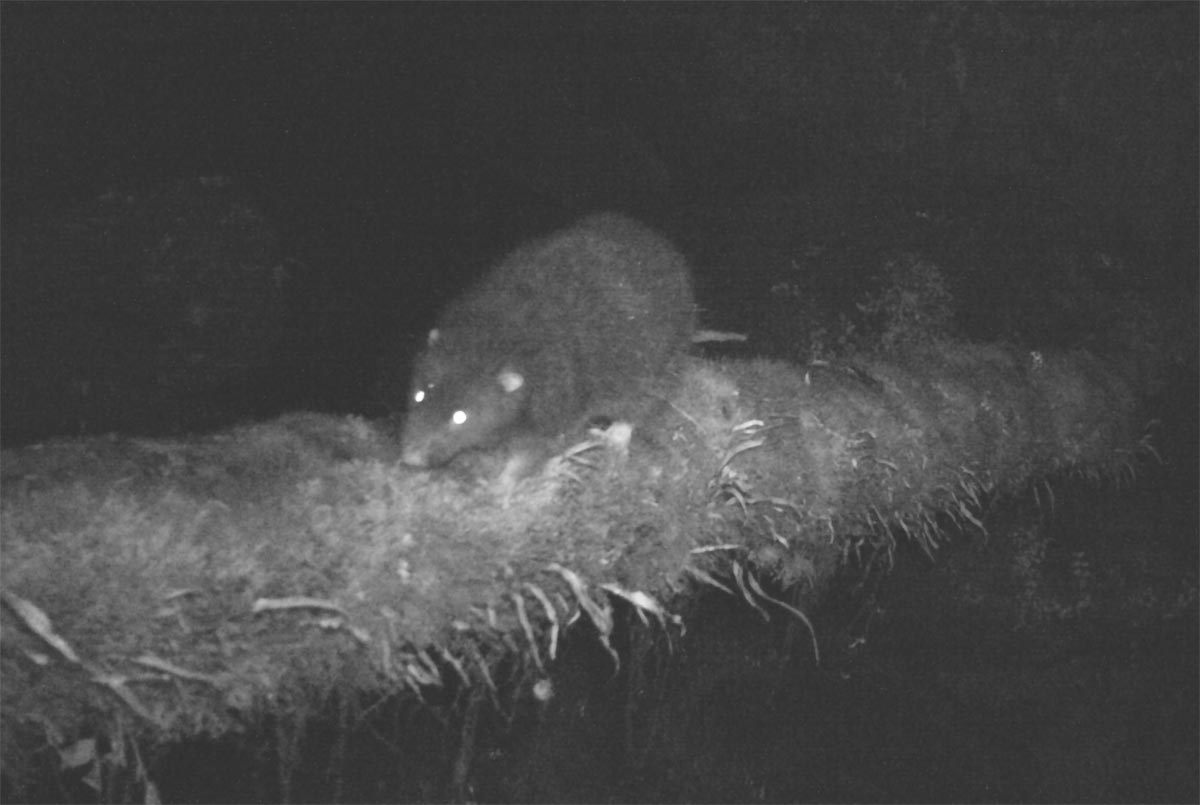
After 30 years, a rare rodent resurfaced. Its study enriches biodiversity knowledge.
A six-month research expedition to New Guinea has resulted in a significant breakthrough by Czech doctoral student František Vejmělka from the Biology Centre of the Czech Academy of Sciences and the University of South Bohemia. He is the first scientist to observe and record in the wild Mallomys istapantap, one of the largest murine rodents on Earth.
This secretive, nocturnal animal lives in the cool, mist-covered mountain forests and grasslands at elevations near 3,700 metres. Until now, knowledge of the species came only from a small number of museum specimens. For the first time, photographs and video have captured the animal in its natural environment.
The Subalpine Woolly Rat (Mallomys istapantap) was first identified in 1989 using historical museum collections. Its last confirmed sighting occurred three decades ago, and it had never before been documented with images. The new photographs and ecological data gathered by Vejmělka provide an important advance in understanding this elusive species and contribute valuable insights into the understudied mammalian diversity of New Guinea.
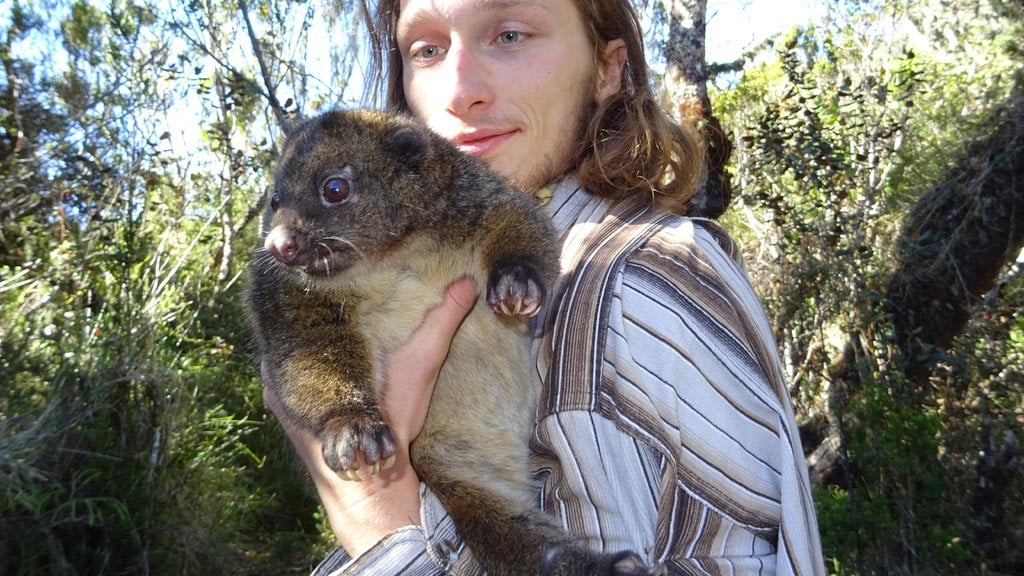
A Mysterious Giant Emerges from the Misty Highlands
“It’s astonishing that such a large and striking animal has remained so poorly studied. How much more is there to discover about the biodiversity of tropical mountains?” says Vejmělka. In addition to the first-ever photos and video, he also recorded the first biometric measurements of males and gathered data on the animal’s diet, parasites, activity patterns, movement, and other aspects of its lifestyle.
Woolly rats of New Guinea, along with the giant cloud rats native to the Philippines, rank among the largest murine rodents in existence. They occur exclusively in the steep mountain regions of New Guinea, where untouched rainforest still dominates the landscape. Over the past five million years, and in the absence of other competing placental mammals, they have evolved into an impressive range of distinct species and forms.

The thick-furred Mallomys istapantap lives a secluded existence in remote and inaccessible terrain. At night, it climbs trees to forage, while during the day, it shelters in underground burrows or high in the canopy.
Its features include sharp incisors, dense fur, paws measuring 8 cm, a body length (including the tail) of about 85 cm, and a weight of nearly 2 kg, making it a powerful and striking rodent. Yet because of its nocturnal lifestyle and the isolation of its mountain habitat, sightings in the wild have been exceptionally rare.
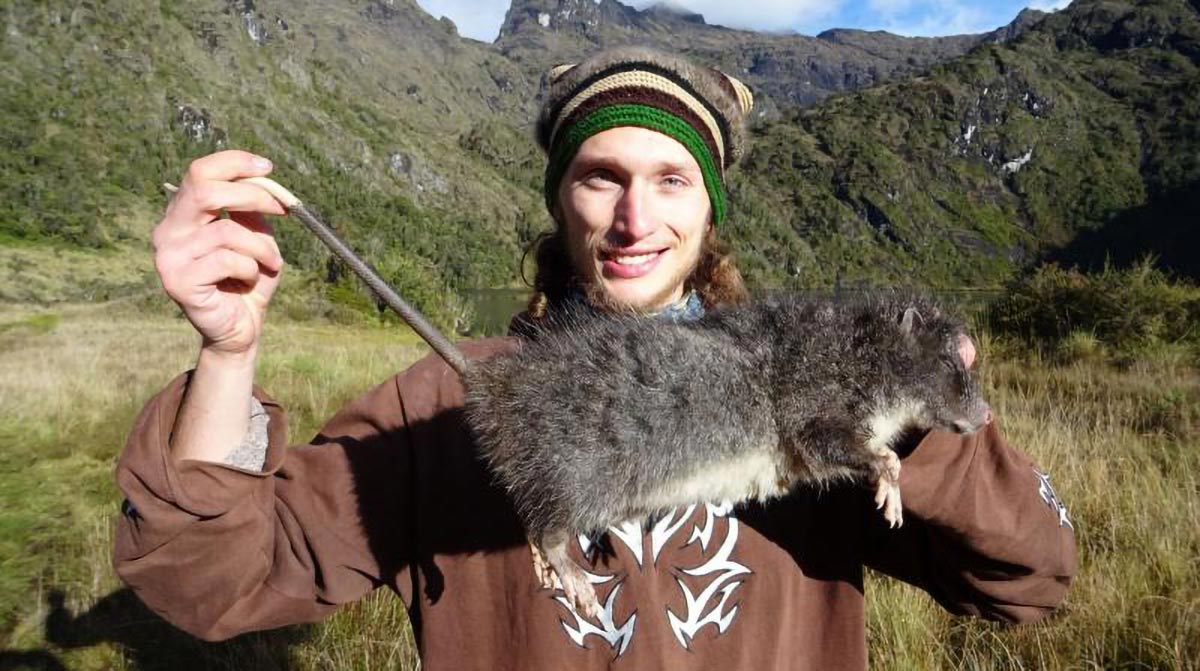
Local Knowledge and Global Science Come Together
“If it weren’t for the indigenous hunters who accompanied me in the mountains and helped me locate the animals, I would never have been able to collect this data,” says Vejmělka. During his six-month expedition, he worked closely with several local tribes while surveying the mammalian diversity of Mount Wilhelm (4,509 m), the highest peak in Papua New Guinea, from base to summit. He documented and genetically identified 61 species of non-flying mammals (rodents and marsupials) found along the mountain.
This research contributes to a deeper understanding of the extraordinary biodiversity of New Guinea’s underexplored tropical mountains. While tropical regions in the Americas, Africa, and Southeast Asia have been well studied in this regard, the Australasian realm has remained largely uncharted. Equally crucial is the collaboration with local communities.
Through such scientific work, the indigenous inhabitants also learn about the unique natural heritage of their homeland and the need to protect it, for instance, from the growing threat of mining.
Reference: “First scientific observation of the largest Sahulian rodent, Mallomys istapantap, in the wild” by František Vejmělka, 18 April 2025, Mammalia.
DOI: 10.1515/mammalia-2024-0153
Never miss a breakthrough: Join the SciTechDaily newsletter.
Follow us on Google and Google News.
4 Comments
They have vampires that flat together in Wellington so they might as well have R.O.U.S. 😆
Is it dead in the later pictures? Cus that’s kinda a bummer, honestly…
Why are you reposting something that was news like 5 months ago, like its brand new information?
Good night I’ve lived in that country my whole life and I’ve seen those animals all over the place we had to sleep with our toes covered