
Close Menu
    Facebook X (Twitter) Instagram
    SciTechDaily
    • Biology
    • Chemistry
    • Earth
    • Health
    • Physics
    • Science
    • Space
    • Technology
    Facebook X (Twitter) Pinterest YouTube RSS
    SciTechDaily
    Home»Space»First Light From Sun-Watching Sunstorm CubeSat
    Space

    First Light From Sun-Watching Sunstorm CubeSat

    By European Space AgencySeptember 23, 2021No Comments3 Mins Read
    Facebook Twitter Pinterest Telegram LinkedIn WhatsApp Email Reddit
    Share
    Facebook Twitter LinkedIn Pinterest Telegram Email Reddit
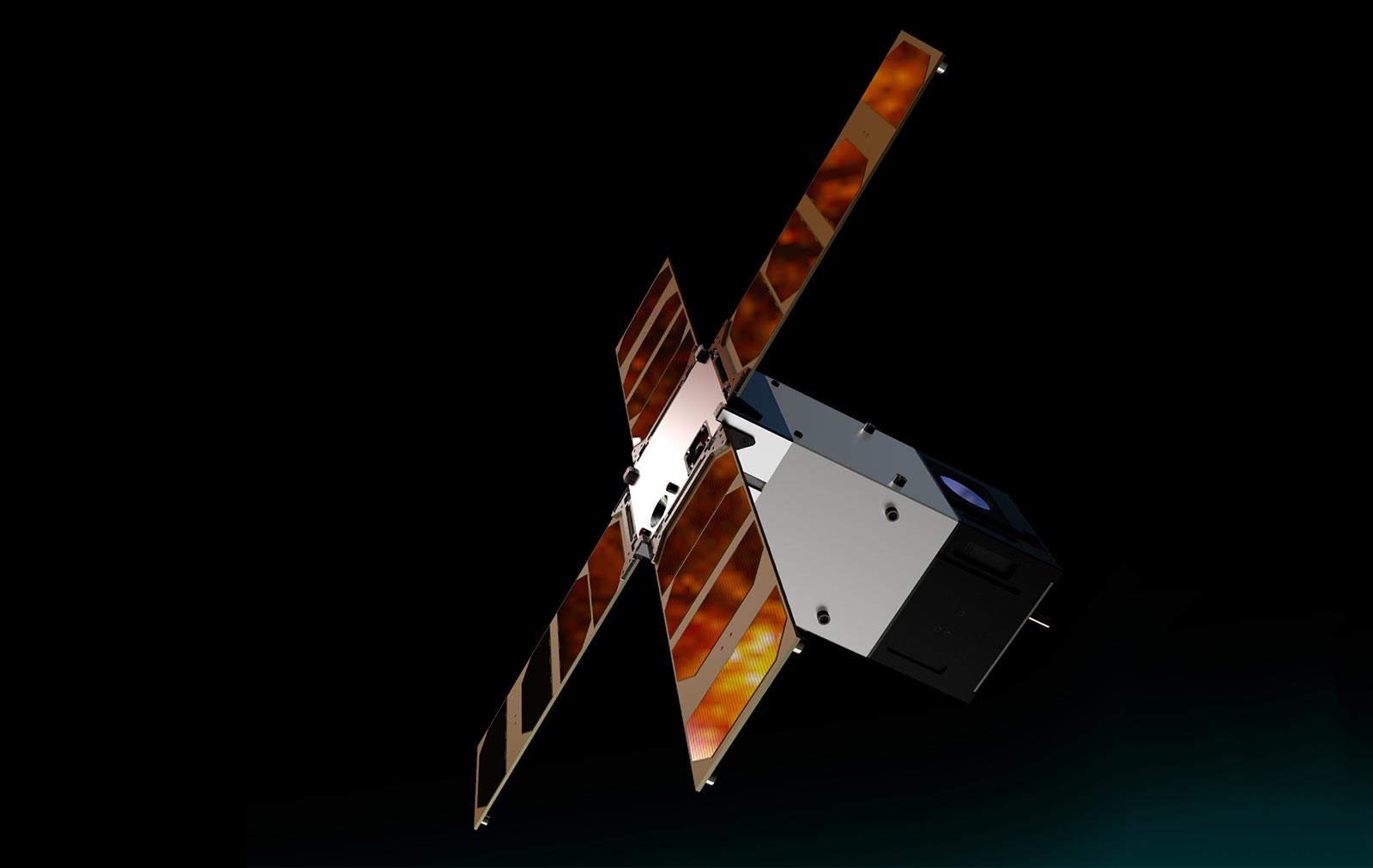
    Sunstorm CubeSat
    Sunstorm CubeSat. Credit: Reaktor Space Lab

    ESA’s Sunstorm CubeSat detects solar flares, achieving first X-ray data days after launch.

    Around the same size as two big Harry Potter paperbacks, ESA’s Sun-watching Sunstorm CubeSat has produced its first solar X-ray spectrum, coming just over a week after its launch to orbit aboard a Vega rocket.

    CubeSats are miniaturized satellites based on standardized 10 cm (4 in) boxes. Sunstorm is a ‘2-unit’ CubeSat, hosting an innovative solar X-ray spectrometer called the X-ray Flux Monitor for CubeSats (XFM-CS).

    A Finnish team led by the ISAWARE company developed the miniaturized XFM-CS instrument.

    Its function is to detect the X-ray pulses produced by solar flares – explosive releases of magnetic energy seen as enormous flashes on the Sun’s surface. These give rise in turn to space weather, threatening satellites and terrestrial power and communications networks, even aircraft on polar flights.

    A Promising Start

    “We are very happy to have acquired our first telemetry from the instrument, showing it is in excellent health,” comments Juhani Huovelin, Chairman of ISAWARE. “It is important to note that this is just a preliminary look for now, but its stability and data quality are very promising.”

    Aboa Space Research Oy, Oxford Instruments Technologies and Talvioja Consulting also collaborated on XFM-CS.

    The Sunstorm CubeSat was manufactured by Finland’s Reaktor Space Lab, and the mission was funded by Business Finland and the FLY element of ESA’s General Support Technology Programme, dedicated to the early space testing of promising new technologies.

    Sunstorm continues its in-orbit operations and the final stages of its commissioning, explains Janne Kuhno of Reaktor Space Lab: “The early operations went very quickly and we managed to establish bi-directional S-Band communications on the first pass, perform platform avionics health checks, deploy all four solar panels and acquire Sun pointing attitude for payload operations.”

    “Acquiring our first solar X-ray spectrum so quickly after launch is a major achievement in itself,” notes Camille Pirat, ESA Technical Officer for the Sunstorm mission.

    “It is also good news for our forthcoming space weather mission, also carrying a version of the XFM-CS instrument – which was previously known as Lagrange but is currently the subject of a naming competition.”

    A second ESA CubeSat was also launched with Sunstorm, explains Roger Walker, ovserseeing ESA’s Technology CubeSats: “The radiation-detecting RadCube, developed by a team from Hungary, Poland the UK, is also undergoing commissioning, with its first results expected next month.”

    Never miss a breakthrough: Join the SciTechDaily newsletter.
    Follow us on Google and Google News.

    Astronomy European Space Agency Sun
    Share. Facebook Twitter Pinterest LinkedIn Email Reddit

    Related Articles

    Incredible New Views of the Sun – As You’ve Never Seen It Before

    Solar Orbiter: Tracking Sunspots Up Close

    Solar Orbiter Spacecraft Captures the Full Sun in Unprecedented Detail

    ESA Vigil: Earth’s Devoted Solar Defender – The First Mission of Its Kind

    Massive Solar Eruption Captured by Solar Orbiter Spacecraft

    Solar Orbiter Has Already Made a Wealth of Science Discoveries

    Science Made Simple: Anatomy of Our Sun

    “Campfires” on the Sun Offer Clue to Solar Heating Mystery

    Dancing With the Stars: Corridor Test of Proba-3’s Formation Flying Sensors

    Leave A Reply Cancel Reply

    • Facebook
    • Twitter
    • Pinterest
    • YouTube

    Don't Miss a Discovery

    Subscribe for the Latest in Science & Tech!

    Trending News

    New Research Shows Vitamin B12 May Hold the Key to Healthy Aging

    These Simple Daily Habits Can Quickly Improve Blood Pressure and Heart Risk Factors

    A Common Nutrient May Play a Surprising Role in Anxiety

    Doing This After 9 p.m. Could Double Your Risk of Gut Issues

    Scientists Discover How Coffee Impacts Memory, Mood, and Gut Health

    Why Did the Neanderthals Disappear? Scientists Reveal Humans Had a Hidden Advantage

    Physicists Propose Strange Experiment Where Time Goes Quantum

    Magnesium Magic: New Drug Melts Fat Even on a High-Fat, High-Sugar Diet

    Follow SciTechDaily
    • Facebook
    • Twitter
    • YouTube
    • Pinterest
    • Newsletter
    • RSS
    SciTech News
    • Biology News
    • Chemistry News
    • Earth News
    • Health News
    • Physics News
    • Science News
    • Space News
    • Technology News
    Recent Posts
    • Scientists Discover Hidden Methane Source Beneath Every Major City
    • Scientists Just Solved the Mystery of Why Crabs Walk Sideways
    • This New Memory Technology Could Make Devices Last Months on One Charge
    • Scientists Turn Cancer’s Own Bacteria Against It in Breakthrough Therapy
    • Cannabis Can Make You Remember Things That Never Happened
    Copyright © 1998 - 2026 SciTechDaily. All Rights Reserved.
    • Science News
    • About
    • Contact
    • Editorial Board
    • Privacy Policy
    • Terms of Use

    Type above and press Enter to search. Press Esc to cancel.