
Fixing the balance of a single brain circuit erased anxiety and social deficits in mice, revealing a powerful new target for emotional disorders.
Researchers from the Synaptic Physiology laboratory at the Institute for Neurosciences (IN), led by Juan Lerma, have identified a small but influential group of neurons in the amygdala that strongly affect emotional behavior. The Institute for Neurosciences (IN) is jointly run by the Spanish National Research Council (CSIC) and Miguel Hernández University (UMH) of Elche. Their findings show that disrupted activity in these neurons can contribute to anxiety, depression, and altered social behavior.
The study, published in iScience, demonstrates that correcting the balance of neuronal excitability within a specific part of the amygdala is sufficient to reverse these behavioral changes in mice. This result highlights how precise changes in brain activity can have wide effects on emotional regulation.
A Specific Neural Population Triggers Emotional Disorders
“We already knew the amygdala was involved in anxiety and fear, but now we’ve identified a specific population of neurons whose imbalanced activity alone is sufficient to trigger pathological behaviors,” Lerma explains. To explore this mechanism, the team used a genetically modified mouse model designed to overexpress the Grik4 gene. This change increases the number of GluK4-type glutamate receptors, making the affected neurons more excitable.
These mice, first developed by the same laboratory in 2015, show pronounced anxiety and social withdrawal. Their behavior closely resembles symptoms seen in people with conditions such as autism or schizophrenia.
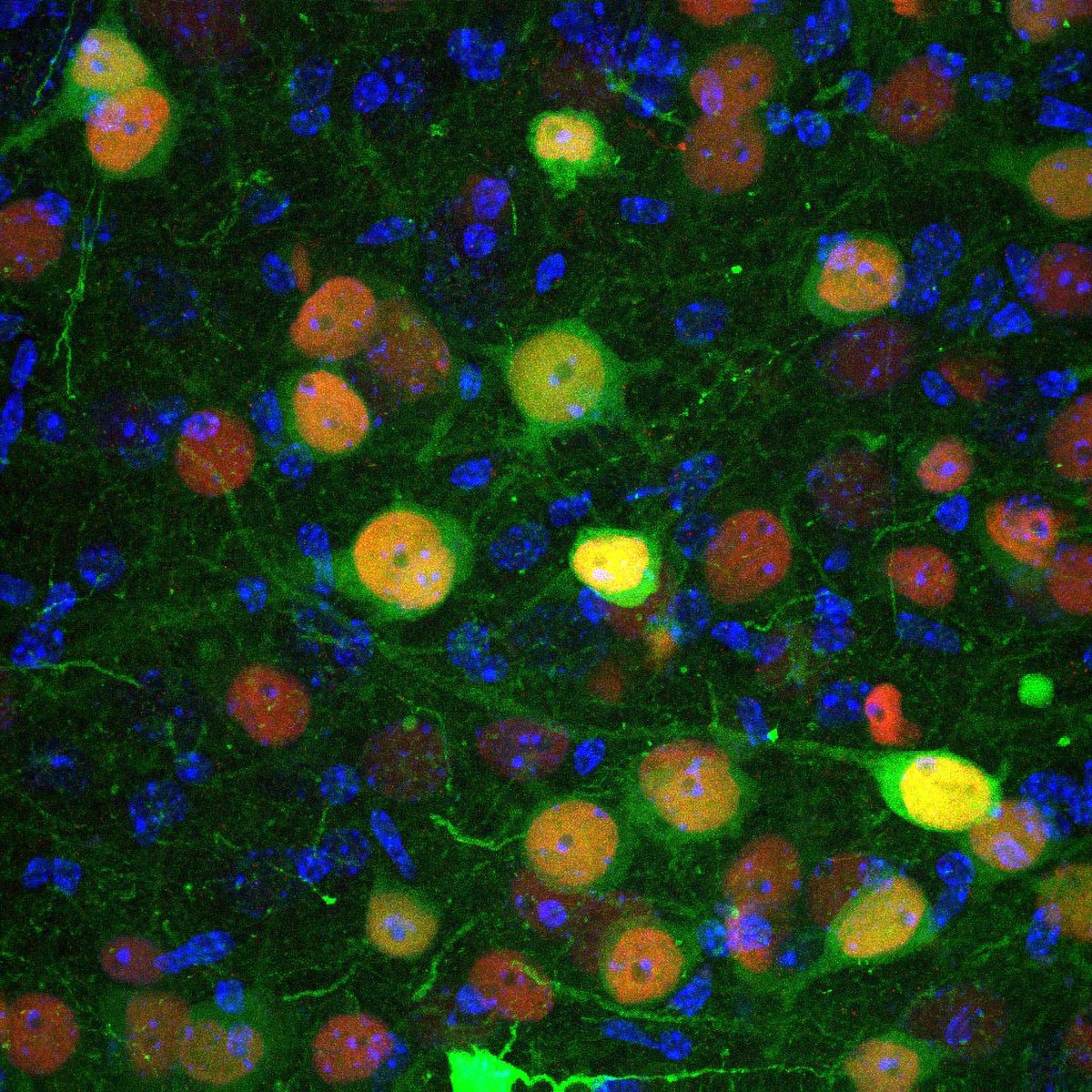
Restoring Communication Inside the Amygdala
The researchers then corrected Grik4 expression only in neurons of the basolateral amygdala. This targeted intervention restored normal signaling with a group of inhibitory neurons in the centrolateral amygdala known as ‘regular firing neurons’. “That simple adjustment was enough to reverse anxiety-related and social deficit behaviors, which is remarkable,” says Álvaro García, the study’s first author.
Measuring Brain Activity and Behavior
To evaluate the effects of this correction, the team used electrophysiological recordings alongside behavioral tests commonly applied in rodent studies. These tests assess anxiety, depression, and social interaction by measuring behaviors such as exploration of open spaces and interest in unfamiliar mice. Using genetic engineering tools and modified viruses, the scientists selectively repaired the altered circuitry in the basolateral amygdala and then tracked changes in both neural activity and behavior.

Effects Extend Beyond a Single Genetic Model
The same procedure was also tested in wild-type mice that naturally exhibited higher anxiety levels. In these animals, the intervention also reduced anxiety. “This validates our findings and gives us confidence that the mechanism we identified is not exclusive to a specific genetic model, but may represent a general principle for how these emotions are regulated in the brain,” Lerma adds.
Limits and Therapeutic Potential
Not all behavioral problems were resolved. Deficits such as impaired object recognition memory remained, suggesting that other brain regions, including the hippocampus, may also contribute to these disorders. Even so, the results point toward promising new treatment strategies. “Targeting these specific neural circuits could become an effective and more localized strategy to treat affective disorders,” Lerma concludes.
Reference: “Central role of regular firing neurons of centrolateral amygdala in affective behaviors” by Alvaro García, M. Isabel Aller, Ana V. Paternain and Juan Lerma, 13 May 2025, iScience.
DOI: 10.1016/j.isci.2025.112649
This research was supported by the Spanish State Research Agency (AEI) – Spanish Ministry of Science, Innovation and Universities, the Severo Ochoa Excellence Program for Research Centers at the Institute for Neurosciences CSIC-UMH, the European Regional Development Fund (ERDF), and the Generalitat Valenciana through the PROMETEO and CIPROM programs.
Never miss a breakthrough: Join the SciTechDaily newsletter.
Follow us on Google and Google News.