
Close Menu
    Facebook X (Twitter) Instagram
    SciTechDaily
    • Biology
    • Chemistry
    • Earth
    • Health
    • Physics
    • Science
    • Space
    • Technology
    Facebook X (Twitter) Pinterest YouTube RSS
    SciTechDaily
    Home»Biology»Hidden Brain Energy Leak Links Stress to Depression and Anxiety
    Biology

    Hidden Brain Energy Leak Links Stress to Depression and Anxiety

    By Society for NeuroscienceNovember 24, 2025No Comments2 Mins Read
    Facebook Twitter Pinterest Telegram LinkedIn WhatsApp Email Reddit
    Share
    Facebook Twitter LinkedIn Pinterest Telegram Email Reddit
    Inflamed Brain Cell Neuron Depression Anxiety
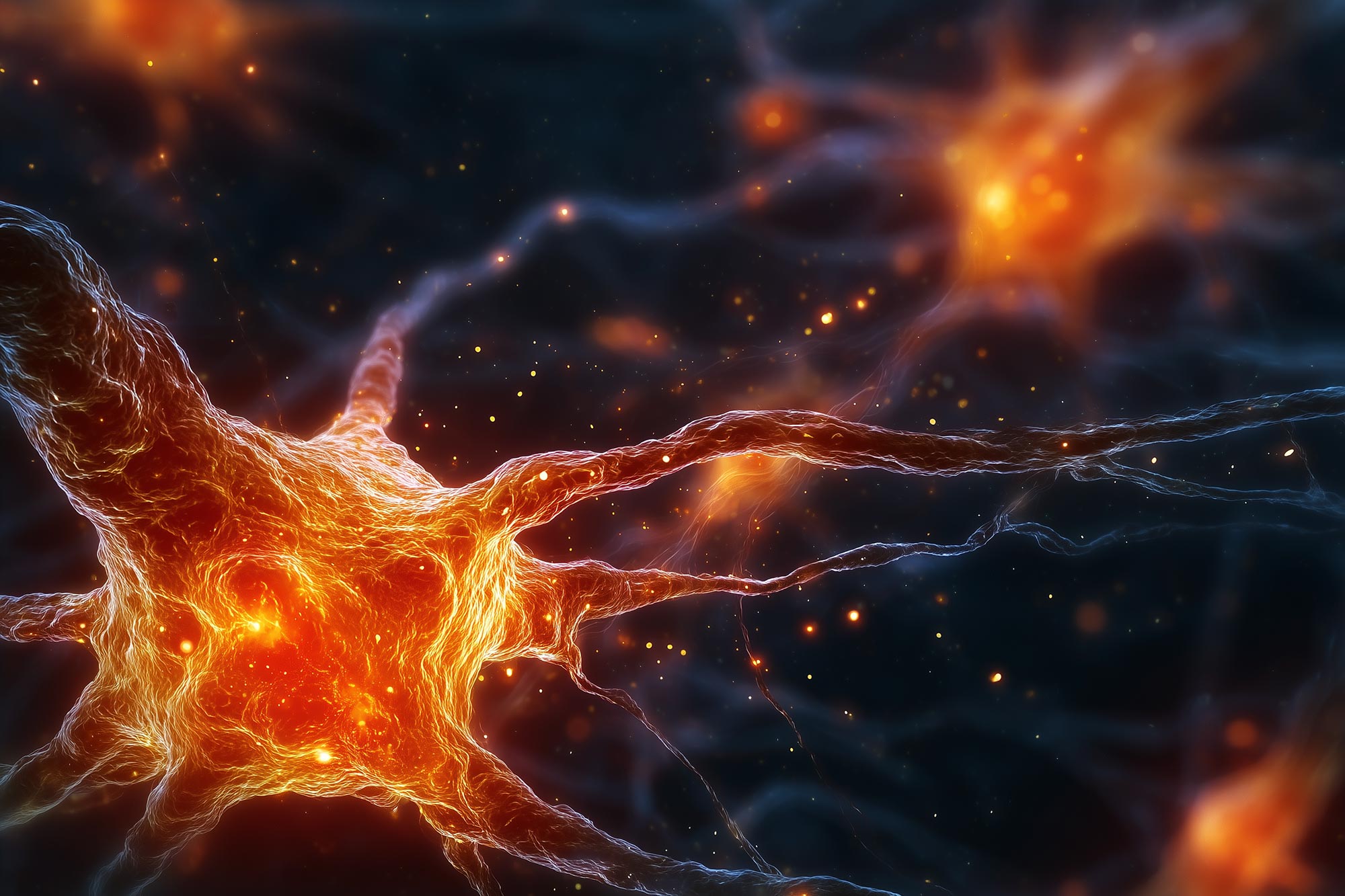
    A drop in ATP signaling may be a key molecular spark behind both depression and anxiety. Credit: SciTechDaily.com

    Scientists found that reduced ATP signaling in the hippocampus can trigger both depression and anxiety in mice.

    Lower ATP levels and a drop in connexin 43 expression appeared to make stressed animals more vulnerable. Manipulating this protein alone was enough to produce mood-related symptoms, while restoring it reversed them.

    ATP Signaling and Mood Disorders

    In a new JNeurosci publication, Tian-Ming Gao and colleagues at Southern Medical University investigated how adenosine triphosphate (ATP) signaling contributes to depression and anxiety in male mice. ATP is widely known as a source of cellular energy, but it also plays an important role in helping neurons communicate. The team centered their work on ATP activity in the hippocampus, a brain region that has been closely linked to depression.

    Stress, ATP Loss, and Connexin 43

    Male mice that were more prone to developing depressive- and anxiety-like behaviors after prolonged stress showed lower ATP levels and decreased expression of a protein that supports ATP release (connexin 43). When the researchers genetically reduced or removed connexin 43 in ATP-releasing cells in a separate group of mice, the animals displayed similar depressive- and anxiety-like behaviors and experienced additional drops in ATP. Bringing both lines of evidence together, the team found that reintroducing normal levels of connexin 43 in the hippocampus of stressed mice restored ATP levels and improved their behavior.

    A Shared Biological Pathway

    According to Gao, “This is the first direct evidence that deficient ATP release in [a region of the] hippocampus drives both depressive- and anxiety-like behaviors, revealing a shared molecular pathway [for these conditions].” He notes that the connection between connexin 43 and this pathway may offer a promising target for treating depression and anxiety when they appear together. The researchers also plan to include both male and female mice in future studies.

    Reference: “ATP release deficiency through astrocytic connexin 43 in the dorsal hippocampus promotes depressive- and anxiety-like behaviors” by Meng-Ling Wang, Jian Hu, Yue-Xin Wang, Xiao-Tong Lian, Yun-Long Song, Ding-Yu Wu, Jia-Yue Du, Hao Li, Xing-Xing Xiong, Zi-Ming Li, Jing-Ting Li, Yun-Shu Wang, Jia-Yu Hu, Xiao-Wen Li, Jian-Ming Yang, Xiang-Dong Sun, Yi-Hua Chen and Tian-Ming Gao, 23 November 2025, Journal of Neuroscience.
    DOI: 10.1523/JNEUROSCI.1063-25.2025

    Never miss a breakthrough: Join the SciTechDaily newsletter.
    Follow us on Google and Google News.

    Anxiety Disorders Brain Depression Neuroscience Popular Society for Neuroscience
    Share. Facebook Twitter Pinterest LinkedIn Email Reddit

    Related Articles

    Scientists Just Found the Secret Difference Between Human and Primate Brains

    How Your “Lizard Brain” Fuels Overthinking and Social Anxiety

    Unlocking Anxiety Relief: The Revolutionary Role of Delta Opioid Receptors

    New Study Reveals How a Common Laxative Improves Cognitive Function and Memory

    The Brain’s “Chill Pill” – Gene That Suppresses Anxiety Discovered by Scientists

    Adult Brain Structure Is Not Fixed: Scientists Discover Depression Treatment Increases Brain Connectivity

    The Brain’s Alarm System To Suppress Intrusive Thoughts and Inhibit Unwanted Memories

    How the Female Brain Responds to Genital Touch – And How It Varies Among Women

    Deep Inside the Brain: Neuroscientists Discover the Missing Piece of the Brain’s Multitasking Network

    Leave A Reply Cancel Reply

    • Facebook
    • Twitter
    • Pinterest
    • YouTube

    Don't Miss a Discovery

    Subscribe for the Latest in Science & Tech!

    Trending News

    One of the Universe’s Largest Stars May Be Getting Ready To Explode

    Scientists Discover Enzyme That Could Supercharge Ozempic-Like Weight Loss Drugs

    Popular Sweetener Linked to DNA Damage – “It’s Something You Should Not Be Eating”

    Ancient “Rock” Microbes May Reveal How Complex Life Began

    Researchers Capture Quantum Interference in One of Nature’s Rarest Atoms

    “A Plague Is Upon Us”: The Mass Death That Changed an Ancient City Forever

    Scientists Discover Game-Changing New Way To Treat High Cholesterol

    This Small Change to Your Exercise Routine Could Be the Secret to Living Longer

    Follow SciTechDaily
    • Facebook
    • Twitter
    • YouTube
    • Pinterest
    • Newsletter
    • RSS
    SciTech News
    • Biology News
    • Chemistry News
    • Earth News
    • Health News
    • Physics News
    • Science News
    • Space News
    • Technology News
    Recent Posts
    • Natural Compounds Boost Bone Implant Success While Killing Bacteria and Cancer Cells
    • After 60 Years, Scientists Uncover Unexpected Brain Effects of Popular Diabetes Drug Metformin
    • New Research Uncovers Hidden Side Effects of Popular Weight-Loss Drugs
    • Scientists Rethink Extreme Warming After Surprising Ocean Discovery
    • The Surprising Role of Asteroids in the Origin of Life
    Copyright © 1998 - 2026 SciTechDaily. All Rights Reserved.
    • Science News
    • About
    • Contact
    • Editorial Board
    • Privacy Policy
    • Terms of Use

    Type above and press Enter to search. Press Esc to cancel.