
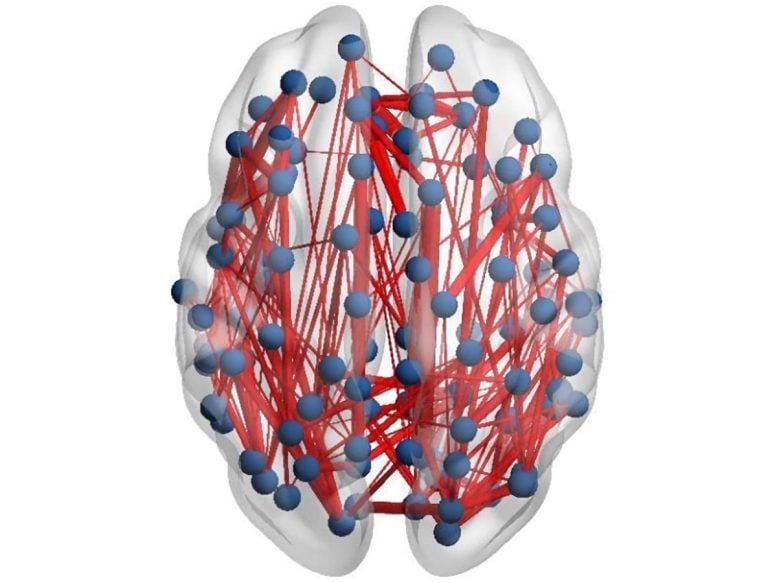
Treatment for Depression Increases Brain Connectivity
Most scientists believe that the structure of the adult brain is generally rigid and incapable of rapid changes. However, new research has now revealed that this is not true. In a new study, German scientists have shown that in-patient treatment for depression can lead to an increase in brain connectivity. Moreover, those individuals who respond well to this treatment show a greater increase in connectivity than those who don’t.
Presenting the work at the European College for Neuropsychopharmacology Congress in Vienna, lead researcher, Professor Jonathan Repple said:
“This means that the brain structure of patients with serious clinical depression is not as fixed as we thought, and we can improve brain structure within a short time frame, around 6 weeks. We found that if this treatment leads to an increase in brain connectivity, it is also effective in tackling depression symptoms. This gives hope to patients who believe nothing can change and they have to live with a disease forever, because it is “set in stone” in their brain.”
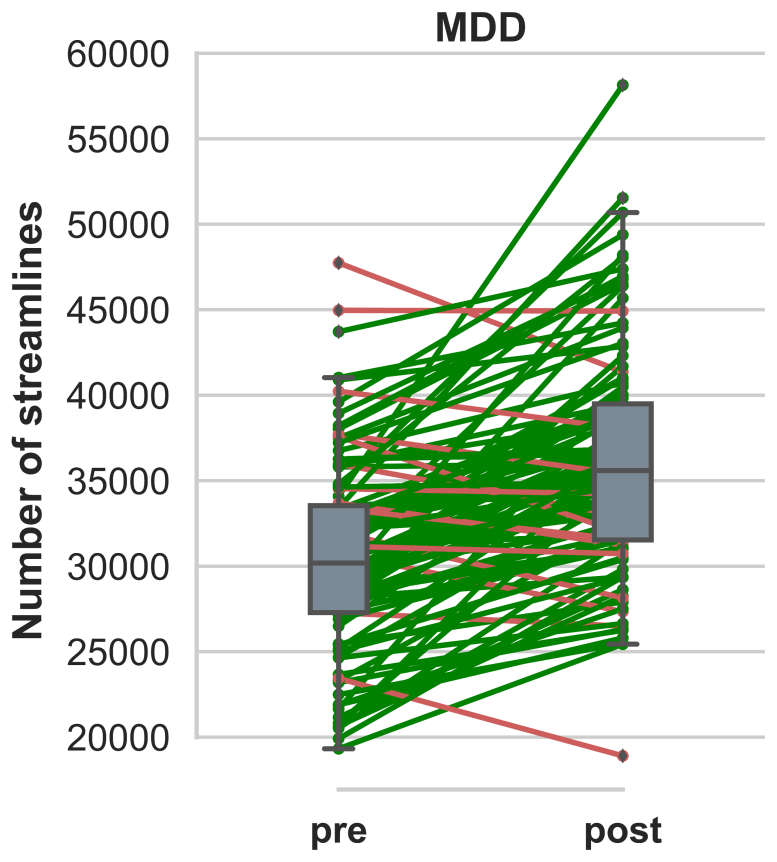
Increased Brain Connectivity Linked to Treatment Response
Working at the University of Muenster in Germany, the scientists studied 109 patients with serious depression (Major Depressive Disorder) and compared them with 55 healthy controls. Participants’ brains were scanned using an MRI scanner that had been set up to identify which parts of the brain were communicating with other parts as a way of measuring the level of connections within the brain. The patients were then treated for depression, some with electroconvulsive therapy (ECT), some with psychological therapy or medication, and some with a combination of all therapies. After treatment, the study participants were then rescanned using MRI to measure the number of brain connections. They were also retested for symptoms of depression.
Professor Repple (now Professor of Predictive Psychiatry at the University of Frankfurt) said:
“We found that treatment for depression changed the infrastructure of the brain, which goes against previous expectations. Treated patients showed a greater number of connections than they had shown before treatment. Moreover, those who showed the most response to treatment developed a greater number of new connections than those who showed little response. A second scan showing that there are no time effects in healthy controls supports our findings that we see something that is related to the disease and more importantly the treatment of this disease.
“We found these changes took place over a period of only around 6 weeks, we were surprised at the speed of response. We don’t have an explanation as to how these changes take place, or why they should happen with such different forms of treatment.”
Commenting, Dr. Eric Ruhe, Rabdoud University Medical Center, Nijmegen, the Netherlands said:
“This is a very interesting and difficult-to-perform study in which the authors repeated MRI scans to reveal changes in structural connectivity over time in patients treated for depression.
“The results align very much with our current belief that the brain has much more flexibility in adaptation over (even short) time than was previously thought. Indeed a major idea of what treatment of depression (and other psychiatric illnesses) invoke is plastic changes over time. This has been proposed as a common mechanism for antidepressants, psychotherapy, and electroconvulsive therapy. However, the amount of research to elucidate what changes are necessary or specific for response to treatment or remission of depression is limited. Moreover, the next question is whether different treatments have the possibility to specifically change targeted brain networks or vice versa whether we can use the disturbances in brain-networks as measured in the present study to choose which therapy will be helpful.
“The fact that the observed changes over time could not be associated with a form of treatment is a pity, but as the authors themselves suggest a topic for further research. First these results should be replicated in independent samples which hopefully is going to happen soon. Second further elaboration on this approach would be daunting and should be supported firmly as this work might help to bridge the current gap between neuroscience and evidence-based patient care.”
This is an independent comment, Dr. Ruhe was not involved in this study.
This work was presented at the 35th European College of Neuropsychopharmacology annual conference, which took place in Vienna. The ECNP is Europe’s main organization working in applied neuroscience.
Never miss a breakthrough: Join the SciTechDaily newsletter.
Follow us on Google and Google News.
11 Comments
Every neuroscientist knows that the brain is not rigid. On the contrary, it is known for its plasticity. Where did you get this strange quote that scientists think differently?
I have suffered many co-occurring disorders and a multitude of all their entertaining entanglement of symptoms for the 50 plus years I’ve been alive and as a result I’ve lived an extremely tortured life when I’m able to manage my symptoms I find myself capable of becoming a pretty dynamic person but when circumstances and conditions in my life render me incapable of managing then I’m reduced to dealing with an extremely non functional version of myself and it’s extremely difficult to make any positive progress in my life when I have no balance in my state of well being my symptoms and disorders pretty much dictate my entire life and have affected every aspect of not just it but myself entirely to the point i have completely withdrawn from any relationships with other human beings .I feel completely alone and disconnected from the rest of this world and I feel hopeless that help for me even exists in this world and even if it actually did júi doubt it ever be accessible to me …….the opportunity for relief I see as being possible for me is the cessation of this live and I greatly anticipate that as it will end up being the best day of my life I really wish the discoveries in this field happened faster at a much larger rate then they do perhaps it would offer me a more preferable outcome the what I currently forsee
It would seem that the method of treatment would be important. My local witch doctor is not very effective.
If treatment increases brain connectivity, and connectivity is associated with improvement, how do the authors explain the 70% rate of minimal improvement to negative outcome for ADs, according to a very recent review?
It also seems more than a bit odd that the results are not reported by treatment type. Are the authors seriously considering ECT to be functionally equivalent to supportive counseling? Why would they not report on differential response?
“Increased connectivity” is also a very vague outcome measure. Could it simply be that when people feel better, whatever the reason, they exhibit more “connectivity?” How permanent are these connections? If they can change quickly, these are not particularly helpful measurements.
All in all, this article is not convincing to me. There are too many uncontrolled variables, including the variable levels of integrity in much of what currently passes for research.
Um, yeah, I thought I had heard for a million years that “everyone with any kind of education knows” that the brain is plastic. But as for why treating for depression would help with connection… it’s because that’s a lot of what causes depression, is the feeling of disconnection from life, and from people, and the isolation from the real world of “all the rest of people.” …So what is treating depressed people attempting to accomplish? What does a successfully treated no-longer-depressed person achieve? Connection in the brain between all the thinking that depressed people do and their feelings and experiences and the people and things around them. Instead of “feeling dead inside” and being mentally cut off or dammed, they are making connections and have gained ability to make connections, and making those connections to move forward is how they live in the future to avoid being depressed. As someone who lives with depression for multiple years, I have always said ever since that what I gained from it was knowing when I knew that I could change the way things were by my connections and I would never have to be depressed again, and as far as I could tell, everyone could stand to go through depression if it would help convince them to learn connecting skills and believe that using those skills would be key to life totally aside from depression, if otherwise they wouldn’t be inclined to be interested in learning the skills…and since someone who has been dead inside and then learns to connect like that comes out ahead of the person who has been oblivious to this whole process during that same time, it’s obvious that this article could say that that those who respond well to treatment are better off than those who don’t (or currently simply are not doing so).
Where it gets complicated for me is that the person who taught me about connections, and humans’ ability to make brain connections and how doing that is the way to avoid depression is the same person whose behavior and habits caused my years-long depression. But I guess it’s another way of showing how doing something to get out of depression, then, has put and will continue to put a person ahead of “the average layman” who has neither gone downhill nor uphill, like the person -who-has-recovered-from-depression has.
More deception from the mental health industry. Long term use of ssri’s attempts to take over natural adaptation. Naturzl Neuroplasticity becomes useless
What treatment? Which? Any treatment, paging Dr.Fine…nyuk, nyuk, nyuk.
Article said zero about the treatment.
Another click bate gaslit article. Where is the journal reference. Even social science needs to avoid ‘he said and she said’ reporting. Glad to read others ask for differential, therapy specific quantitative data. But here as elsewhere there is just an assertion that MRI activity has something to do with ‘connectivity’. Just that would be a welcome report. But I was glad the work and report didn’t drag us into the zoo clown world of ‘brain wave’ pseudo science. TG for tender mercies.
Pardon my ignorance but what are AD’s?
Which treatment are you talking about? The fact that you won’t mention or leave any references makes me think it’s an illicit substance like psilocybin or mdma 🤔
this article seems logically incomplete somewhere