
Close Menu
    Facebook X (Twitter) Instagram
    SciTechDaily
    • Biology
    • Chemistry
    • Earth
    • Health
    • Physics
    • Science
    • Space
    • Technology
    Facebook X (Twitter) Pinterest YouTube RSS
    SciTechDaily
    Home»Health»Prenatal Depression Weakens Child’s Brain Connectivity – Associated With Increased Aggression and Hyperactivity
    Health

    Prenatal Depression Weakens Child’s Brain Connectivity – Associated With Increased Aggression and Hyperactivity

    By Society for NeuroscienceAugust 10, 2020No Comments2 Mins Read
    Facebook Twitter Pinterest Telegram LinkedIn WhatsApp Email Reddit
    Share
    Facebook Twitter LinkedIn Pinterest Telegram Email Reddit
    Child's Altered Brain Connectivity
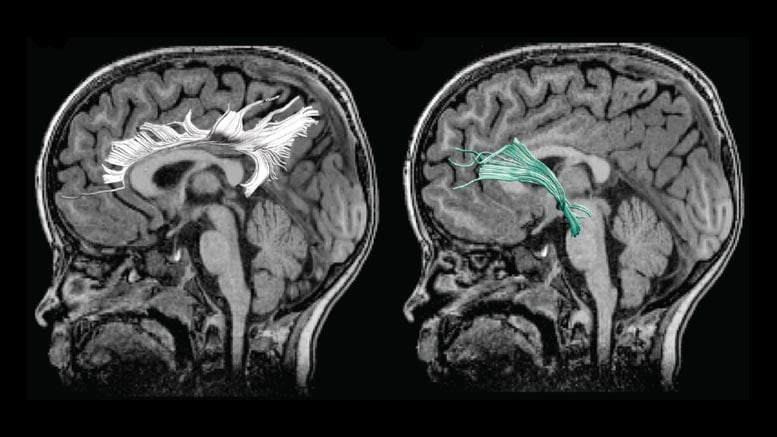
    Prenatal depression symptoms were associated with weakened white matter tracts in the cingulum (left) and amygdala pathway (right). Credit: Hay et al., JNeurosci 2020

    Weakened brain connections may mediate prenatal depression’s influence on child behavior.

    Altered brain connectivity may be one way prenatal depression influences child behavior, according to new research in JNeurosci.

    Up to one fifth of women experience depression symptoms during pregnancy, with unknown effects on the fetus. Prenatal depression is correlated with behavioral and developmental issues in the child, as well as an increased risk of developing depression at age 18. But how prenatal depression leads to these changes remains unclear.

    Hay et al. studied 54 mother/child pairs. Mothers answered a survey about their depression symptoms at several points during their pregnancy. The research team employed diffusion MRI, an imaging technique that reveals the strength of structural connections between brain regions, to examine the children’s white matter.

    Greater prenatal depression symptoms were associated with weaker white matter connections between brain regions involved in emotional processing. This change could lead to dysregulated emotional states in the children and may explain why the children of depressed mothers have a higher risk of developing depression themselves. The weakened white matter was associated with increased aggression and hyperactivity in the male children. These findings highlight the need for better prenatal care to recognize and treat prenatal depression in order to support the mother and the child’s development.

    Reference: “Amygdala-prefrontal structural connectivity mediates the relationship between prenatal depression and behaviour in preschool boys” by Rebecca E. Hay [MD], Jess E. Reynolds [PhD], Melody N. Grohs [MSc], Dmitrii Paniukov [PhD], Gerald F. Giesbrecht [PhD], Nicole Letourneau [PhD], Deborah Dewey [PhD] and Catherine Lebel [PhD], 11 August 2020, JNeurosci.
    DOI: 10.1523/JNEUROSCI.0481-20.2020

    Never miss a breakthrough: Join the SciTechDaily newsletter.
    Follow us on Google and Google News.

    Depression Gynecology Neuroscience Society for Neuroscience
    Share. Facebook Twitter Pinterest LinkedIn Email Reddit

    Related Articles

    Scientists Identify Structural Protein for the Diagnosis and Treatment of Depression

    Lactation Changes Electrical Signaling in Mom’s Brain – But It’s Reversible

    Brain Waves of Sleeping Sheep Maaay Offer Clues to Human Brain Disease

    New Research Shows the Brain May Need Iron for Healthy Cognitive Development

    Secrets of the Molecular Makeup of Cannabis Reveals How CBD and THC Levels Impact Side Effects

    Yale Study Links Depression During Pregnancy to Risky Postpartum Sexual Behavior

    Area of Brain Responsible for Exercise Motivation Discovered, May Help Improve Treatments for Depression

    Neural Connection Between Infant Stress & Depression in Teenage Girls

    Ketamine Produces Rapid Antidepressant Responses

    Leave A Reply Cancel Reply

    • Facebook
    • Twitter
    • Pinterest
    • YouTube

    Don't Miss a Discovery

    Subscribe for the Latest in Science & Tech!

    Trending News

    Largest-Ever Study Finds Medicinal Cannabis Ineffective for Anxiety, Depression, PTSD

    250-Million-Year-Old Egg Solves One of Evolution’s Biggest Mysteries

    Living With Roommates Might Be Changing Your Gut Microbiome Without You Knowing

    Century-Old Cleaning Chemical Linked to 500% Increased Risk of Parkinson’s Disease

    What if Your Memories Never Happened? Physicists Take a New Look at the Boltzmann Brain Paradox

    One of the Universe’s Largest Stars May Be Getting Ready To Explode

    Scientists Discover Enzyme That Could Supercharge Ozempic-Like Weight Loss Drugs

    Popular Sweetener Linked to DNA Damage – “It’s Something You Should Not Be Eating”

    Follow SciTechDaily
    • Facebook
    • Twitter
    • YouTube
    • Pinterest
    • Newsletter
    • RSS
    SciTech News
    • Biology News
    • Chemistry News
    • Earth News
    • Health News
    • Physics News
    • Science News
    • Space News
    • Technology News
    Recent Posts
    • Scientists Prove There Are Just Six Degrees of Separation in a Social Network
    • Bee Bacteria Could Fix a Major Flaw in Plant-Based Milk
    • Scientists Discover a Surprising Way To Make Bread Healthier and More Nutritious
    • Natural Compounds Boost Bone Implant Success While Killing Bacteria and Cancer Cells
    • After 60 Years, Scientists Uncover Unexpected Brain Effects of Popular Diabetes Drug Metformin
    Copyright © 1998 - 2026 SciTechDaily. All Rights Reserved.
    • Science News
    • About
    • Contact
    • Editorial Board
    • Privacy Policy
    • Terms of Use

    Type above and press Enter to search. Press Esc to cancel.