

Michigan State University researchers have made important discoveries about the supermassive black hole at our galaxy’s center, presenting their findings based on NuSTAR X-ray data.
- Researchers led by Shuo Zhang have presented new findings that will help scientists better understand the supermassive black hole at the center of the Milky Way, Sagittarius A*.
- Grace Sanger-Johnson, a postbaccalaureate researcher, discovered nine previously undetected “flares” from Sagittarius A* — high-energy X-ray bursts that give researchers valuable insights into the black hole’s physical environment.
- Jack Uteg, an undergraduate researcher in the MSU Honors College, analyzed X-ray echoes from a molecular cloud near the black hole to peer more than 200 years into Sagittarius A*’s past.
Groundbreaking Discoveries at the Galactic Center
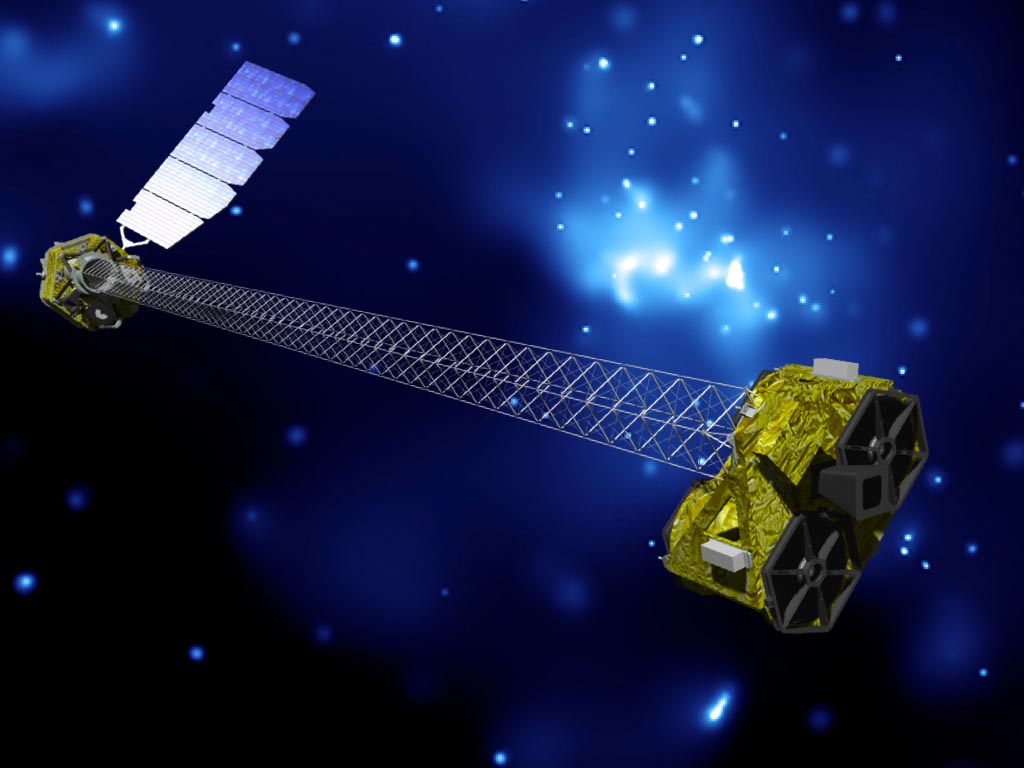
Groundbreaking discoveries about the supermassive black hole at the center of our Milky Way galaxy have been made by researchers at Michigan State University. Their findings, based on data from NASA’s NuSTAR X-ray telescope, were presented at the 244th meeting of the American Astronomical Society, or AAS, on June 11.
Studying black holes presents unique challenges due to their powerful gravitational fields, which are so strong that even light cannot escape. To understand these mysterious objects, scientists often examine the effects of their gravity on nearby stars and the emissions from adjacent gas clouds, among other indicators.
Innovations in Black Hole Research
Grace Sanger-Johnson and Jack Uteg, led by Shuo Zhang, assistant professor in the Department of Physics and Astronomy, have found innovative ways to shed more light on these cosmic enigmas using decades of X-ray data from space-based telescopes.
“Grace and Jack’s contributions are a source of immense pride,” Zhang said. “Their work exemplifies MSU’s commitment to pioneering research and fostering the next generation of astronomers. This research is a prime example of how MSU scientists are unlocking the universe’s secrets, bringing us closer to comprehending the nature of black holes and the dynamic environment at the heart of our galaxy.”
Galactic Fireworks
Sanger-Johnson, a postbaccalaureate researcher, analyzed 10 years of data looking for X-ray flares from Sagittarius A*, or Sgr A*, the Milky Way’s central black hole. In doing so, she discovered nine flares that had gone unnoticed.
These flares are dramatic bursts of high-energy light that provide a unique opportunity to study the immediate environment around the black hole, a region typically invisible due to its incredible gravity.
Sgr A* is the closest and least active supermassive black hole to Earth and, therefore, data from Sgr A* and its flares is one of the only ways currently known to study the physical environments of a black hole.
“We are sitting in the front row to observe these unique cosmic fireworks at the center of our own Milky Way galaxy,” said Zhang, Sanger-Johnson’s advisor.
“Both flares and fireworks light up the darkness and help us observe things we wouldn’t normally be able to. That’s why astronomers need to know when and where these flares occur, so they can study the black hole’s environment using that light.”
Sanger-Johnson meticulously sifted through a decade’s worth of X-ray data collected from 2015 to 2024 by NuSTAR, or the Nuclear Spectroscopic Telescope Array, one of NASA’s space-based X-ray telescopes. Each of the nine newly discovered flares provides invaluable data for understanding the black hole’s environment and activities, the team said.
“We hope that by building up this bank of data on Sgr A* flares, we and other astronomers can analyze the properties of these X-ray flares and infer the physical conditions inside the extreme environment of the supermassive black hole,” Sanger-Johnson said.
‘Echoes’ of a Black Hole
While Sanger-Johnson focused on the brilliant flares from Sgr A*, Uteg, an undergraduate researcher in the MSU Honors College, examined the black hole’s activity using a technique akin to listening to echoes. Uteg analyzed almost 20 years’ worth of data targeting a giant molecular cloud known as “the Bridge” near Sgr A*.
“Unlike stars, these clouds of gas and dust in interstellar space don’t generate their own X-rays,” Uteg said. So when X-ray telescopes began picking up photons from the Bridge, astronomers started hypothesizing the source.
“The brightness we see is most likely the delayed reflection of past X-ray outbursts from Sgr A*,” Uteg said. “We first observed an increase in luminosity around 2008. Then, for the next 12 years, X-ray signals from the Bridge continued to increase until it hit peak brightness in 2020.”
This “echo” light from the black hole has traveled for hundreds of years from Sgr A* to the molecular cloud, and then traveled another roughly 26,000 years before reaching Earth.
By analyzing this X-ray echo, Uteg has started reconstructing a timeline of our black hole’s past activity, offering insights that wouldn’t be possible through direct observation alone. Uteg’s analysis used data from NuSTAR as well as from the European Space Agency’s X-ray Multi-Mirror, or XMM, Newton space observatory.
“One of the main reasons we care about this cloud getting brighter is that it lets us constrain how bright the Sgr A* outburst was in the past,” Uteg said.
Within these calculations, Uteg and the team at MSU have determined that about 200 years ago, Sgr A* was about 5 orders of magnitude brighter in X-rays as we see it today.
“This is the first time that we have constructed a 24-year-long variability for a molecular cloud surrounding our supermassive black hole that has reached its peak X-ray luminosity,” Zhang said. “It allows us to tell the past activity of Sgr A* from about 200 years ago. Our research team at MSU will continue this ‘astroarchaeology game’ to further unravel the mysteries of the Milky Way’s center.”
While the exact mechanisms triggering X-ray flares and the precise life cycle of black holes remain mysteries, MSU researchers are confident their findings will spark further investigation and potentially revolutionize our understanding of these enigmatic objects.
Uteg and Sanger-Johnson were supported by the NASA NuSTAR guest observation program.
Never miss a breakthrough: Join the SciTechDaily newsletter.
Follow us on Google and Google News.
1 Comment
Are we meeting God?