
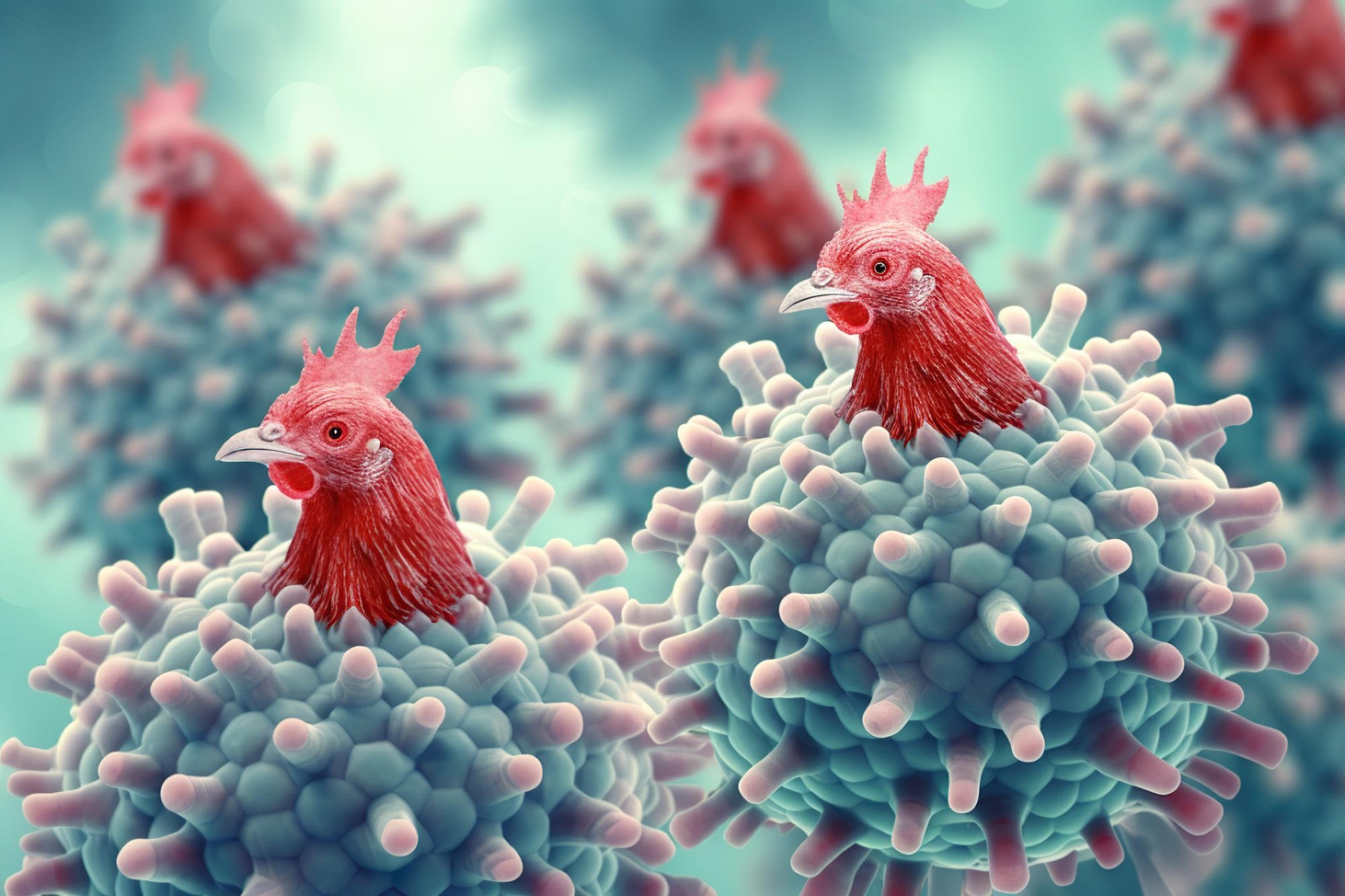
Research indicates that the food-stealing behavior of some seabirds may be a key factor in the spread of the lethal H5N1 bird flu, potentially affecting seabird populations worldwide through migration.
The deadly H5N1 avian influenza virus, which has killed millions of birds globally since 2021 and can occasionally infect humans, may be transmitted through the food-stealing behavior of certain seabirds.
A study recently published in the journal Conservation Letters highlights food theft – also known as ‘kleptoparasitism’, where some seabird species like frigatebirds and skuas force other birds to regurgitate their prey – as a possible transmission path for the spread of avian flu.
Led by scientists from UNSW Sydney’s Center for Ecosystem Science and involving BirdLife International, Deakin University, and Monash University, the researchers analyzed existing information about frigatebird and skua distribution, behavior, and movements, while searching through a global database for records of their contracting the virus. They also looked at the literature available to see which species of seabird the frigatebirds and skua target with kleptoparasitism.
Lead author Simon Gorta from UNSW Science says the study could provide a new focus in determining how and where the spread of the deadly virus may originate and how it could be transmitted among individuals, populations, and at the continental or ocean-basin scale.
“Understanding transmission is critical to monitoring and management efforts, particularly when at-risk species or regions are involved, and it’s helpful to understand threats to other animals and people,” says lead author Simon Gorta, a PhD student with UNSW.
“While the original H5N1 virus first emerged in 1996, the current 2.3.4.4b strain has spread far more than other strains, and is highly virulent, killing hundreds of thousands of wild seabirds since being first detected in 2021.”
Previously restricted largely to Eurasia and Africa, the virus spread to North America in 2021 and South America in late 2022. It reached Antarctica in early 2024, and has been declared a panzootic – a pandemic among animals.
Seabirds at risk and capable of transmitting the disease
Marine species, such as seabirds, have been particularly hard hit by the panzootic.
“As one of the most threatened groups of birds on the planet, the fact that seabirds have proven to be particularly vulnerable to diseases like this is of great concern,” says co-author A/Prof. Rohan Clarke from Monash University.
Co-author Professor Richard Kingsford says the seabirds are especially vulnerable because of the way they group when breeding.
“Transmission among seabirds is a real concern because of their close contact and potential contamination of communal resources on densely-packed breeding islands, as well as particular behaviors like predation and scavenging of infected individuals,” he says.
But now the researchers say another behavior may play an important role here: food theft or “kleptoparasitism”. This is a widespread behavior in seabirds, commonly practiced by frigatebirds and skuas which the researchers focused on in their study.
This process involves a kleptoparasitic bird stealing food from another bird by forcing it to regurgitate its prey. If the bird the kleptoparasite targets is infected, the regurgitated food item could be coated in saliva with a high viral load, which could then infect the kleptoparasite, which in turn could infect others.
The researchers highlighted that this pathway of transmission could lead to transmission of the disease into new populations, but could also be carried long distances if birds become infectious on migration.
“Many seabirds, including these kleptoparasitic species, cover tens of thousands of kilometers in their migrations,” says Alex Berryman, Red List Officer for BirdLife International.
“If kleptoparasites become infected during these migrations and come into contact with other individuals in a way that can facilitate transmission soon after, the disease could spread into new, threatened, and previously unexposed populations and regions.”
Early detection is key
While the H5N1 2.3.4.4b has not yet reached Australia, monitoring for early detection of the disease when it arrives – rather than if – is underway.
“Birds globally are already under greater threat than ever before – it is critical the risk posed by bird flu is properly researched and managed,” Mr Gorta says.
“We have identified that migratory kleptoparasites, alongside predatory and scavenging species, could be some of the first species to become infected when H5N1 reaches Australia.”
These insights will contribute to the coordinated management of avian influenza in Australia, including the National Avian Influenza Wild Bird Surveillance Program.
The researchers say this is important for guiding Australia’s preparedness for the arrival of the disease on its shores, including vulnerable subantarctic islands.
Reference: “Kleptoparasitism in seabirds—A potential pathway for global avian influenza virus spread” by Simon B. Z. Gorta, Alex J. Berryman, Richard T. Kingsford, Marcel Klaassen and Rohan H. Clarke, 16 September 2024, Conservation Letters.
DOI: 10.1111/conl.13052
The study was funded by the Funder Australian Government Research Training Program Scholarship.
Never miss a breakthrough: Join the SciTechDaily newsletter.
Follow us on Google and Google News.
1 Comment
Great! Can you now finally start sparing lives of innocent chickens on the farms accross the world?
Can’t help thinking: they’re destroying chickens now to “stop the spread”. How long before they start doing that with people?