
The study of the Christmas Island rat exposes the limitations of de-extinction, with missing genes preventing perfect replicas and raising ethical concerns about the process.
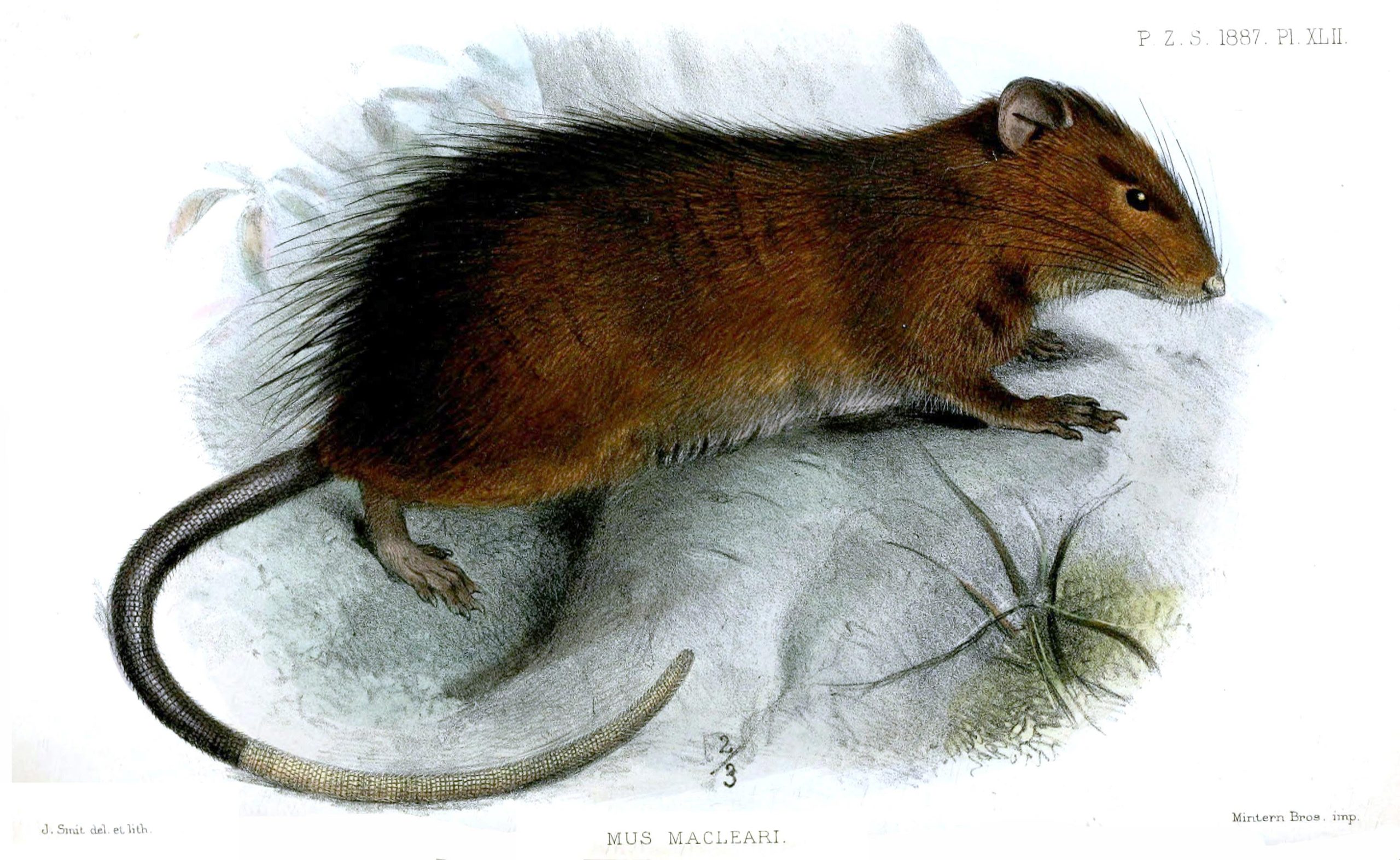
Dinosaurs went extinct 65 million years ago, mammoths 4,000 years ago, and the Christmas Island Rat 119 years ago. Since becoming a popular concept in the 1990s, de-extinction efforts have focused on grand animals with mythical stature, but in a paper published March 9, 2022, in the journal Current Biology, a team of paleogeneticists turn their attention to Rattus macleari, and their findings provide insights into the limitations of de-extinction across all species.
Challenges in Sequencing Extinct Species’ Genomes
De-extinction work is defined by what is unknown. When sequencing the genome of an extinct species, scientists face the challenge of working with degraded DNA, which doesn’t yield all the genetic information required to reconstruct a full genome of the extinct animal. With the Christmas Island rat, which is believed to have gone extinct because of diseases brought over on European ships, evolutionary geneticist Tom Gilbert at University of Copenhagen and his colleagues lucked out.
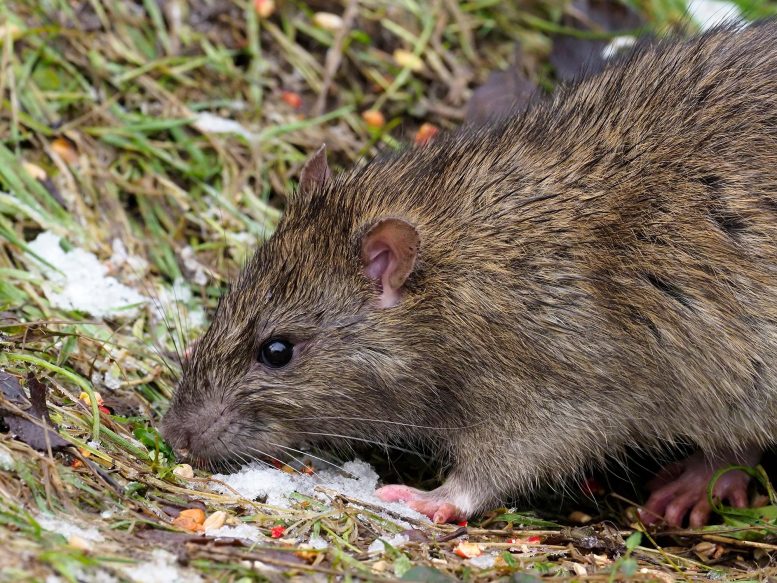
Not only was the team able to obtain almost all of the rodent’s genome, but since it diverged from other Rattus species relatively recently, it shares about 95% of its genome with a living rat, the Norway brown rat. “It was quite a nice test model,” says Gilbert. “It’s the perfect case because when you sequence the genome, you have to compare it to a really good modern reference.”
After the DNA has been sequenced as well as possible and the genome is matched up against the reference genome of the living species, the scientists identify the parts of the genomes that don’t match up and, in theory, would then use CRISPR technology to gene edit the DNA of the living species to match that of the extinct one. The brown-rat-to-Christmas-Island-rat scenario is a particularly good test case because the evolutionary divergence is similar to that of the elephant and the mammoth.
Imperfections in De-Extinction: Missing Genes
Though the sequencing of the Christmas Island rat was mostly successful, a few key genes were missing. These genes were related to olfaction, meaning that a resurrected Christmas Island Rat would likely be unable to process smells in the way as it would have originally. “With current technology, it may be completely impossible to ever recover the full sequence, and therefore it is impossible to ever generate a perfect replica of the Christmas Island rat,” says Gilbert.
“It is very, very clear that we are never going to be able to get all the information to create a perfect recovered form of an extinct species,” he says. “There will always be some kind of hybrid.” Though a replica will never be perfect, the key is that scientists are able to edit for the DNA that makes the extinct animal functionally different from the living one.
Ethical and Practical Considerations
Gilbert says that in order to make an ecologically functional mammoth, for example, it might be enough to edit elephant DNA to make the animal hairy and able to live in the cold. “If you’re making a weird fuzzy elephant to live in a zoo, it probably doesn’t matter if it is missing some behavioral genes,” he says. “But that brings up a whole lot of ethical questions.”
Gilbert plans to try doing the actual gene editing on rats but would like to start with species that are still living. He intends to begin by doing CRISPR edits on a black rat genome to change it to a Norway brown rat before attempting to resurrect the Christmas Island rat. Though he is excited about his future research, the whole process still gives him pause. “I think it’s a fascinating idea in technology, but one has to wonder if that’s the best use of money as opposed to keeping the things alive that are still here,” he says.
Reference: “Probing the genomic limits of de-extinction in the Christmas Island rat” by Jianqing Lin, David Duchêne, Christian Carøe, Oliver Smith, Marta Maria Ciucani, Jonas Niemann, Douglas Richmond, Alex D. Greenwood, Ross MacPhee, Guojie Zhang, Shyam Gopalakrishnan and M. Thomas P. Gilbert, 9 March 2022, Current Biology.
DOI: 10.1016/j.cub.2022.02.027
This work was supported by the European Research Council and the Danish National Research Foundation.
Never miss a breakthrough: Join the SciTechDaily newsletter.
Follow us on Google and Google News.
17 Comments
Cool and scary at the same time. Bringing back this rat and possibly other extinct species. Now humans probably contributed to a lot of species’ demise but some are just from our continual changing environment that includes changing competing species as well as food sources not just environmental factors with those factors keeping them in check. Something tell me we need to keep our wish to play god in check.
We are not playing god. We are playing human. Ever since the first hominin bashed two rocks together to make a tool, we have been changing nature. Most of the food people have been eating in the last 5000 years have been genetically manipulated – not through CRISPR but through selected breeding. So by de-extinction studies, we are not playing some imaginary friend – we are playing human.
Your concerns are well placed, but please give that tired, dumb old adage of “playing god” a rest.
I second that! On the other hand, we must obviously make prudent choices.
There is a reason why a species goes extinct, and we shouldn’t interfere with the natural order of things. It isn’t a good idea to fool with Mother Nature. And if our actions led to the extinction, we should correct the actions that caused it in the first place.
Oh really? So the domestication of cows was a bad idea? How about wheat or corn? You wouldn’t be here if we didn’t mess with “mother nature”.
A waste or effort and resources too pitiful for words… Nonetheless, here’s one:
DEVOLUTION.
Here’s another word – DISCOMBOBULATION. In the context of what the article described, this word makes as much sense as the one you used.
Of all things to try to bring back.. why a rodent? If you need rodents; Go to New York City.. there are a plethora of black rats there. Or maybe head to Singapore which is awash with black and brown rats. But no.. lets waste time and resources on an unneeded rodent. Which lets face it, will, by way of man’s interference, have some super immuity to disease and will reproduce like mad and become a nusance, and spread diseases that man has never experienced before. Way to go DNA guys.
The efforts focus on this rodent for the same reason that we first made wooden biplanes instead of going directly to supersonic jets. We have to start somewhere. Bringing back a recently extinct creature with an existing close relative is easier than bringing back something where we have to start with a scratch. Starting with an easier project gives us lesser points of failure from which we learn before attempting increasingly more complex projects. This is how we humans learn.
Jurassic park was fantasy, not a documentary. Reconstructing the genome of a complex creature is multiple orders of magnitude tougher than reconstructing top secret documents ripped and flushed down a toilet.
Resurecting the Christmas island rat is non-fungible science. But you can easily recoup the investment needed to resurrect the woolly mammoth (and turn a tidy profit) by selling a few to the high-fence game preserves in Texas. I’m sure Ted Nugent, Kid Rock, et Al, will be willing to part with some long green to get to hunt an elephant in a fur coat.
I am not sure you understand what “non-fungible” means. The learning from this project is directly transferable to projects that focus on de-extinction of more “relatable” animals, so it is definitely fungible, and not a wasted effort.
I don’t think the ultimate goal of this project is to re-introduce this species in to the wild. However, this project will give us an idea about the logistics of carrying out such a modification – eg. whether the womb of an existing closely related species could host a modified zygote.
“your scientists were so preoccupied with whether or not they could, they didn’t stop to think if they should.”
“Toto, I’ve a feeling we’re not in Kansas anymore.”
What? I thought we were doing random movie quotes.
Why should we forget mammoths? They are one of the following steps after this, right?
Very Interesting
Some thoughts.
1. All senses of living & Dead including olfactory senses, must be on a range or spectrum of capability. Sense of smell is species dependent .
2. Genes encode information.
3. Could be a important step in the theory of extinction. Including for Humans. After all there is no shortageof two legged rats.
On a lighter note recall a now famous actor playing the role of Barbarino in “Welcome Back Kotter” , holding up a dead Rat and going ” You dirty Rat” . Cracked me up.
Christmas Island Rats.Very Funny .
Views expressed are personal and not binding on anyone.
I find it unlikely that a rat went extinct due to a disease & why would you bring it back we need to worry about the animals & people still alive
Incredible stuff, a wikipedia binge let me to extinct species in the genome rattus which led me to this. Painful reading the other comments, commenter “TheHeck” is far too patient