
Close Menu
    Facebook X (Twitter) Instagram
    SciTechDaily
    • Biology
    • Chemistry
    • Earth
    • Health
    • Physics
    • Science
    • Space
    • Technology
    Facebook X (Twitter) Pinterest YouTube RSS
    SciTechDaily
    Home»Health»Four-Second Cycling Sprints: 10 Minutes Is All You Need for This High-Intensity Workout
    Health

    Four-Second Cycling Sprints: 10 Minutes Is All You Need for This High-Intensity Workout

    By Experimental BiologyApril 30, 2021No Comments3 Mins Read
    Facebook Twitter Pinterest Telegram LinkedIn WhatsApp Email Reddit
    Share
    Facebook Twitter LinkedIn Pinterest Telegram Email Reddit
    Exercise Bike
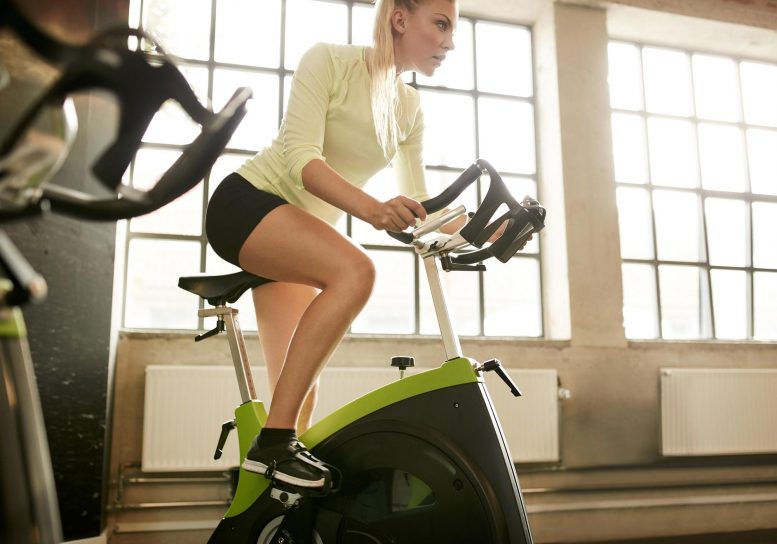
    The University of Texas at Austin Human Performance Lab studied health and performance benefits associated with four-second bursts of high-intensity exercise.

    Four-Second Cycling Sprints Improve Exercise Endurance and Power

    High-intensity cycling in very short bursts can lead to performance and health benefits in just 10 minutes a day, according to a new study that was presented virtually this week at the American Physiological Society’s (APS) annual meeting at Experimental Biology 2021.

    Remzi Satiroglu
    Remzi Satiroglu, MS, University of Texas at Austin. Credit: Remzi Satiroflu

    Young adult volunteers participated in high-intensity cycling three times a week for eight weeks. They cycled at maximum effort for four seconds and rested for 15 to 30 seconds before beginning another four-second sprint. Each sprint-rest bout was repeated up to 30 times in a single workout session, for a total of 10 minutes.

    By the end of the trial period, the participants had increased their maximum oxygen consumption, which indicates an improvement of aerobic exercise endurance. Their anaerobic power (strength) and total blood volume increased as well. Both athletic performance and cardiovascular health can improve with a boost in blood volume, explained Remzi Satiroglu, MS, first author of the study from the University of Texas at Austin.

    These results may encourage people to exercise because the total workout time is very short, Satiroglu explained. “[People] often claim they don’t have enough time to squeeze [exercise] in. We offer people a workout that only takes 10 minutes total and shows results when completed three times per week,” he said.

    About Experimental Biology 2021

    Experimental Biology is the annual meeting of five societies that explores the latest research in physiology, anatomy, biochemistry, and molecular biology, investigative pathology and pharmacology. With a mission to share the newest scientific concepts and research findings shaping clinical advances, the meeting offers an unparalleled opportunity for global exchange among scientists who represent dozens of scientific areas, from laboratory to translational to clinical research.

    About the American Physiological Society

    Physiology is a broad area of scientific inquiry that focuses on how molecules, cells, tissues, and organs function in health and disease. The American Physiological Society connects a global, multidisciplinary community of more than 10,000 biomedical scientists and educators as part of its mission to advance scientific discovery, understand life, and improve health. The Society drives collaboration and spotlights scientific discoveries through its 16 scholarly journals and programming that support researchers and educators in their work.

    Never miss a breakthrough: Join the SciTechDaily newsletter.
    Follow us on Google and Google News.

    Exercise Fitness Physiology
    Share. Facebook Twitter Pinterest LinkedIn Email Reddit

    Related Articles

    Four Weeks to a Healthier Brain: Resistance Training Can Prevent or Delay Alzheimer’s Disease

    An Easy Way to Improve Exercise Performance: Dab on Deep Heat Cream

    From Vitamin C to Spinach: Researching Ways to Protect Astronaut Cardiovascular Health From Space Radiation

    Athletic Training Can Make Your Brain Tired, Not Just Your Body

    New Study Shows, It’s Never Too Late to Start Exercising

    New Study Shows Dehydration Alters Human Brain Shape and Activity

    Long-Term Heat Therapy Increases Mitochondrial Function in Muscles

    New Study Shows Greater Health Benefits From Exercise Than Previously Believed

    Breakthrough Research May Lead to “Exercise in a Bottle”

    Leave A Reply Cancel Reply

    • Facebook
    • Twitter
    • Pinterest
    • YouTube

    Don't Miss a Discovery

    Subscribe for the Latest in Science & Tech!

    Trending News

    Your Blood Pressure Reading Could Be Wrong Because of One Simple Mistake

    Astronomers Stunned by Ancient Galaxy With No Spin

    Physicists May Be on the Verge of Discovering “New Physics” at CERN

    Scientists Solve 320-Million-Year Mystery of Reptile Skin Armor

    Scientists Say This Daily Walking Habit May Be the Secret to Keeping Weight Off After Dieting

    New Therapy Rewires the Brain To Restore Joy in Depression Patients

    Giant Squid Detected off Western Australia in Stunning Deep-Sea Discovery

    Popular Sugar-Free Sweetener Linked to Liver Disease, Study Warns

    Follow SciTechDaily
    • Facebook
    • Twitter
    • YouTube
    • Pinterest
    • Newsletter
    • RSS
    SciTech News
    • Biology News
    • Chemistry News
    • Earth News
    • Health News
    • Physics News
    • Science News
    • Space News
    • Technology News
    Recent Posts
    • Scientists Say Cognitive Decline Isn’t Inevitable — Your Brain Can Improve at Any Age
    • This Weird Sea Creature May Have Rewritten Life’s Genetic Rulebook
    • The Hidden Types of Dementia Most People Have Never Heard Of
    • Scientists Discover Why Alcohol Prevents the Liver From Healing, Even After You Quit
    • Scientists Solve a 60-Year-Old Fat Cell Mystery — and It Changes What We Know About Obesity
    Copyright © 1998 - 2026 SciTechDaily. All Rights Reserved.
    • Science News
    • About
    • Contact
    • Editorial Board
    • Privacy Policy
    • Terms of Use

    Type above and press Enter to search. Press Esc to cancel.