
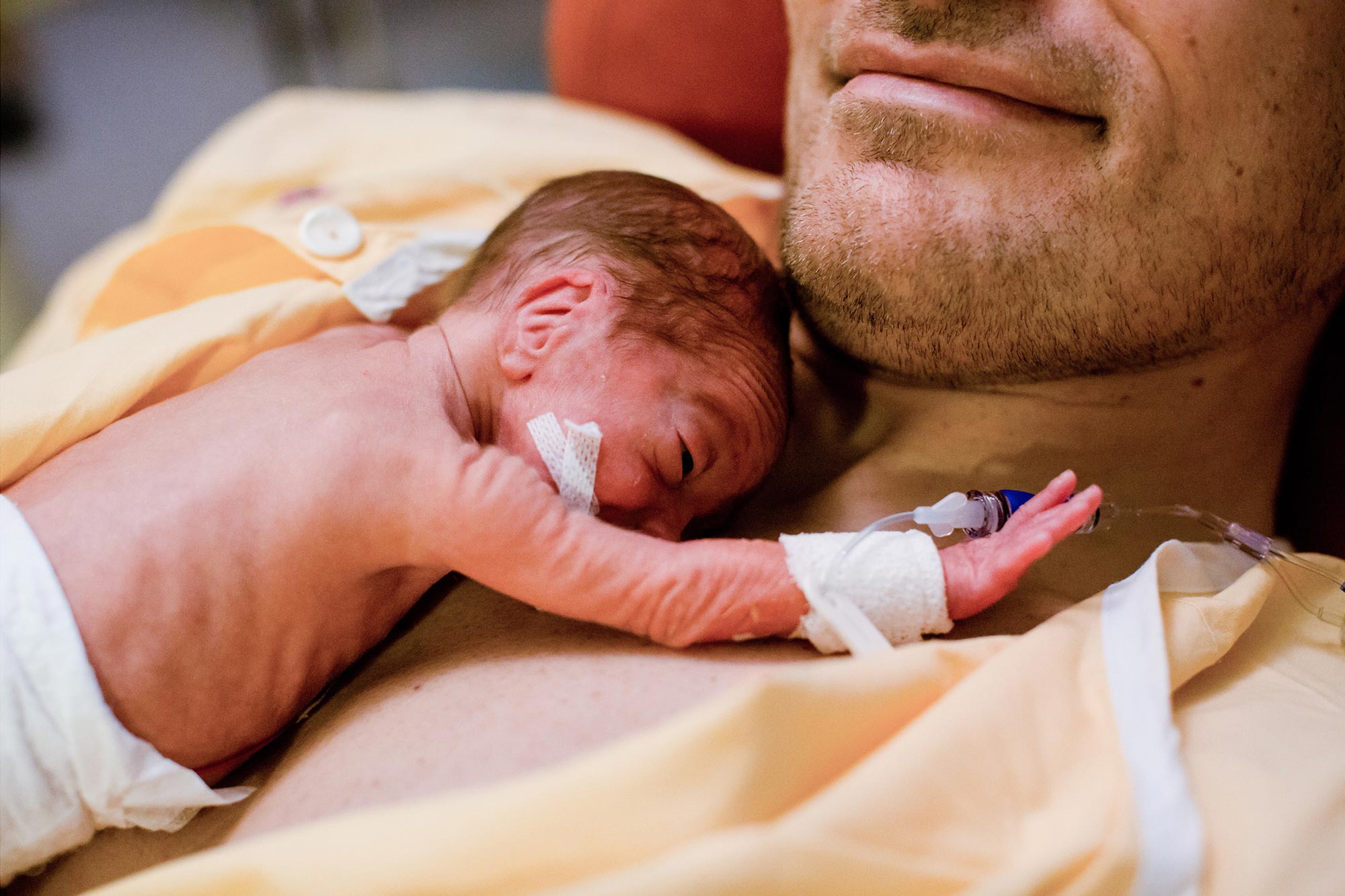
Over the last decade, preterm births in the United States have risen by over 10 percent, a concerning trend identified in a comprehensive study of over five million births in California.
The study reveals increases in risk factors like diabetes and decreases in protective measures like prenatal care. Notably, the disparities in preterm birth rates among different racial and socioeconomic groups are pronounced, with the highest rates observed in black mothers with public insurance.
Over the past decade, preterm births have increased by more than 10 percent, with racial and socioeconomic disparities persisting over time. This is according to a new study analyzing more than five million births.
The study, published today (September 27) in the journal JAMA Network Open, also found that some factors that increase the risk for preterm birth—such as diabetes, sexually transmitted infections, and mental health conditions—became much more common over the past decade, while other factors that protect against preterm birth declined.
“Our findings not only show that preterm births are on the rise, but provide clues as to why this may be the case,” said Laura Jelliffe-Pawlowski, the study’s lead author, an epidemiologist and professor at the NYU Rory Meyers College of Nursing and professor emeritus of epidemiology, biostatistics, and of global health sciences in the University of California San Francisco (UCSF) School of Medicine. “Understanding patterns of and factors related to preterm birth is important for informing clinical care and the development of public health programs to address this critical need.”
The Health Impacts of Preterm Births
Babies born preterm or prematurely—before the 37th week of pregnancy—are more likely to experience a range of short and longer-term problems, including a higher risk for illness, intellectual and emotional difficulty, and death. Certain factors are known to increase the risk of preterm birth, including mothers having high blood pressure, diabetes, an infection, or smoking. In addition, black, Native American, and Hawaiian and Pacific Islander expectant mothers are at higher risk for preterm birth, which is thought to be driven by a long history of structural racism experienced by these groups.
To understand recent trends around preterm births, Jelliffe-Pawlowski and her colleagues looked at more than 5.4 million singleton births (not twins or other multiples) from 2011 to 2022 in the state of California. They examined how preterm birth rates changed over time and explored patterns in risk and protective factors within racial/ethnic and socioeconomic groups. Health insurance type was used as a proxy for socioeconomic status, comparing public insurance (MediCal, California’s Medicaid program) with nonpublic insurance (including private insurance and coverage through the military and the Indian Health Service).
“Alarm Bells” in Preterm Birth Risks
The researchers found that preterm births increased by 10.6 percent over the decade studied, from 6.8 percent in 2011 to 7.5 percent in 2022—echoing a report from the Centers for Disease Control and Prevention (CDC) released earlier this year that also found an increase in preterm birth across the nation from 2014 to 2022.
Rates of preterm birth grew across nearly all groups, but varied by racial/ethnic and socioeconomic group. The highest rates of preterm birth were among black mothers with public insurance (11.3 percent), while the lowest rates were among white mothers who had nonpublic insurance (5.8 percent). Preterm birth rates decreased slightly over time among black mothers with nonpublic insurance, from 9.1 percent in 2011 to 8.8 percent in 2022, but were still significantly higher than rates among white mothers. In contrast, preterm birth rates jumped from 6.4 percent to 9.5 percent among Native American mothers with nonpublic insurance.
“We found stark differences in terms of what it looks like to be a black or Native American pregnant person compared with a white individual who is of middle or higher income,” said Jelliffe-Pawlowski.
Expanding on the CDC report’s findings by looking at risk and protective factors over time, the researchers determined that several factors were linked to an increased risk for preterm birth, including diabetes, high blood pressure, previously having a preterm birth, having fewer than three prenatal care visits, and housing insecurity. Notably, the rates of preexisting diabetes, sexually transmitted infections, and mental health conditions more than doubled during the decade studied.
“These patterns and changes in risk factors should be setting off alarm bells,” said Jelliffe-Pawlowski.
Several factors were found to protect against preterm birth among low-income expectant mothers, including receiving prenatal care and participation in WIC, the supplemental nutrition program supporting women and children. Unfortunately, the researchers observed a decline in WIC participation across most low-income racial/ethnic groups over the period studied.
Strategies to Counteract Preterm Births
The researchers note that their findings underscore the need to improve pregnancy care and promote treatments that address risk factors associated with preterm birth—which are often underutilized during pregnancy, especially among mothers of color.
“We need to do a better job of sharing information with pregnant people about risk factors for preterm birth and interventions that may be able to help them address this risk. Some providers report not wanting to scare or overwhelm pregnant people, but pregnant people tend to report wanting to have this information,” said Jelliffe-Pawlowski. “For those who are at increased risk due to factors like hypertension or previous preterm birth, for example, providers should be having conversations about how taking low-dose aspirin might be helpful to them and their growing baby. This also extends to things like screening for sexually transmitted infections and offering mental health care in a non-judgmental, supportive way.”
“There is also important work to be done to improve structural issues and respectful care in WIC to increase participation,” added Jelliffe-Pawlowski.
Innovative Approaches for Preterm Birth Prevention
Jelliffe-Pawlowski and her colleagues are also working to develop a digital platform called Hello Egg to help expectant mothers better understand their risk for preterm birth, identify interventions that may be helpful to them, and create a healthy pregnancy plan co-developed with prenatal providers. Jelliffe-Pawlowski and the team at the start-up, EGG Healthy Pregnancy, aim to conduct a large study to see if using the platform boosts a pregnant person’s knowledge; a key outcome will be seeing if this information sharing leads to increases in the use of interventions and, ultimately, to a reduced risk of preterm birth and other adverse outcomes.
Reference: “Risk and Protective Factors for Preterm Birth Among Racial, Ethnic, and Socioeconomic Groups in California” by Laura L. Jelliffe-Pawlowski, Rebecca J. Baer, Scott Oltman, Safyer McKenzie-Sampson, Patience Afulani, Ribka Amsalu, April J. Bell, Bridgette Blebu, Kacie C.A. Blackman, Christina D. Chambers, Jean Costello, Jonathan Fuchs, Odessa Garay, Kayla L. Karvonen, Miriam Kuppermann, Audrey Lyndon, Charles E. McCulloch, Giannina Ong, Carolyn Ponting, Larry Rand, Elizabeth E. Rogers, Kelli K. Ryckman, Solaire Spellen, Akila Subramaniam, Louie Swander, Kelly D. Taylor, Schyneida Williams and Karen M. Tabb, 27 September 2024, JAMA Network Open.
DOI: 10.1001/jamanetworkopen.2024.35887
The research was supported by the University of California, San Francisco California Preterm Birth Initiative. Additional study authors include Audrey Lyndon of NYU Meyers and collaborators from the University of California, San Francisco; University of California San Diego; Stanford University; UCLA Medical Center; California State University, Northridge; San Francisco State University; Indiana University Bloomington; University of Alabama at Birmingham; and the University of Illinois Urbana-Champaign.
Never miss a breakthrough: Join the SciTechDaily newsletter.
Follow us on Google and Google News.
2 Comments
The babies just can’t wait to be born to this wonderful world, am I right?
But seriously, when one takes into account extremely unhealthy environment the Yanks put themselves into, what with food poverty, stress, medications and all kinds of pollution, it’s surprising there are so few anomalies regarding newborns thus far.
Simply put, by 1980 the nearly subclinical non-IgE-mediated food allergy ignorant and incompetent US FDA instigated what is now a ‘silent American genocide’ with the illegal approvals of soy mostly processed with toxic hexane with some residue and added artificially cultured “free” (can cross the blood- brain barrier; as opposed to natural ‘protein bound’ which can’t) monosodium glutamate (MSG). In consideration of the types of diets of the cited disadvantaged groups, it just stands to reason that those pregnant women ingest a lot more FDA approved food poisoning during their pregnancies than their better-off counterparts.