
Close Menu
    Facebook X (Twitter) Instagram
    SciTechDaily
    • Biology
    • Chemistry
    • Earth
    • Health
    • Physics
    • Science
    • Space
    • Technology
    Facebook X (Twitter) Pinterest YouTube RSS
    SciTechDaily
    Home»Earth»Fuel for Earliest Life Forms: Organic Molecules Discovered in 3.5 Billion-Year-Old Rocks
    Earth

    Fuel for Earliest Life Forms: Organic Molecules Discovered in 3.5 Billion-Year-Old Rocks

    By University of CologneMarch 1, 2021No Comments2 Mins Read
    Facebook Twitter Pinterest Telegram LinkedIn WhatsApp Email Reddit
    Share
    Facebook Twitter LinkedIn Pinterest Telegram Email Reddit
    Rocks Containing Biologically Relevant Organic Molecules
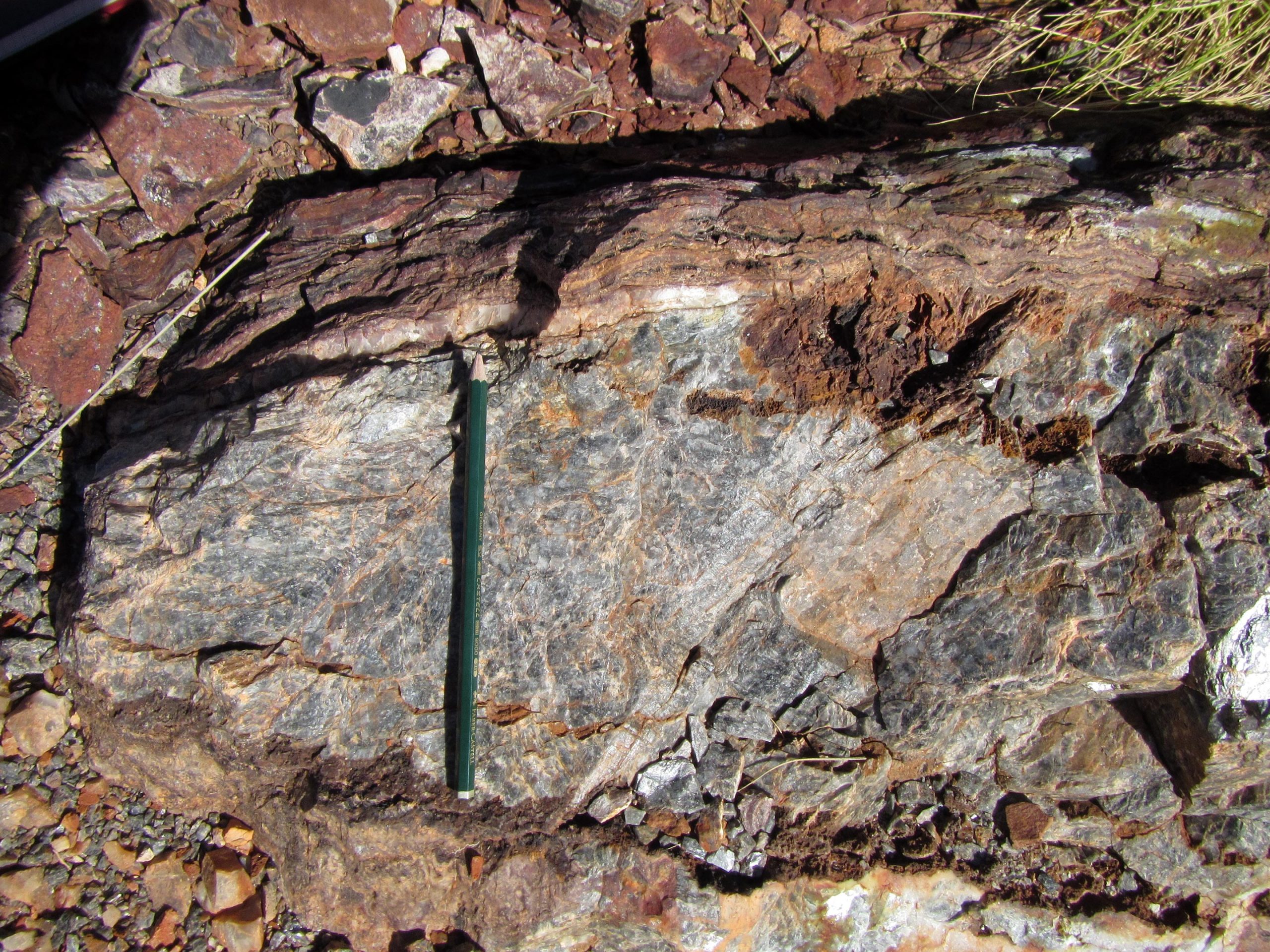
    3.5 billion-year-old barite (bottom) with fossilized microbial mat (top). This barite is part of the Dresser Formation in NW Australia. Credit: Helge Missbach

    Organic molecules in ancient hydrothermal rocks suggest early Earth had the chemical conditions to support microbial life 3.5 billion years ago.

    A research team including the geobiologist Dr. Helge Missbach from the University of Cologne has detected organic molecules and gases trapped in 3.5 billion-year-old rocks. A widely accepted hypothesis says that the earliest life forms used small organic molecules as building materials and energy sources. However, the existence of such components in early habitats on Earth was as yet unproven. The current study, published in the journal Nature Communications, now shows that solutions from archaic hydrothermal vents contained essential components that formed a basis for the earliest life on our planet.

    Specifically, the scientists examined about 3.5 billion-year-old barites from the Dresser Formation in Western Australia. The barite thus dates from a time when early life developed on Earth. “In the field, the barites are directly associated with fossilized microbial mats, and they smell like rotten eggs when freshly scratched. Thus, we suspected that they contained organic material that might have served as nutrients for early microbial life,” said Dr. Helge Missbach of the Institute of Geology and Mineralogy and lead author of the study.

    In the fluid inclusions, the team identified organic compounds such as acetic acid and methanethiol, in addition to gases such as carbon dioxide and hydrogen sulfide. These compounds may have been important substrates for metabolic processes of early microbial life. Furthermore, they are discussed as putative key agents in the origin of life on Earth. “The immediate connection between primordial molecules emerging from the subsurface and the microbial organisms — 3.5 billion years ago — somehow surprised us. This finding contributes decisively to our understanding of the still unclear earliest evolutionary history of life on Earth,” Missbach concluded.

    Reference: “Ingredients for microbial life preserved in 3.5 billion-year-old fluid inclusions” by Helge Mißbach, Jan-Peter Duda, Alfons M. van den Kerkhof, Volker Lüders, Andreas Pack, Joachim Reitner and Volker Thiel, 17 February 2021, Nature Communications.
    DOI: 10.1038/s41467-021-21323-z

    Never miss a breakthrough: Join the SciTechDaily newsletter.
    Follow us on Google and Google News.

    Evolution Geology Paleontology Popular University of Cologne
    Share. Facebook Twitter Pinterest LinkedIn Email Reddit

    Related Articles

    Balkanatolia: Forgotten Continent Discovered by Team of Paleontologists and Geologists

    Remarkably Well-Preserved Fossils Helping to Solve Baffling Puzzle That Vexed Darwin

    Ancestor of All Animals – Including Humans – Identified in Australian Fossils

    3.8 Billion-Year-Old Rocks Show That Water and Other Elements Necessary for Life Were Delivered to Earth Very Late in Its History

    Remarkable New Species of Meat-Eating Jurassic Dinosaur Discovered in Utah

    Unraveling the Mystery of How Early Animals Survived Most Severe Ice Age

    Mutated Ferns Show Poisonous Factor in Ancient Mass Extinction

    Gap in Fossil Record Filled by Find From School Class Hike – Ancient Rhinos Roamed the Yukon

    It Really Was the Asteroid That Ended the Dinosaurs – Here’s How It Went Down

    Leave A Reply Cancel Reply

    • Facebook
    • Twitter
    • Pinterest
    • YouTube

    Don't Miss a Discovery

    Subscribe for the Latest in Science & Tech!

    Trending News

    Monster Storms on Jupiter Unleash Lightning Beyond Anything on Earth

    Scientists Create “Liquid Gears” That Spin Without Touching

    The Simple Habit That Could Help Prevent Cancer

    Millions Take These IBS Drugs, But a New Study Finds Serious Risks

    Scientists Unlock Hidden Secrets of 2,300-Year-Old Mummies Using Cutting-Edge CT Scanner

    Bread Might Be Making You Gain Weight Even Without Eating More Calories

    Scientists Discover Massive Magma Reservoir Beneath Tuscany

    Europe’s Most Active Volcano Just Got Stranger – Here’s Why Scientists Are Rethinking It

    Follow SciTechDaily
    • Facebook
    • Twitter
    • YouTube
    • Pinterest
    • Newsletter
    • RSS
    SciTech News
    • Biology News
    • Chemistry News
    • Earth News
    • Health News
    • Physics News
    • Science News
    • Space News
    • Technology News
    Recent Posts
    • Scientists Were Wrong About This Strange “Rule-Breaking” Particle
    • Webb Space Telescope Uncovers Unexpected Ice Clouds on a Jupiter-Like World
    • 289-Million-Year-Old Reptile Mummy Reveals Origin of Human Breathing System
    • New Brain Discovery Challenges Long-Held Theory of Teenage Brain Development
    • Sharks Are Overheating as Warming Oceans Push Them to the Edge
    Copyright © 1998 - 2026 SciTechDaily. All Rights Reserved.
    • Science News
    • About
    • Contact
    • Editorial Board
    • Privacy Policy
    • Terms of Use

    Type above and press Enter to search. Press Esc to cancel.