

Close Menu
    Facebook X (Twitter) Instagram
    SciTechDaily
    • Biology
    • Chemistry
    • Earth
    • Health
    • Physics
    • Science
    • Space
    • Technology
    Facebook X (Twitter) Pinterest YouTube RSS
    SciTechDaily
    Home»Health»Fungal Meningitis Has New Appetite for Human Brains
    Health

    Fungal Meningitis Has New Appetite for Human Brains

    By SciTechDailyNovember 13, 2012No Comments2 Mins Read
    Facebook Twitter Pinterest Telegram LinkedIn WhatsApp Email Reddit
    Share
    Facebook Twitter LinkedIn Pinterest Telegram Email Reddit
    Meningitis-Outbreak
    In the United States, a persistent outbreak of fungal meningitis has claimed the lives of 30 individuals and afflicted another 419. Credit: Sebastian Kaulitzki/Shutterstock

    In the USA, an ongoing fungal meningitis outbreak has killed 30 people and sickened another 419. The fungus responsible has never wreaked such havoc before.

    Exserohilum rostratum is a plant-eating generalist fungus that has a spore-launching mechanism ideal for airborne infection. It is usually found in grasses, but it will dine on anything, including humans.
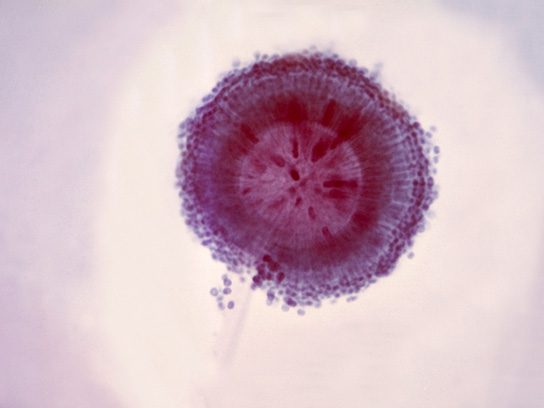
    aspergillus-niger
    The fungus Aspergillus niger. Credit: Lucille K. Georg /CDC

    The errant fungus has been identified in lab samples from 52 of those affected and was similarly found growing in unopened vials of steroids that seem to have been the cause of the outbreak, according to the CDC.

    E. rostratum prefers tropical and subtropical environments, and has been found on a number of different plant species. They infect plants and in some cases precipitate tissue death. The plant’s defenses were strong enough to keep infections in check, but not to eradicate it. Once the plant expired, the fungus could feast on its decaying remains. It also grows quite rapidly.

    It could have spread northwards by winds and then found itself in human patients through infected steroids. Once inside a patient, the fungus was situated in the epidural space, between the dura matter, which encloses the spinal fluid and spinal cord. The fungus’ filaments were able to penetrate the dura matter, enter the spinal fluid, and travel directly into the brain, an environment where the body’s immune system has difficulty eliminating or controlling infections.

    In some of the fatal cases, the fungal filaments began to grow in the brain, attracting platelets as well as white and red blood cells to aggregate around the filaments, forming a mass that could block blood vessels and initiate strokes. The exact mechanism of all the deaths is still unclear and the fungus’s confinement to just three lots of the drug also remains unexplained.

    Never miss a breakthrough: Join the SciTechDaily newsletter.
    Follow us on Google and Google News.

    Disease Epidemiology Fungal Meningitis Mycology
    Share. Facebook Twitter Pinterest LinkedIn Email Reddit

    Related Articles

    Hepatitis E Vaccine Debuts Thanks to Chinese Biotech Partnership

    FDA States Deadly Meningitis Outbreak Tied to More Drugs

    New Coronavirus Could Infect Millions During Hajj in Saudi Arabia

    West Nile Virus Might Be Linked to Kidney Problems

    Ebola Outbreak in Uganda Tests Readiness

    CDC Reports that Superbug NDM-1 Spread within a US-Based Hospital

    Latency Develops Soon After Infection and Slows When Antiretroviral Therapy is Given

    Flu Infections and MRSA Combine into Lethal Cocktail in Maryland

    Prion Diseases Hidden in Spleens Could Mean Thousands of Infected

    Leave A Reply Cancel Reply

    • Facebook
    • Twitter
    • Pinterest
    • YouTube

    Don't Miss a Discovery

    Subscribe for the Latest in Science & Tech!

    Trending News

    Scientists May Have Found the Key to Jupiter and Saturn’s Moon Mystery

    Scientists Uncover Brain Changes That Link Pain to Depression

    Saunas May Do More Than Raise Body Temperature – They Activate Your Immune System

    Exercise in a Pill? Metformin Shows Surprising Effects in Cancer Patients

    Hidden Oceans of Magma Could Be Protecting Alien Life

    New Study Challenges Alzheimer’s Theories: It’s Not Just About Plaques

    Artificial Sweeteners May Harm Future Generations, Study Suggests

    Splashdown! NASA Artemis II Returns From Record-Breaking Moon Mission

    Follow SciTechDaily
    • Facebook
    • Twitter
    • YouTube
    • Pinterest
    • Newsletter
    • RSS
    SciTech News
    • Biology News
    • Chemistry News
    • Earth News
    • Health News
    • Physics News
    • Science News
    • Space News
    • Technology News
    Recent Posts
    • Scientists Discover Unexpected Climate Benefit Hidden in Forest Soils
    • The Grand Canyon’s “Swiss Cheese” Rocks Hold a Critical Secret
    • Scientists Discover 430,000-Year-Old Wooden Tools, Rewriting Human History
    • Scientists Make Breakthrough on 40-Year-Old 2D Physics Puzzle
    • As Cities Invade the Amazon, Yellow Fever Makes a Dangerous Comeback
    Copyright © 1998 - 2026 SciTechDaily. All Rights Reserved.
    • Science News
    • About
    • Contact
    • Editorial Board
    • Privacy Policy
    • Terms of Use

    Type above and press Enter to search. Press Esc to cancel.