
Close Menu
    Facebook X (Twitter) Instagram
    SciTechDaily
    • Biology
    • Chemistry
    • Earth
    • Health
    • Physics
    • Science
    • Space
    • Technology
    Facebook X (Twitter) Pinterest YouTube RSS
    SciTechDaily
    Home»Space»Galileo: World’s Most Precise Satellite Navigation System Expands
    Space

    Galileo: World’s Most Precise Satellite Navigation System Expands

    By European Space Agency (ESA)May 4, 2024No Comments3 Mins Read
    Facebook Twitter Pinterest Telegram LinkedIn WhatsApp Email Reddit
    Share
    Facebook Twitter LinkedIn Pinterest Telegram Email Reddit
    Galileo L12
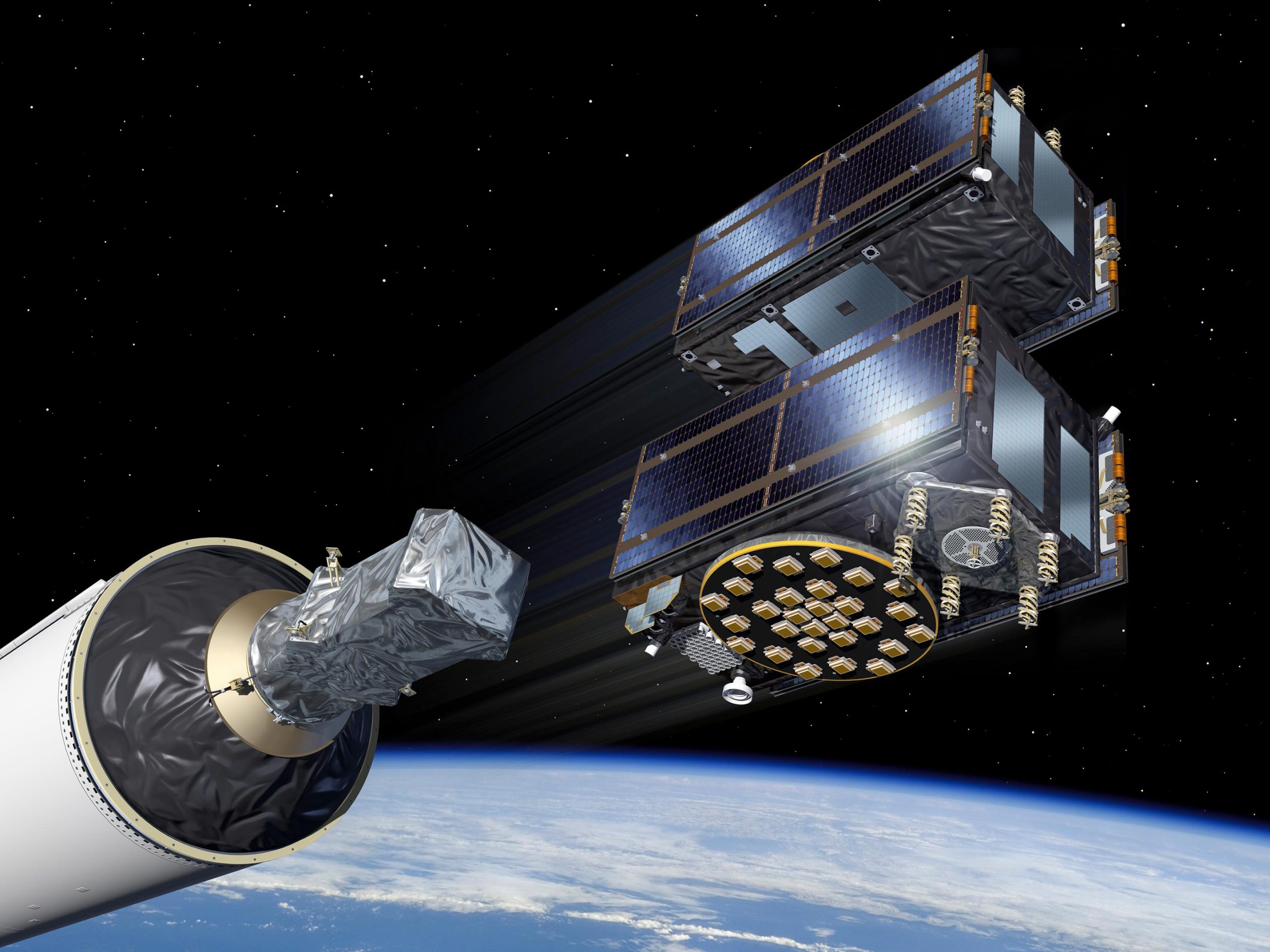
    The European Galileo navigation system has two more satellites in orbit following their launch in the early morning of Sunday, April 28. With 30 satellites now in orbit, Galileo is expanding its constellation, increasing the reliability, robustness and, ultimately, the precision, benefiting billions of users worldwide. Credit: ESA–P. Carill

    Galileo, the world’s most precise satellite navigation system, expanded its constellation with two new satellites launched by SpaceX, enhancing its reliability and precision.

    The European Galileo navigation system has two more satellites in orbit following their launch on a SpaceX Falcon 9 in the early morning of Sunday, 28 April, at 01:34 BST/02:34 CEST. With 30 satellites now in orbit, Galileo is expanding its constellation, increasing the reliability, robustness and, ultimately, the precision, benefiting billions of users worldwide.

    Already the most precise satellite navigation system in the world and the largest European constellation of satellites, Galileo has been operational since 2016, when Initial Services were declared. Galileo is making a difference across the fields of rail, maritime, agriculture, financial timing services, and rescue operations.

    Many strategic sectors depend on it: already 10% of the EU’s yearly GDP relies on satellite navigation and this is set to increase. From finding our way, to supporting Search and Rescue activities and providing ultra-precise timestamps for all kinds of institutional and commercial applications, Galileo is integral to our everyday lives.

    Since the conception of Galileo, 38 Galileo satellites have been developed and tested by ESA and European industry for the EU’s Galileo program. Of these, four In-Orbit-Validation and 26 Full Operation Capability satellites have been placed in orbit with 12 launches.

    This launch is taking place only a few days after the new Public Regulated Service (PRS) signals started to be broadcast. This encrypted navigation service is specifically designed for authorized governmental users and sensitive applications, contributing to increase Europe’s autonomy and resilience in the critical domain of satellite navigation.

    The eight remaining Galileo First Generation satellites are ready to be launched soon, after which a Second Generation (G2) of satellites will start joining the constellation, expected in 2026 with the Ariane 6 launcher. ESA, as Galileo’s design authority and system development prime, is working with European industry to develop the G2 satellites that will revolutionize the fleet with enhanced capabilities. G2 satellites will use electric propulsion and host a more powerful navigation antenna, more and even better atomic clocks and fully digital payloads.

    About Galileo

    Galileo is currently the world’s most precise satellite navigation system, serving over four billion smartphone users around the globe since entering Open Service in 2016. All smartphones sold in the European Single Market are now guaranteed Galileo-enabled. In addition, Galileo is making a difference across the fields of rail, maritime, agriculture, financial timing services, and rescue operations.

    A flagship program funded by the European Union (EU), Galileo is managed by the European Commission. Since its inception, ESA leads the design, development, and qualification of the space and ground systems, as well as procuring launches. ESA is also entrusted with research and development activities for the future of Galileo within the EU program Horizon Europe. The EU Agency for the Space Programme (EUSPA) acts as the service provider, overseeing market uptake and closing the loop with users.

    Never miss a breakthrough: Join the SciTechDaily newsletter.
    Follow us on Google and Google News.

    European Space Agency GPS SpaceX
    Share. Facebook Twitter Pinterest LinkedIn Email Reddit

    Related Articles

    How To Watch the Euclid “Dark Universe Explorer” Launch Live

    Euclid’s Final Earthly Sighting: Dark Universe Explorer Prepares for Launch

    International Collaboration: ESA, NASA, JAXA, Roscosmos Unite for SpaceX’s Crew-7 Mission

    Beaming Up Security: Spire Global Launches Optical Link Nanosats

    Splashdown! NASA SpaceX Crew-3 Astronauts Safely Return to Earth

    NASA, ESA Assign Astronauts to Space Station Mission on SpaceX Crew Dragon

    SpaceX Dragon Fire

    Astronauts Chosen for NASA SpaceX Crew-3 Mission to Space Station

    Alpha Mission: First ESA Astronaut to Ride a Dragon to Space

    Leave A Reply Cancel Reply

    • Facebook
    • Twitter
    • Pinterest
    • YouTube

    Don't Miss a Discovery

    Subscribe for the Latest in Science & Tech!

    Trending News

    5 Simple Ways To Remember More and Forget Less

    The Atomic Gap That Could Cost the Semiconductor Industry Billions

    Researchers Finally Solve 50-Year-Old Blood Group Mystery

    Scientists Discover “Molecular Switch” That Fuels Alzheimer’s Brain Inflammation

    Trees Emit Tiny Lightning Flashes During Storms and Scientists Finally Prove It

    Pomegranate Compound Could Help Protect Against Heart Disease

    Your Blood Test Might Already Show Alzheimer’s Risk

    Scientists Were Wrong About This Strange “Rule-Breaking” Particle

    Follow SciTechDaily
    • Facebook
    • Twitter
    • YouTube
    • Pinterest
    • Newsletter
    • RSS
    SciTech News
    • Biology News
    • Chemistry News
    • Earth News
    • Health News
    • Physics News
    • Science News
    • Space News
    • Technology News
    Recent Posts
    • Hidden Parasite Found in Popular Portuguese Lake Raises Health Concerns
    • This Simple Trick Can Boost Your Workout Endurance by 20%
    • This Popular Supplement May Interfere With Cancer Treatment, Scientists Warn
    • Scientists Propose Radical New Way To Detect Alien Life – Without Traditional Biosignatures
    • Scientists Just Discovered Light Can Actually Slow Plant Growth
    Copyright © 1998 - 2026 SciTechDaily. All Rights Reserved.
    • Science News
    • About
    • Contact
    • Editorial Board
    • Privacy Policy
    • Terms of Use

    Type above and press Enter to search. Press Esc to cancel.