
Close Menu
    Facebook X (Twitter) Instagram
    SciTechDaily
    • Biology
    • Chemistry
    • Earth
    • Health
    • Physics
    • Science
    • Space
    • Technology
    Facebook X (Twitter) Pinterest YouTube RSS
    SciTechDaily
    Home»Biology»Genetic Variations & Vegetarian Vibes: Unpacking the DNA Diet Connection
    Biology

    Genetic Variations & Vegetarian Vibes: Unpacking the DNA Diet Connection

    By PLOSOctober 12, 2023No Comments3 Mins Read
    Facebook Twitter Pinterest Telegram LinkedIn WhatsApp Email Reddit
    Share
    Facebook Twitter LinkedIn Pinterest Telegram Email Reddit
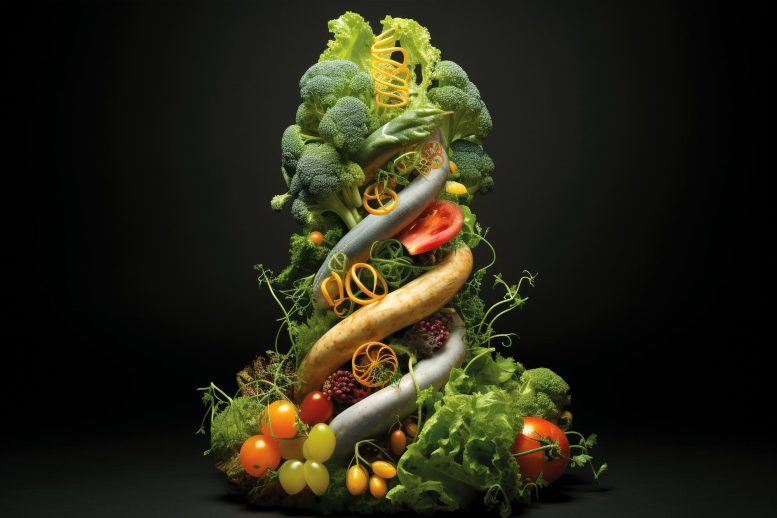
    Vegetable Genetics Art Concept
    Gene variations linked to lipid metabolism and brain function may influence vegetarian diet choices, reveals a Northwestern University study published in PLOS ONE.

    A study of more than 330,000 genomes indicates 34 genes potentially involved in vegetarianism.

    Certain variations in genes involved in lipid metabolism and brain function may be associated with choosing a vegetarian diet, according to a new study led by Nabeel Yaseen of Northwestern University, published on October 4 in the open-access journal PLOS ONE.

    “Our data indicate that adherence to a strict vegetarian diet is influenced by genetics.”

    Diverse Factors Influencing Dietary Preferences

    A small percentage of the population chooses to eat a vegetarian diet for a variety of religious, ethical, environmental, and health-related reasons. A person’s dietary choices may also involve a combination of personal taste, their metabolism, and the effects of different foods on the body. All of these factors are strongly influenced by genetics, but the role of a person’s genes in choosing a vegetarian diet is not well understood.

    Insights from the Genome-Wide Study

    In the new study, researchers performed a genome-wide association study where they screened thousands of genomes to identify genetic variations linked to being vegetarian. The researchers compared genomes from 5,324 strict vegetarians to 329,455 non-vegetarians who are participants in the UK Biobank, a large-scale biomedical database. They identified variants associated with 34 genes that may contribute to choosing a vegetarian diet. Several of these genes have important functions in lipid metabolism and brain function, which raises the possibility that differences in how the body processes lipids and the resulting effects on the brain may underlie the ability and choice to subsist on a vegetarian diet.

    A Deeper Dive into Genetics and Diet

    These results add to existing research pointing to a role for genetics in dietary choices. However, the researchers note that more research is needed into potential differences between lipid synthesis and metabolism in vegetarians and non-vegetarians, as well as other physiologic pathways that might underlie vegetarianism. A better understanding of these pathways may help nutritionists design more effective dietary recommendations based on a person’s individual genetics.

    The authors add: “Our data indicate that adherence to a strict vegetarian diet is influenced by genetics. Using a genome-wide association study, we identified 34 genes with possible roles in vegetarianism.”

    For more on this research, see The Genetic Roots of Vegetarianism.

    Reference: “Genetics of vegetarianism: A genome-wide association study” by Nabeel R. Yaseen, Catriona L. K. Barnes, Lingwei Sun, Akiko Takeda and John P. Rice, 4 October 2023, PLOS ONE.
    DOI: 10.1371/journal.pone.0291305

    Never miss a breakthrough: Join the SciTechDaily newsletter.
    Follow us on Google and Google News.

    Diet Genetics Nutrition PLOS
    Share. Facebook Twitter Pinterest LinkedIn Email Reddit

    Related Articles

    Neuronal Nightmare: The Troubling Connection Between Sugar, Obesity, and Brain Degeneration

    The Genetic Roots of Vegetarianism: Is It in Your DNA?

    Genetic Self-Destruct – Some Worms Programmed to Die Early for Sake of Colony

    Have A Fat Cat? Here Is The Diet They Need To Follow To Lose Weight

    Study Shows Changing Gut Bacteria Through Diet Affects Brain Function

    Calcified Bacteria Sheds Light on the Health Consequences of the Evolving Diet

    UCLA Researchers Show Link Between Diet, Genetics and Obesity

    The Tomato Genomics Consortium Sequences the Tomato Genome

    Diets Lacking in Omega-3 Fatty Acids May Cause Your Brain to Age Faster

    Leave A Reply Cancel Reply

    • Facebook
    • Twitter
    • Pinterest
    • YouTube

    Don't Miss a Discovery

    Subscribe for the Latest in Science & Tech!

    Trending News

    Why Popular Diabetes Drugs Like Ozempic Don’t Work for Everyone: The “Genetic Glitch”

    Scientists Stunned After Finding Plant Thought Extinct for 60 Years

    Scientists Discover Tiny New Spider That Hunts Prey 6x Its Size

    Natural Component From Licorice Shows Promise for Treating Inflammatory Bowel Disease

    Scientists Warn: Popular Sweetener Linked to Dangerous Metabolic Effects

    Monster Storms on Jupiter Unleash Lightning Beyond Anything on Earth

    Scientists Create “Liquid Gears” That Spin Without Touching

    The Simple Habit That Could Help Prevent Cancer

    Follow SciTechDaily
    • Facebook
    • Twitter
    • YouTube
    • Pinterest
    • Newsletter
    • RSS
    SciTech News
    • Biology News
    • Chemistry News
    • Earth News
    • Health News
    • Physics News
    • Science News
    • Space News
    • Technology News
    Recent Posts
    • Ancient Bacteria Turned a DNA System Into a Cell Skeleton
    • Researchers Finally Solve 50-Year-Old Blood Group Mystery
    • Scientists Discover “Molecular Switch” That Fuels Alzheimer’s Brain Inflammation
    • Hidden Ocean Currents Revealed in Stunning Detail by AI
    • Trees Emit Tiny Lightning Flashes During Storms and Scientists Finally Prove It
    Copyright © 1998 - 2026 SciTechDaily. All Rights Reserved.
    • Science News
    • About
    • Contact
    • Editorial Board
    • Privacy Policy
    • Terms of Use

    Type above and press Enter to search. Press Esc to cancel.